

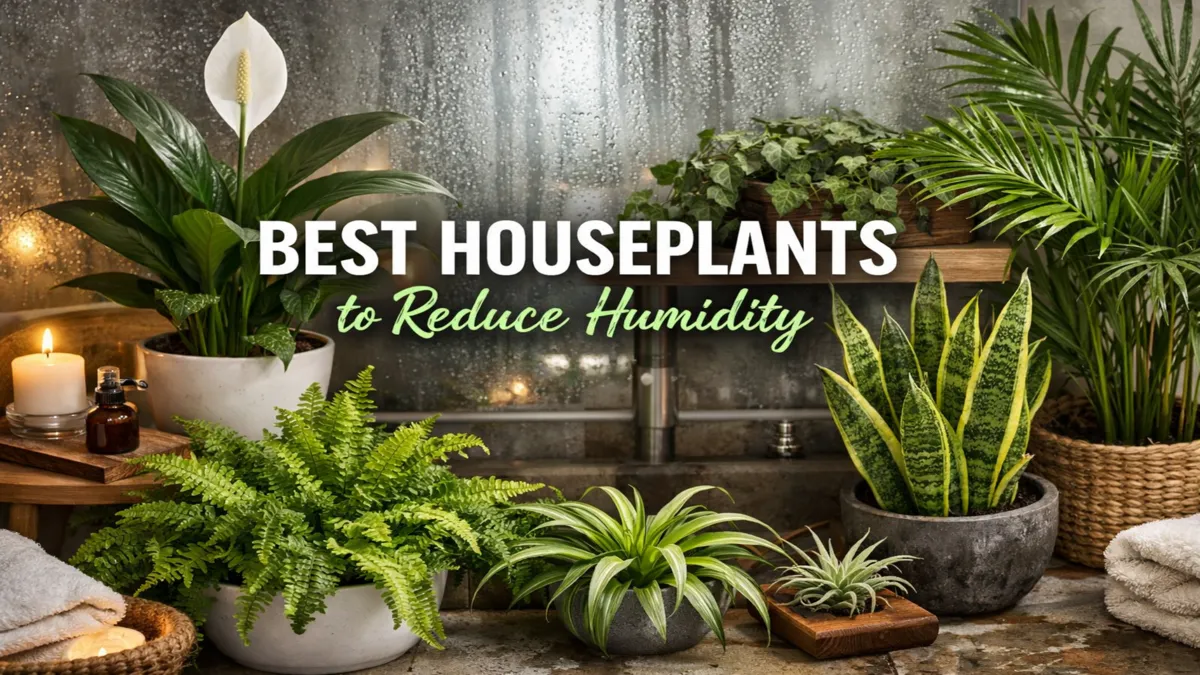
Excessive humidity indoors can cause many problems. You might notice dampness in the walls, a musty smell, or even mold in corners.
An easy and natural remedy that many people overlook is indoor plants.
Related News



Some houseplants can absorb moisture from the air through their leaves. This process helps reduce humidity slightly and freshens the room.
If you're experiencing humidity issues in bathrooms, kitchens, or poorly ventilated rooms, these plants can help more than you might expect.
Below are seven plants that naturally absorb moisture from the air.
1. Peace Lily
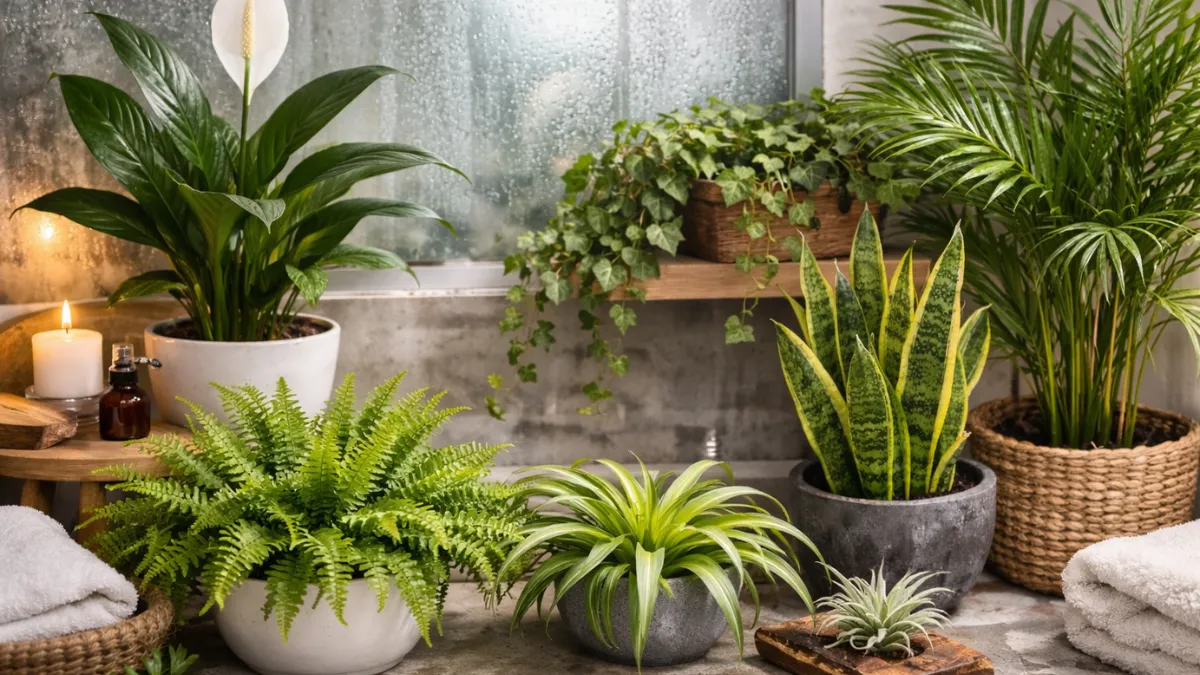
Peace Lily is one of the best indoor plants for humid areas.
This plant absorbs moisture through its leaves and soil, improving air quality. It thrives in bathrooms, kitchens, or laundry areas where humidity is naturally high.
In my experience, peace lilies are healthiest when placed in bright, indirect light. They also give clear signals when they're thirsty, as their leaves begin to droop slightly.
One thing I noticed while growing them is that they grow faster in humid rooms than in dry ones.
2. Boston Fern
Boston ferns love humidity and can help balance humid indoor air.
Its long, feather-like leaves release moisture through transpiration and also draw water from the surrounding atmosphere. This natural cycle can help control humidity in small spaces.
These ferns do especially well near bathrooms or shower areas.
However, a mistake many people make is placing Boston ferns in very dry rooms. In my experience, they struggle in air-conditioned spaces unless you increase the humidity around them.
3. English Ivy
English ivy is well-known for improving indoor air quality, but it also absorbs moisture from the air.
Because of its dense leaves, this plant can absorb moisture from the air and help reduce humidity over time.
This makes it useful for spaces like bathrooms, basements, or kitchens.
One advantage of English ivy is its flexible growth pattern. You can grow it in a hanging basket or hang it on a shelf.
Just keep in mind that it prefers bright, indirect light rather than dark corners.
4. Spider Plant
Spider plants are one of the easiest plants to grow indoors.
They are highly adaptable and can tolerate a wide range of indoor conditions. Their main benefit is air purifying, and they also help absorb excess moisture from indoor air.
In my experience, spider plants grow surprisingly quickly in humid places.
Within a few months, they begin to produce small plantlets that hang down from the mother plant. These small plantlets can be easily transplanted into new pots.
5. Reed Palm
Reed palms grow in tropical environments with high humidity.
Because of this, they are very good at managing indoor humidity. Their large leaf surface helps them absorb and regulate moisture in the surrounding air.
Reed palms also add a cool, tropical look to a living room or bedroom.
One thing I learned the hard way is that reed palms don't like direct sunlight. Once I placed it near a sunny window, the leaves quickly began to yellow.
They thrive better in bright, indirect light.
6. Tillandsia (Air Plants)
Air plants are unique because they absorb moisture directly through their leaves.
Unlike most houseplants, they don't require soil. Instead, they take water and nutrients from the air.
This makes them surprisingly effective in humid areas.
Air plants work well in bathrooms, near kitchen windows, or even on decorative holders. They're also great for those who want low-maintenance plants.
However, they do require occasional watering or soaking to stay healthy.
7. Snake Plant
Snake plants are renowned for their ability to survive almost anywhere.
Although they're mostly known for air purification, they can also help control indoor humidity.
Their thick leaves store water and release it slowly during dry weather, helping to balance the indoor environment.
In my experience, snake plants are one of the most forgiving plants you can have.
I once forgot to water my snake plant for almost a month, and it still remained healthy. However, watering too much is a bigger problem than watering too little.
A little fact about humidity-loving plants
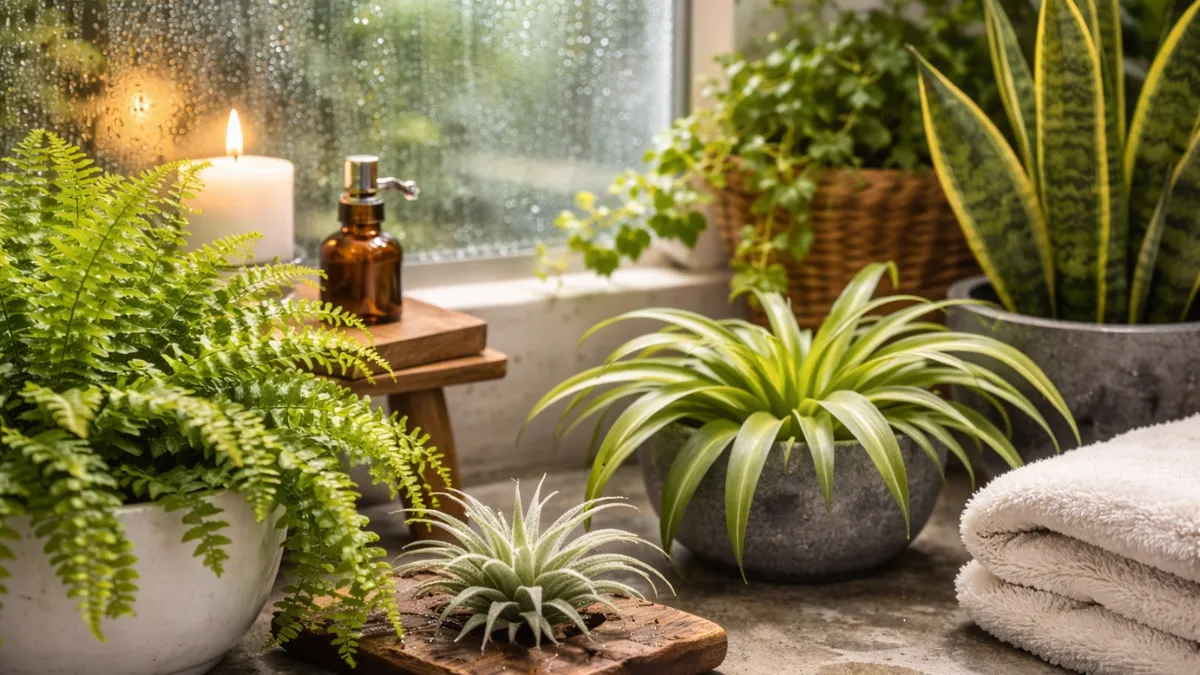
Indoor plants can help manage humidity, but they can't completely replace a dehumidifier.
Their effect is gradual and works best in small rooms or areas with mild humidity.
If you have problems with excessive humidity or mold in your home, improving ventilation should always be the first step.
Plants work best as a natural support system rather than a complete solution.
Related Helpful Articles:
Best Air Purifying Indoor Plants (Science-Based List 2026)
Best Bedroom Plants for Oxygen and Air Quality (Science-Backed Guide)
How Many Plants Do You Need in a Bedroom for Noticeable Air Improvement?
Final Thoughts
Using indoor plants to manage humidity is a simple and natural idea.
They green up your space, improve air quality, and can also help balance indoor humidity levels.
From peace lilies to air plants, each of these plants has its own way of interacting with air humidity.
If you place them in the right place and care for them properly, they can quietly help create a fresher and more comfortable home.
Written from real experience caring for indoor plants for IndoorPlantify.