

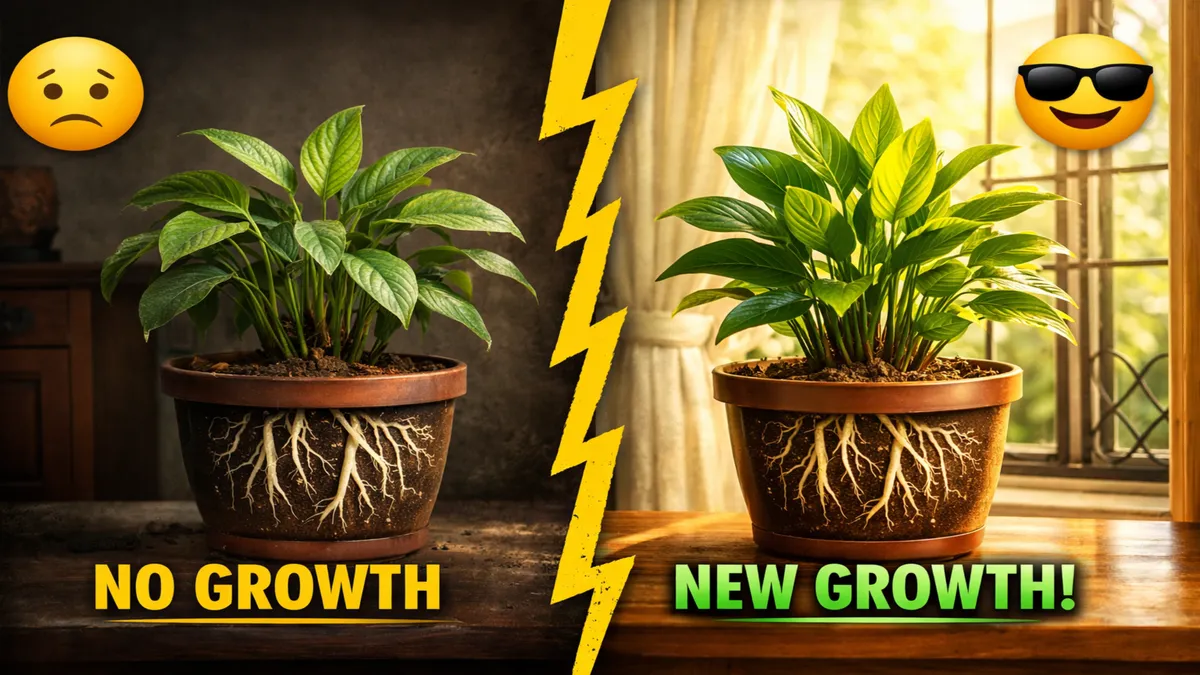
Many plant parents who love indoor plants become frustrated when their plants have healthy-looking roots but barely grow. I've experienced this myself many times. You water it, check the soil, and even fertilize it, but the leaves seem stagnant, and your plant just doesn't grow.
Sometimes the problem with these plants isn't obvious. A healthy root system is great, but roots alone don't guarantee growth. Several factors silently affect plants indoors. Issues with light, temperature, and even subtle air currents can slow down a plant's growth without killing it.
Related News
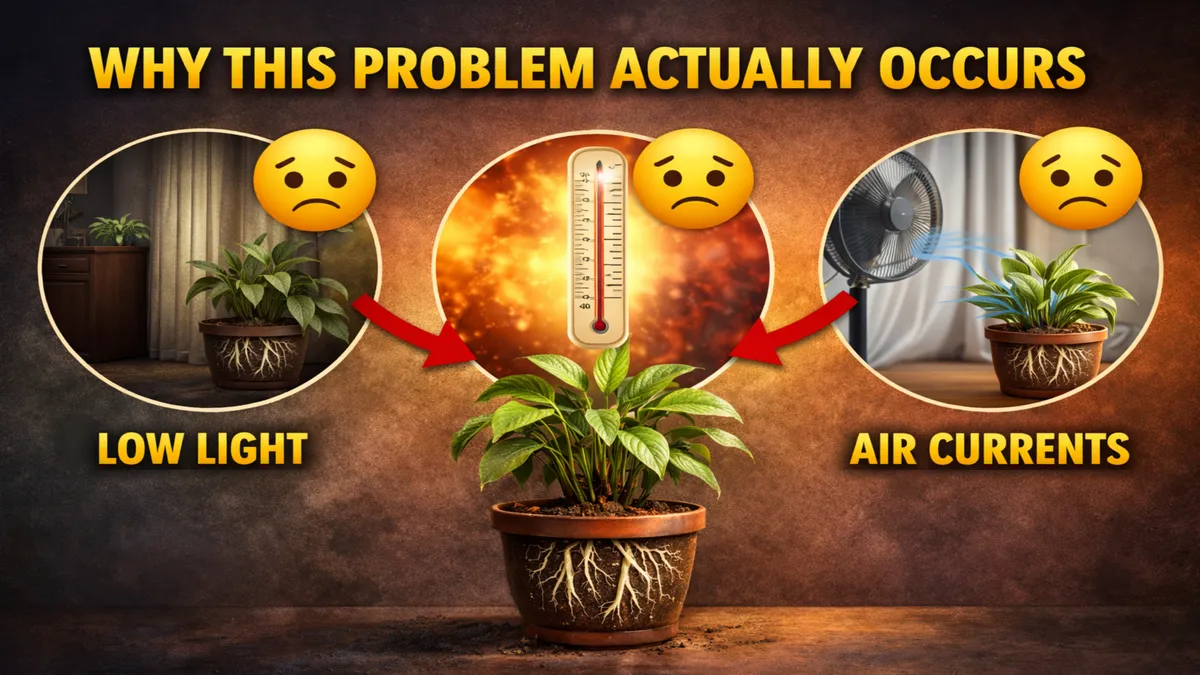
Why this problem actually occurs
One major reason is light. No matter how healthy a plant looks, insufficient light can silently stunt its growth. I've seen my money plant have healthy roots, while its stems barely grew for months, all because it was too far from the window.
Another reason is temperature or humidity. Indoor rooms often experience temperature fluctuations, especially in Indian homes with ACs or heaters. Plants experience subtle stress, which slows down their growth. Even healthy roots can't produce new shoots when conditions aren't right.
Signs that your plant is struggling
The first sign is little to no new leaf growth. Even if the old leaves are green and the roots are fine, your plant might simply be stagnant. I noticed my peace lily stayed at the same height for weeks, even though I was using fertilizer.
Another sign is weak stems or leaves that spread slowly. The leaves might remain curled or slightly droop, indicating stress. The roots provide nourishment, but without energy from proper light, the plant can't utilize the nutrients efficiently, resulting in minimal growth.
Examples
A snake plant placed in a corner had thick roots, but it was growing very slowly. Moving it closer to natural sunlight restarted its growth after a few weeks.
Similarly, my spider plant had strong roots, but no new shoots were appearing. Placing the pot near a sunny window for a few hours each day resulted in small new shoots appearing within a month.
What Actually Works in Your Home
First, check the light levels. Most indoor plants need bright, natural light. Even a short period of morning sun can kickstart growth. I usually rotate my plants weekly to ensure all the leaves get enough energy.
Next, pay close attention to soil moisture. Healthy roots need consistent moisture, but the soil shouldn't be soggy. I learned the hard way that letting the soil dry out slightly between waterings helped my plants thrive instead of just surviving.
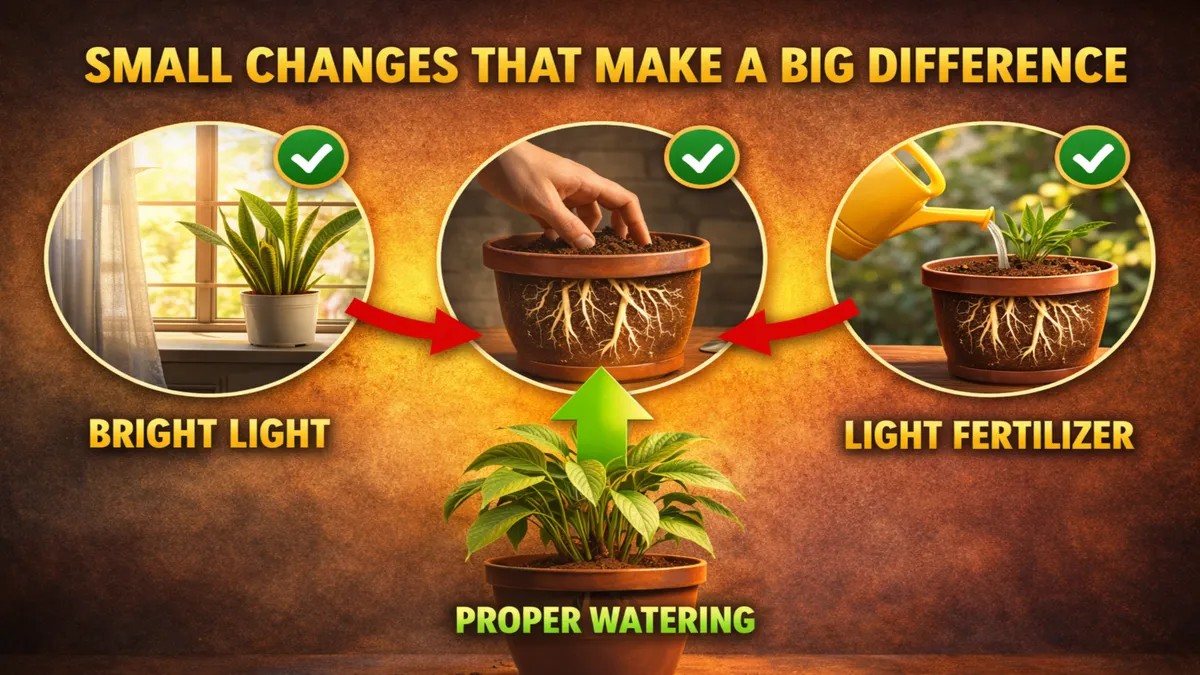
Small Changes That Make a Big Difference
Move your plants closer to a natural light source. Even a small change of 30–40 cm can make a huge difference. My fiddle-leaf fig responded incredibly well just by being placed near a bright window.
Start with a light fertilizer. Instead of heavy doses, a light application of liquid fertilizer once a month helps the plant grow steadily. I once over-fertilized my pothos, and its growth slowed down even more, proving that more isn't always better.
Common Mistakes People Make
Many people water frequently, thinking the roots need constant moisture. Overwatering can indirectly harm growth, forcing the roots to work harder and leaving less energy for new leaves.
Another common mistake is neglecting airflow. Stagnant indoor air can slowly stress plants. I placed a small fan near my indoor garden, and plants that had been stagnant for months slowly started producing new leaves.
Some people forget the importance of patience. Healthy roots need time to support visible growth. Expecting your plants to change overnight will only lead to disappointment. My plants have taught me that consistent care is always better than quick fixes.
Extra Tip : Pot size matters!
Pots that are too large or too small can silently hinder growth. I repotted my Philodendron from a small pot to a slightly larger one, and suddenly, new leaves appeared within a few weeks. Healthy roots need space to support growth.
Check the roots occasionally as well. Healthy roots circling the pot can indicate that it's time to repot. I've learned that ignoring this can result in plants that are healthy but don't grow for months, because the roots can't efficiently support the top growth.
Conclusion
If your plant has healthy roots but still isn't growing, don't panic. Most of the time, small adjustments to light, watering, or pot size will solve the problem. Growth may be slow, but your consistent care will pay off. If you do everything right, your plant will eventually respond.