

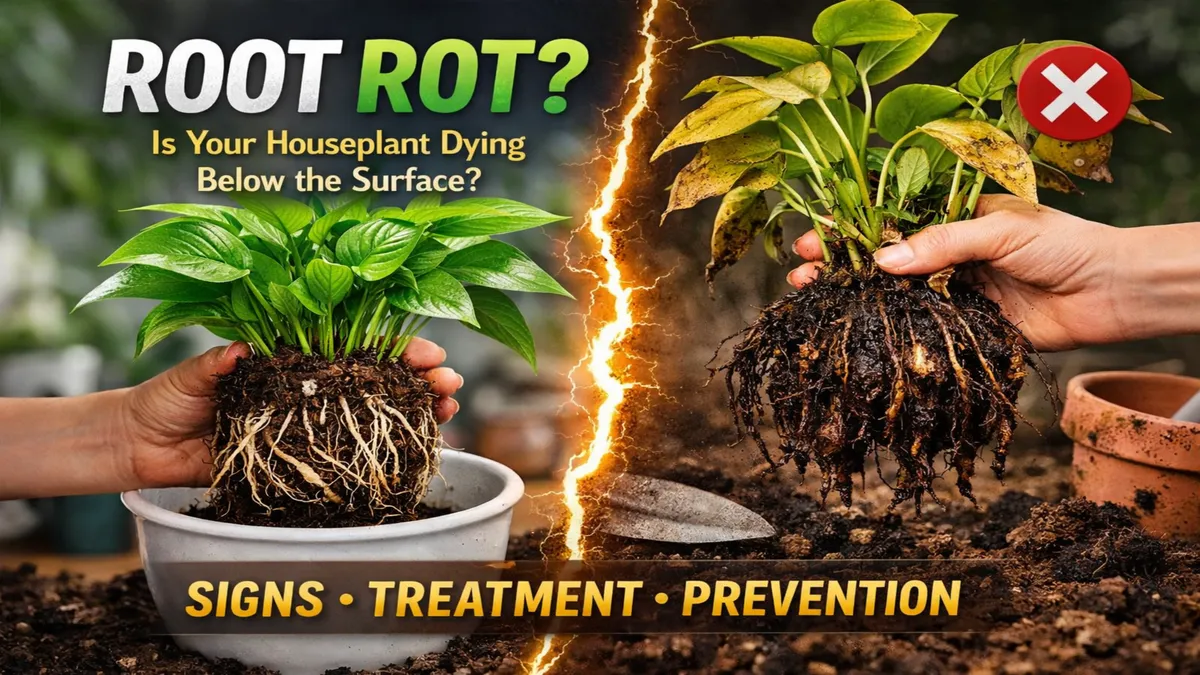
Root rot is one of the most common reasons why houseplants suddenly decline, even if their leaves still look healthy. It typically starts below the soil surface, where excess moisture gradually damages the roots. Many plant owners don't notice this problem until it's too late. This guide explains how to identify root rot early, how to safely treat it, and how to prevent its return using simple houseplant care techniques.
Quick Comparison:
• Best for low light : Snake Plant
• Best for fast growth : Pothos
• Best for beginners : ZZ Plant
• Best for air purification : Areca Palm
Related News


What is Root Rot and Why Does It Happen Indoors?
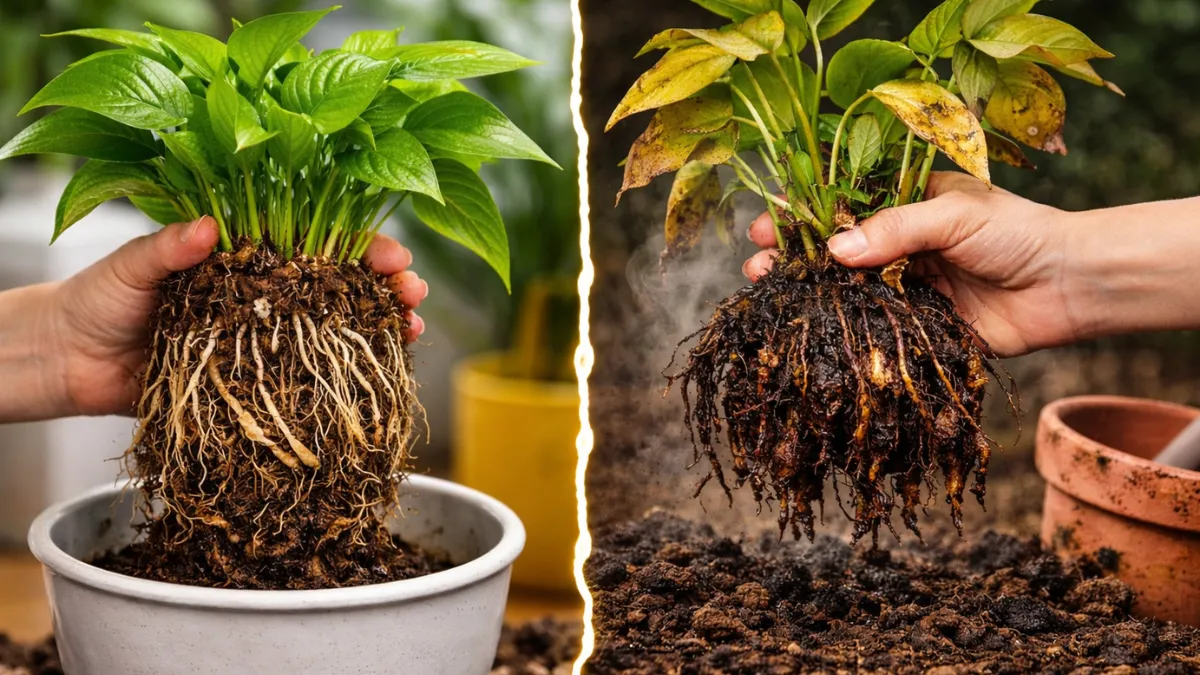
Root rot occurs when a plant's roots remain in overly wet soil for too long and don't receive adequate oxygen. Instead of healthy white roots, they become brown, soft, and mushy. Most cases of indoor root rot are caused by overwatering, poor drainage, or compacted soil that traps moisture.
The indoor environment makes this problem even more common. Pots without drainage holes, decorative planters, and slow-drying rooms allow water to linger longer than the roots can tolerate. Over time, the roots stop absorbing nutrients, even if the plant still looks green above the soil.
Early Signs of Root Rot in Your Houseplant
Yellowing leaves are often the first visible warning sign, but it's easily misinterpreted. Many people see yellowing leaves and water even more, exacerbating the problem. Soft stems, drooping leaves, and a sour smell from the soil usually follow.
If a plant looks loose in its pot or stops growing altogether, the root damage is likely already significant. The only reliable way to confirm root rot before the plant recovers is to inspect the roots early.
Step-by-Step : How to Save a Plant with Root Rot
Step 1: Carefully remove the plant from its pot
Gently remove the plant and brush away excess soil. Healthy roots should appear firm and light in color. Rotted roots will appear dark, soft, or stringy. Avoid pulling forcefully, as weakened roots break easily.
Step 2: Trim away all rotted roots
Use clean scissors to cut away every affected portion of the roots. Even a small piece of rot left behind can cause the problem to return. Focus only on the strong, healthy roots that still have their structure intact.
Step 3: Allow the roots to air dry briefly
Let the remaining roots air dry for a few hours. This reduces excess moisture and prevents immediate reinfection. Do not leave the roots exposed overnight, as dehydration can further stress the plant.
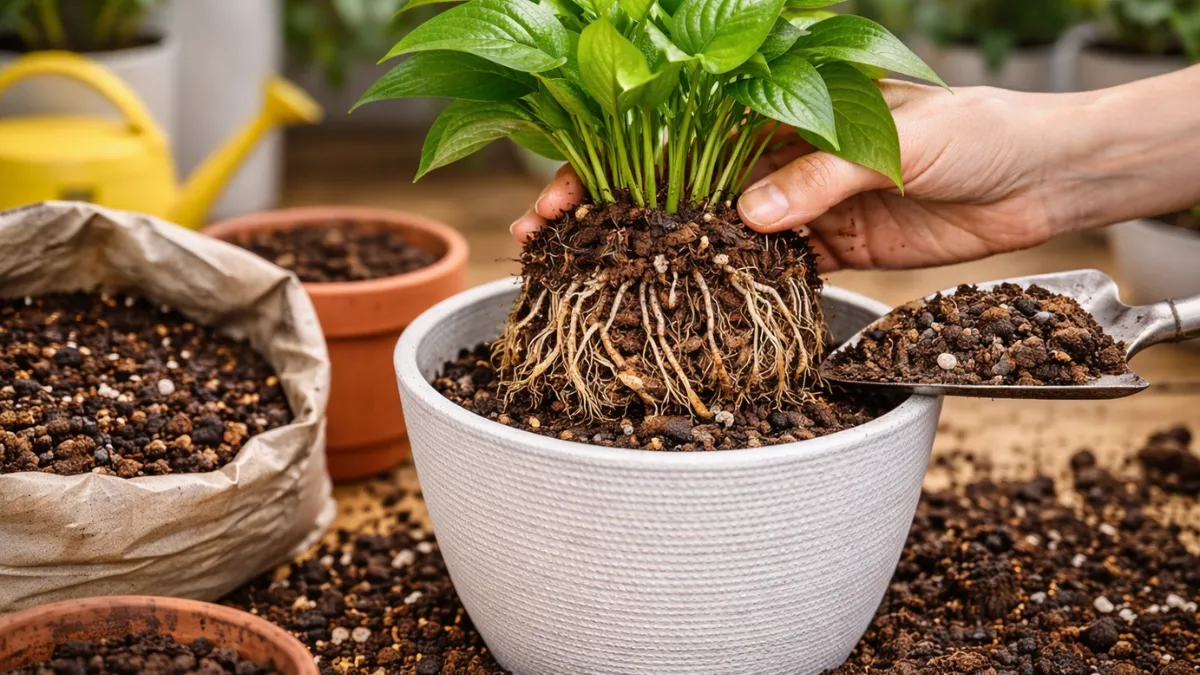
Step 4: Repot in fresh, well-draining soil
Always use fresh potting mix. Old soil often retains too much moisture and has poor aeration. Be sure to choose a pot with proper drainage holes and avoid reusing decorative containers without drainage.
Mistakes That Cause Root Rot to Return
Many indoor plants die even after "treatment" because the underlying cause was never addressed. Watering based on a calendar schedule instead of soil moisture often leads to a recurrence of the problem. Low-light rooms also slow evaporation, keeping the roots wet for longer periods.
Another common mistake is using oversized pots. Large pots hold more soil and moisture than small roots can handle. Fertilizing immediately after repotting can also stress recovering roots.
Root Rot Recovery : What Works vs. What Doesn't
| Action | Works | Doesn’t Work |
|---|---|---|
| Trimming roots | Removes infection | Ignoring damaged roots |
| Fresh soil | Improves airflow | Reusing old soil |
| Drainage holes | Prevents water buildup | Decorative pots only |
| Light watering | Allows recovery | Frequent watering |
Related Articles:
Indoor Plants : Complete Beginner-to-Expert Guide (2026 Edition)
How Long Does Recovery Actually Take?
Root recovery is often slow and frequently invisible at first. Even with proper treatment, the leaves may not show improvement for several weeks. Under stable conditions, new root growth usually begins within two to four weeks.
Don't expect quick results. Plants prioritize rebuilding their roots before producing new leaves. Avoid disturbing the plant or changing its care routine during this time.
Related Articles:
Roots Are Healthy But Plant Not Growing? Hidden Reasons Explained
How to Prevent Root Rot in the Future
Prevention is always better than cure. Check the soil moisture by touch rather than following a fixed schedule. Water only when the top layer feels dry. Use pots that allow excess water to drain easily.
Choose potting mixes designed for indoor plants, not garden soil. Improve air circulation around your plants and avoid placing them in consistently dark or damp locations. Prevention is mostly about patience and observation, not extra effort.
Related Article:
Burdock Root (Bur Ka Potato) Plant Guide : Benefits, Uses, How to Grow & Complete Care
Final Thoughts on Protecting Indoor Plants from Root Rot
Root rot is serious, but it's not always a death sentence. Early intervention, careful pruning, and improved watering habits can save many indoor plants. The key is to address the environment around the roots, not just the symptoms. With consistent care and realistic expectations, most plants can regenerate healthy roots and gradually regain their strength over time.