

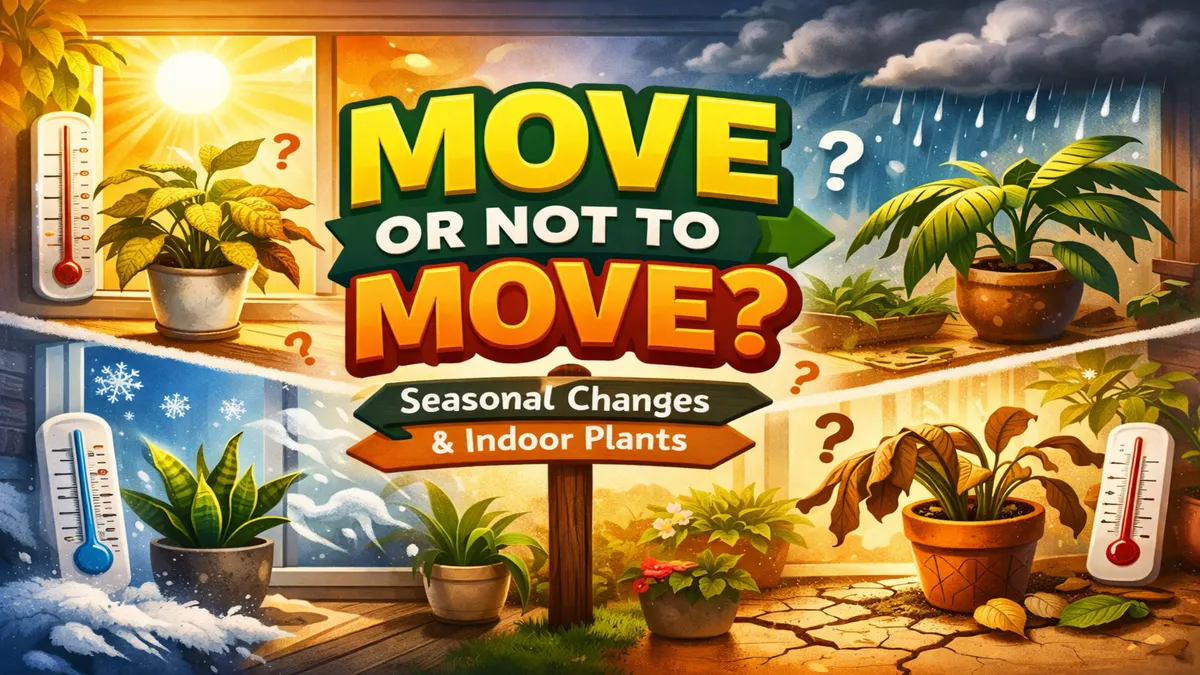
Changing seasons often create a new source of confusion for indoor plant enthusiasts. In my own home, I notice that my plants thrive one month, and then the next, their growth suddenly slows down. The direction of light changes, the air becomes dry or cold, and the temperature fluctuates without warning. Many people assume the plant is unhealthy, but the real question is simple: Should indoor plants be moved when the seasons change, or should they be left alone to adjust naturally?
Why this problem actually occurs
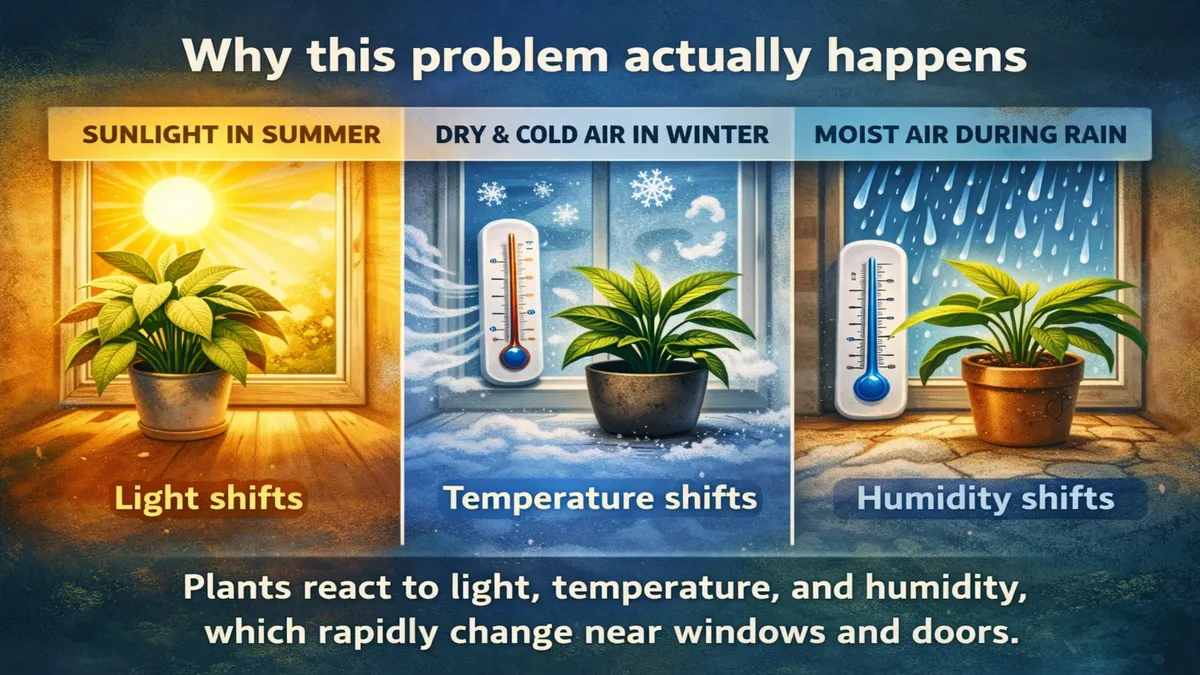
Indoor plants don't understand seasons the way humans do. Instead, they simply react to the intensity of light, the room temperature, and the airflow around them. But when the seasons change, these three factors change rapidly inside homes, especially near windows, doors, and balconies.
Related News



In the summer, sunlight is intense and direct. But in the winter, cold air seeps in through cracks and windows. During the monsoon season, rooms remain humid for extended periods. Plants don't suffer because of the changing seasons themselves, but because their usual location is no longer comfortable for them.
Some signs that your plant is stressed
• Plants always show signs of stress, albeit subtly. You just need to observe carefully.
• Their leaves turn yellow or pale.
• The tips of the leaves dry out or burn.
• Their growth suddenly slows down.
• The leaves wilt even after watering.
Examples
My money plant thrived near the window during the winter. But when summer arrived, the leaves started to burn in the same spot. My snake plant, placed near the balcony door, stopped growing during the winter due to the cold night air. The same plants, the same pots, different seasonal stresses.
What actually works in real homes
You shouldn't move your houseplants around constantly. They also suffer if their location is unsuitable. The solution isn't to move them every day. It's about making small, thoughtful adjustments. Only move a plant when there's a clear reason, and make the changes gradually so the plant can adjust.
Small changes that help a lot
|
|---|
Some common mistakes people repeatedly make:
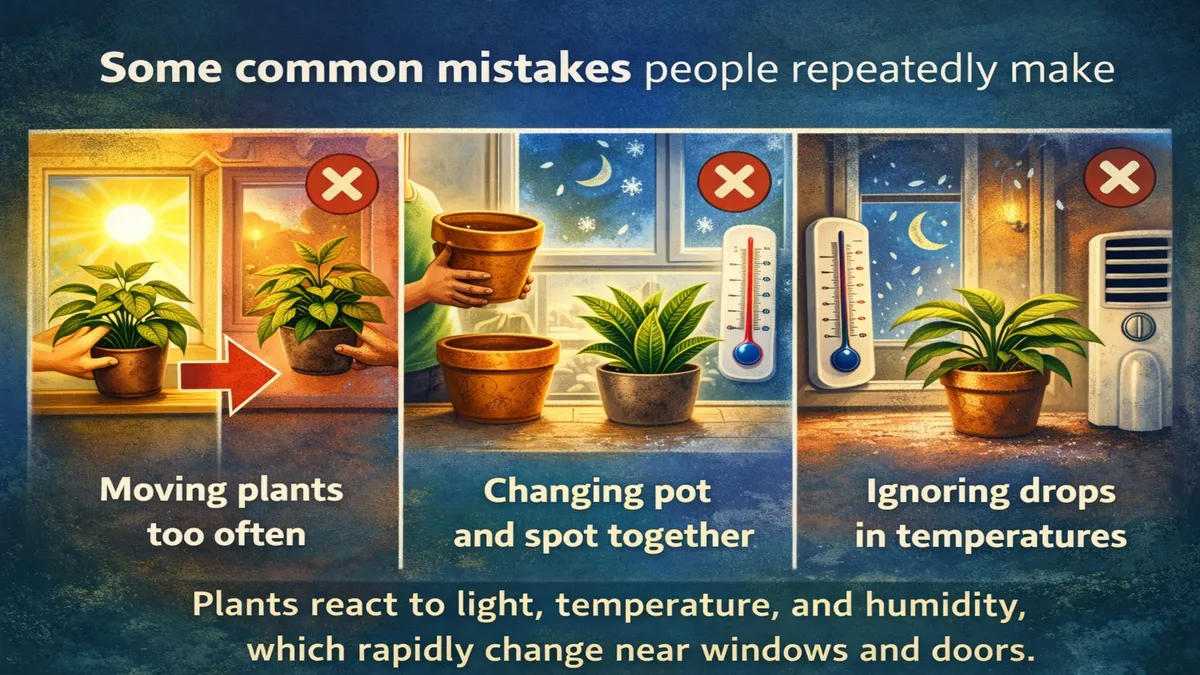
• Moving plants every few days
• Changing the pot and location simultaneously
• Ignoring drops in nighttime temperatures
• Placing plants near AC vents or heaters
• Treating all plants the same
One last thing from my experience
What I've learned from growing plants at home for many years is that consistency is more important than constant fussing. Because seasonal changes only require minor adjustments, not panic. Observe your plant, pay attention to changes in light and air, and make adjustments only when necessary. After that, give the plant time. Calm, consistent care always works better than frequent moving and rearranging.