

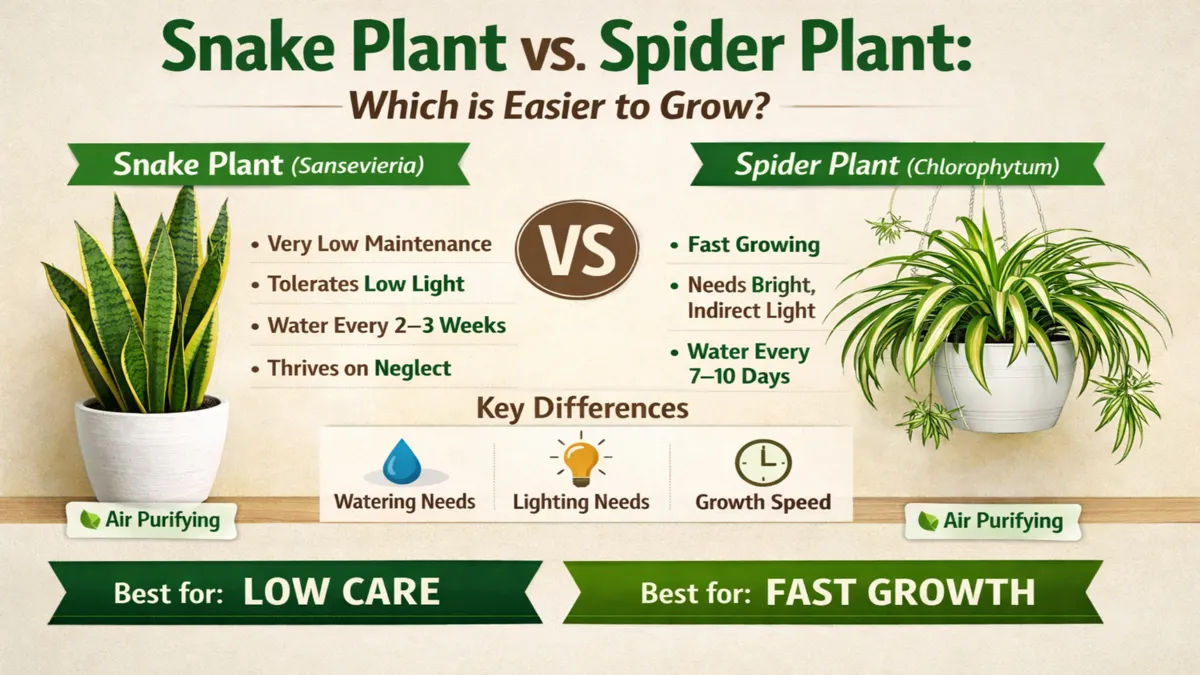
If you are looking for the easiest indoor plant, the Snake Plant is often the best choice. It tolerates low light, irregular watering, and dry indoor air much better than most other indoor plants.
Spider Plants are also easy for beginners, but they require a little more care especially when it comes to watering and lighting.
Related News

Based on my own experience growing both plants at home, Snake Plants tolerate neglect much better, whereas Spider Plants grow faster but tend to wilt quickly if there is any lapse in care.
Snake Plant vs. Spider Plant: A Basic Overview
Both of these plants are extremely popular indoor plants because they:
• Are easy for beginners
• Adapt well to indoor conditions
• Look decorative in modern homes
• Are known for their air-purifying qualities
Also Read : Spider Plant vs Snake Plant : Which Is Better for Your Home?
However, their care requirements differ slightly, which determines which plant will feel easier for a beginner to manage.
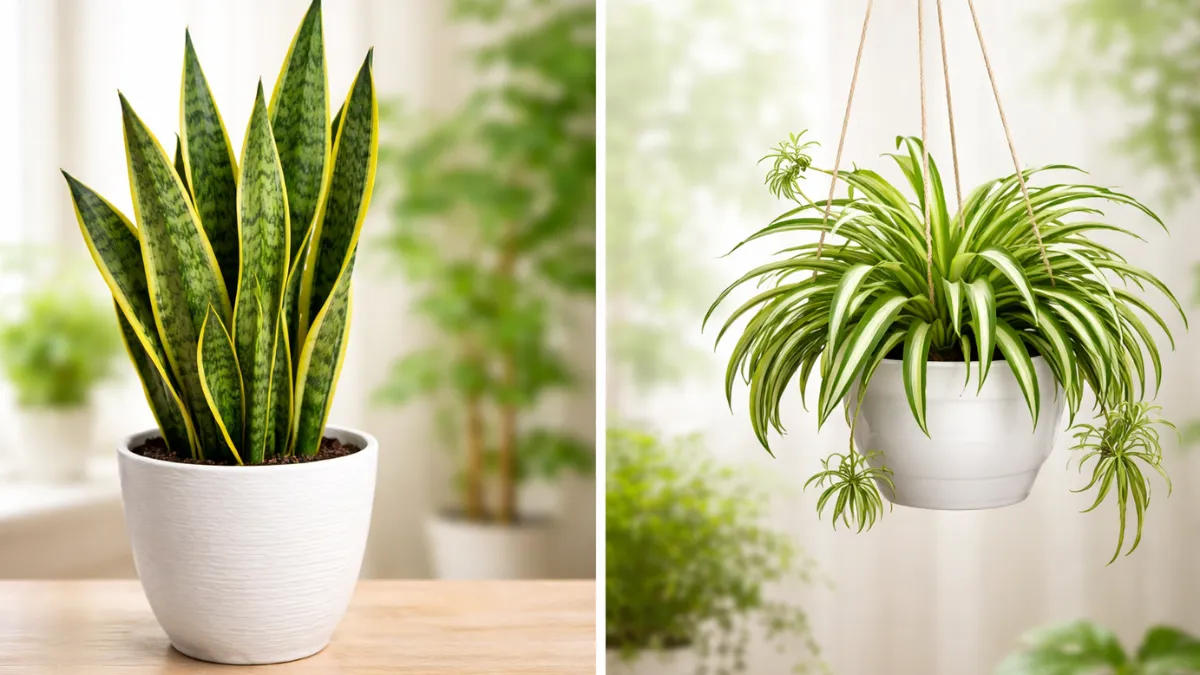
| Feature | Snake Plant | Spider Plant |
|---|---|---|
| Scientific Name | Sansevieria / Dracaena trifasciata | Chlorophytum comosum |
| Water Needs | Very low | Moderate |
| Light Needs | Low to bright light | Medium to bright light |
| Growth Speed | Slow | Fast |
| Maintenance | Very low | Low |
Snake Plant Care (Why It Is One of the Easiest Plants)
Snake Plants are often recommended to beginners because this plant is extremely forgiving of mistakes.
Key Care Requirements
Lighting
Snake Plants thrive in the following environments:
• Low-light rooms
• Indirect sunlight
• Brightly lit rooms
They can even survive in corners where many other plants would fail to survive.
Watering
This is where Snake Plants prove to be incredibly tolerant.
General Watering Schedule:
• Under normal conditions: once every 2–3 weeks
• In winter: occasionally once a month
Beginners often make one common mistake: overwatering, which can lead to root rot.
I personally lost my first Snake Plant several years ago because I treated it like a tropical plant and watered it every week. Once I cut back on the watering, my next plant thrived effortlessly.
Humidity
Snake Plants grow well in the following environments:
• Dry apartments
• Air-conditioned rooms
• Homes with low humidity
This makes them perfectly suited for modern indoor environments.
Spider Plant Care (Still easy, but requires slightly more attention)
Spider Plants are also easy for beginners, but they are more sensitive to changes in their care routine.
Basic Care Requirements
Lighting
Spider Plants prefer the following conditions:
• Bright, indirect light
• Locations near windows
• Filtered sunlight
In very dark corners, they may grow slowly or produce fewer new plantlets.
Watering Spider Plants generally prefer soil that remains slightly moist, but never soggy.
General Schedule:
• Every 7–10 days, depending on the season
If watering is inconsistent, the tips of the leaves may turn brown a common occurrence with this plant.
Humidity
Spider Plants prefer moderate humidity, though they still adapt well to average indoor air conditions.
Snake Plants vs. Spider Plants for Air Purification
Many people compare Snake Plants and Spider Plants in terms of air purification capabilities, but the reality is far more complex.
NASA research has shown that, in controlled environments, both plants can help remove small amounts of certain indoor air pollutants. However, typical homes feature the following elements:
• Air circulation
• Open spaces
• Ventilation
Therefore, a single plant cannot completely purify the indoor air.
The Reality:
Plants can contribute slightly to air quality, but they should not be considered a substitute for proper ventilation or air filters.
Both plants remain excellent choices, as they provide natural greenery and a sense of tranquility within the home.
Benefits of the Spider Plant vs. Snake Plant
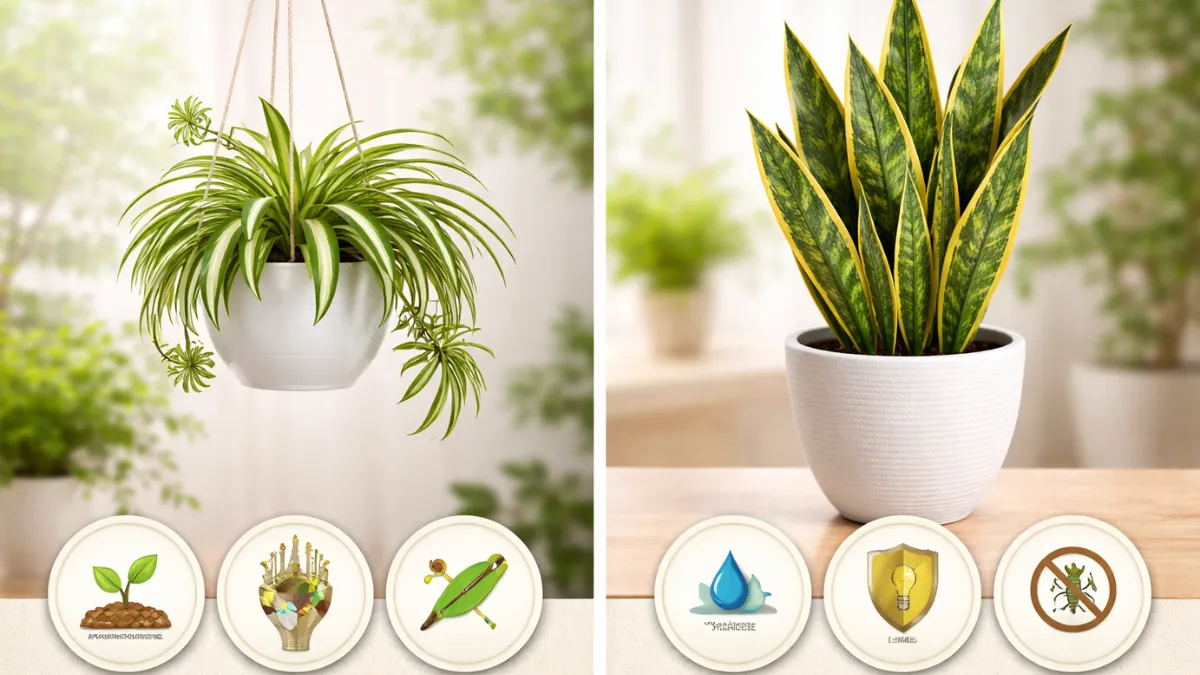
Benefits of the Snake Plant
• Requires extremely low maintenance
• Survives even with neglect
• Tolerates low-light conditions
• Rarely affected by pests
• Offers a modern, decorative aesthetic
Benefits of the Spider Plant
• Easily propagates new plants
• Grows faster than the Snake Plant
• Looks beautiful in hanging baskets
• Easy to grow
In my experience, Spider Plants tend to look more visually striking and continuously produce new leaves, whereas Snake Plants have a simpler, more decorative aesthetic.
Snake Plants vs. Spider Plants: Regarding Mold
Neither of these plants can directly remove mold from walls or ceilings.
However, plants can have a slight influence on indoor humidity levels.
Spider Plants release more moisture through transpiration than Snake Plants; therefore, they are not ideal for highly humid environments where mold growth is already a potential concern.
In such settings, Snake Plants are often the superior choice because:
• They require less water.
• They prefer dry soil.
But again, plants cannot resolve mold issues entirely. Proper ventilation and humidity control remain essential.
Snake Plants vs. Spider Plants vs. Sansevieria
This question often causes confusion among people.
Sansevieria is, in fact, the former botanical name for the Snake Plant.
Recently, botanists have reclassified it as a member of the Dracaena family. however, most plant enthusiasts still refer to it as either the Snake Plant or Sansevieria today.
Therefore, when people search for:
• Snake Plant vs. Sansevieria
they are essentially referring to the exact same plant.
Snake Plants vs. Peace Lilies (A Quick Comparison)
Many beginners also tend to compare Snake Plants with Peace Lilies.
| Plant | Difficulty |
|---|---|
| Snake Plant | Very easy |
| Spider Plant | Easy |
| Peace Lily | Moderate |
Peace Lilies require consistent watering and humidity, which makes caring for them slightly more challenging compared to the other two plants.
Practical Tips for Successfully Growing Both Plants
If you wish to successfully grow both of these plants indoors, the following tips will prove to be extremely useful.
1. Use soil that drains easily
Neither plant likes soil where water tends to stagnate.
A simple mixture works very well for this:
• Potting soil
• Perlite
• Sand
2. Avoid overwatering
Overwatering is the most common mistake made with indoor plants.
Always check the soil before watering.
3. Choose the right pot
Pots with drainage holes reduce the risk of root rot.
4. Clean the leaves periodically
Dust accumulation on the leaves can reduce the amount of light the plant receives.
The Verdict: Which plant is easier to grow?
If your goal is to grow a plant that requires the absolute minimum amount of care, the winner is:
The Snake Plant.
Here are the reasons why:
• It requires very little water
• It can thrive even in low-light rooms
• It is forgiving it won't suffer even if you neglect its care a little
However, if you enjoy these features, the Spider Plant is also an excellent choice for beginners:
• It is a fast-growing plant
• It is ideal for planting in hanging baskets
• It is easy to propagate (create new plants)
As long as their basic needs are met, both of these plants can flourish indoors with very little maintenance.
Written from real indoor plant care experience for IndoorPlantify.