

Indoor plants can transform a drab room into a calm and refreshing environment. However, the first question that often arises in the minds of beginners is: Which plant is the easiest to start with?
Almost every list of recommended plants for beginners includes two specific varieties: the Snake Plant and the Spider Plant. People often compare options such as "Spider Plant vs. Snake Plant: Which is better?", Spider Plant vs. Snake Plant as air purifiers, or even consider specific placements like Snake Plants for the bedroom.
Related News

Both plants are suitable for beginners, but they are not identical. Each possesses its own unique strengths, a few minor drawbacks, and slightly different care requirements.
This guide outlines the key differences, benefits, and practical care tips to help beginners confidently choose the right plant for their needs.
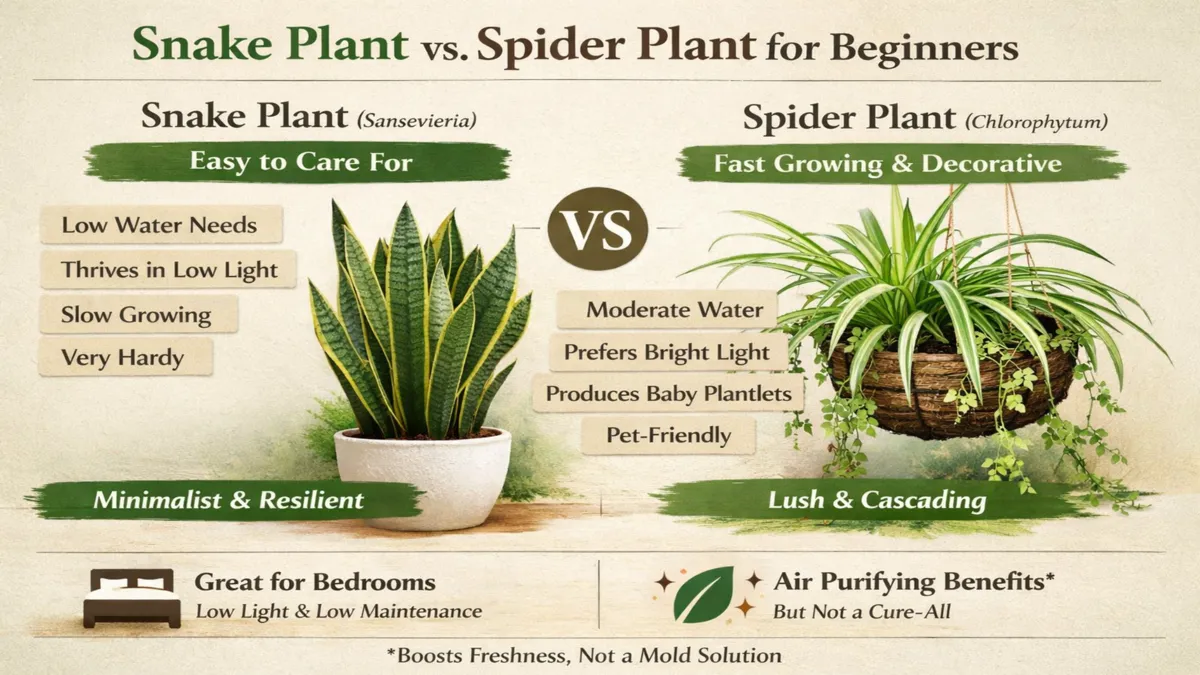
The Short Answer: Snake Plant vs. Spider Plant
If you are looking for the absolute easiest plant to care for, the Snake Plant is generally the superior choice.
Reasons:
• Requires minimal maintenance
• Survives even in low-light conditions
• Needs very little water
• Grows slowly and maintains a tidy appearance
However, the Spider Plant grows much faster and offers a more decorative aesthetic—especially with its cascading baby plantlets.
Also Read : Spider Plant vs Snake Plant : Which Is Better for Your Home?
Answer in Brief:
Snake Plant = Easy to care for
Spider Plant = Fast-growing and visually appealing
Both plants are excellent choices for beginners.
Snake Plant vs. Spider Plant: Key Differences
Snake Plant (Sansevieria / Dracaena trifasciata)
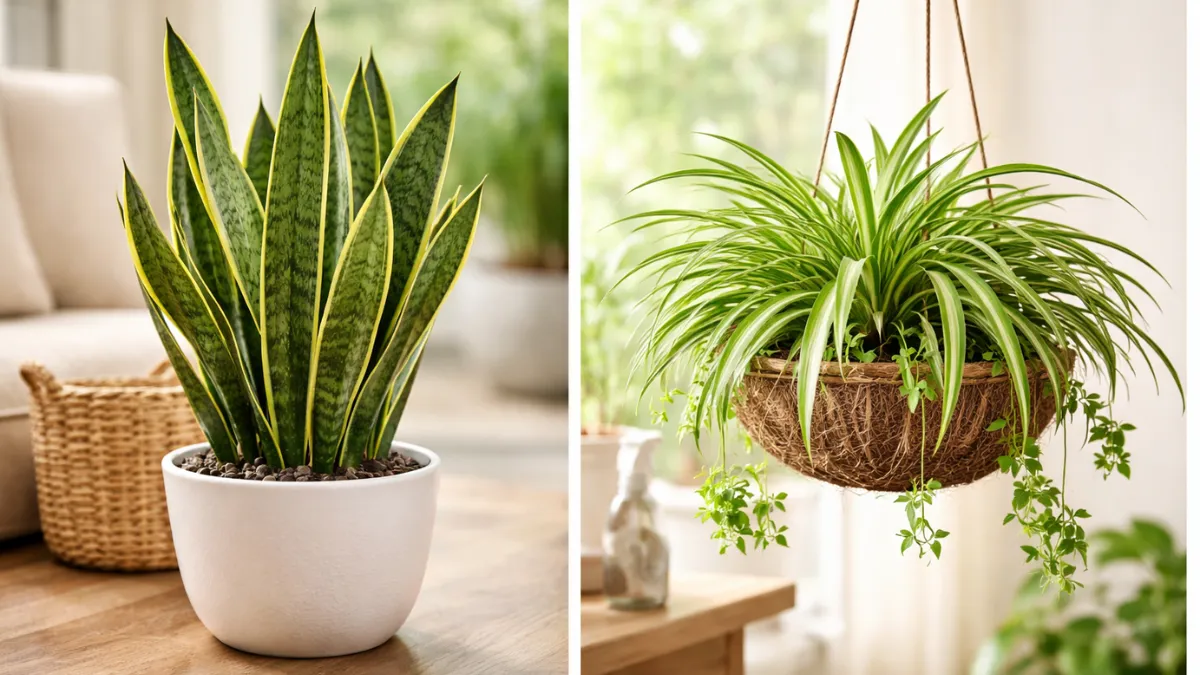
The Snake Plant features long, upright leaves that grow in a blade-like formation. Their distinct texture and structure make them an ideal fit for modern interiors and minimalist living spaces.
Key Features:
• Drought-tolerant
• Can thrive even in low-light environments
• Slow-growing
• Extremely hardy
Beginners particularly love Snake Plants because they are incredibly resilient; they do not perish easily, even if they are occasionally neglected. Spider Plant (Chlorophytum comosum)
The leaves of the Spider Plant are long and arching, and they produce small offshoots known as plantlets.
These trailing plantlets make them ideal for the following locations:
• Shelves
• Hanging baskets
• Window corners
Spider Plants grow faster than Snake Plants, which makes them visually appealing to beginners.
Spider Plant vs. Snake Plant: Which is Better?
For beginners, the Snake Plant is slightly better because it is easier to care for.
Here is a practical comparison:
| Feature | Snake Plant | Spider Plant |
|---|---|---|
| Water tolerance | Very high | Moderate |
| Light tolerance | Very flexible | Prefers medium light |
| Growth speed | Slow | Fast |
| Decoration | Minimalist | Decorative |
| Care difficulty | Very easy | Easy |
If you frequently forget to water your plants, the Snake Plant is a safer choice.
If you prefer to see distinct growth and trailing plantlets, you may find the Spider Plant more satisfying.
Spider Plant vs. Snake Plant as Air Purifiers: The Reality
Many articles claim that these plants significantly purify indoor air. This belief stems primarily from a famous NASA study.
However, there is an important reality to consider.
Plants like the Spider Plant and Snake Plant can help remove small amounts of specific chemicals in a controlled environment, but their impact in an average home is limited.
To make a significant difference in air quality, you would need dozens of plants in a single room.
So, the truth is:
• They can offer some minor assistance.
• They cannot replace proper ventilation or air purifiers.
Nevertheless, they enhance mental well-being and add greenery, which can make a room feel fresher.
Snake Plants for the Bedroom: Is It a Good Idea?
Yes, snake plants are commonly kept in bedrooms.
People favor them because they possess the ability to continue exchanging gases even at night through a process known as CAM metabolism.
However, expectations should remain grounded in reality.
A single plant will not bring about a drastic change in oxygen levels; nevertheless, it is completely safe and can contribute to a more tranquil atmosphere in the bedroom.
Snake plants are also beneficial in the bedroom because:
• They require very little water.
• They can thrive even in low-light conditions.
• They require minimal maintenance.
Benefits of Spider Plants
Spider plants offer several distinct advantages for indoor spaces.
1. Rapid Growth
Spider plants grow much faster than many other indoor plants. This allows novice gardeners to experience a sense of success relatively quickly.
2. Easy Propagation
New plants can be grown simply by cutting off the small, hanging plantlets and planting them in soil.
This is one of the easiest methods for propagating new plants.
3. Safe for Pets (Mostly)
Spider plants are generally not considered toxic to cats and dogs, although pets may occasionally chew on their leaves.
4. Decorative Appeal
Its cascading foliage and small plantlets make the Spider Plant quite visually appealing, especially when planted in hanging baskets.
Snake Plant Care (A Beginner's Guide)
Snake Plants are quite hardy and can tolerate minor mistakes, but basic care is still essential.
Lighting
They can thrive in the following lighting conditions:
• Low light
• Indirect light (not direct)
• Bright indirect light
However, they grow faster when receiving moderate sunlight.
Watering
Overwatering is the most common mistake.
Water only when the soil has dried out. A typical schedule is:
• Every 2–3 weeks in the summer
• Once a month in the winter
Soil
Use well-draining soil; ideally, use a cactus or succulent mix.
My Personal Experience
From my own experience with indoor gardening, I have observed that Snake Plants survive even in conditions where many other plants would struggle to survive. Once, while I was away on a trip, I didn't water a plant for nearly a month, yet it still looked healthy.
Snake Plant vs. Peace Lily
Another popular comparison among beginners is between the Snake Plant and the Peace Lily.
Peace Lilies are beautiful to look at, but they require a bit more care.
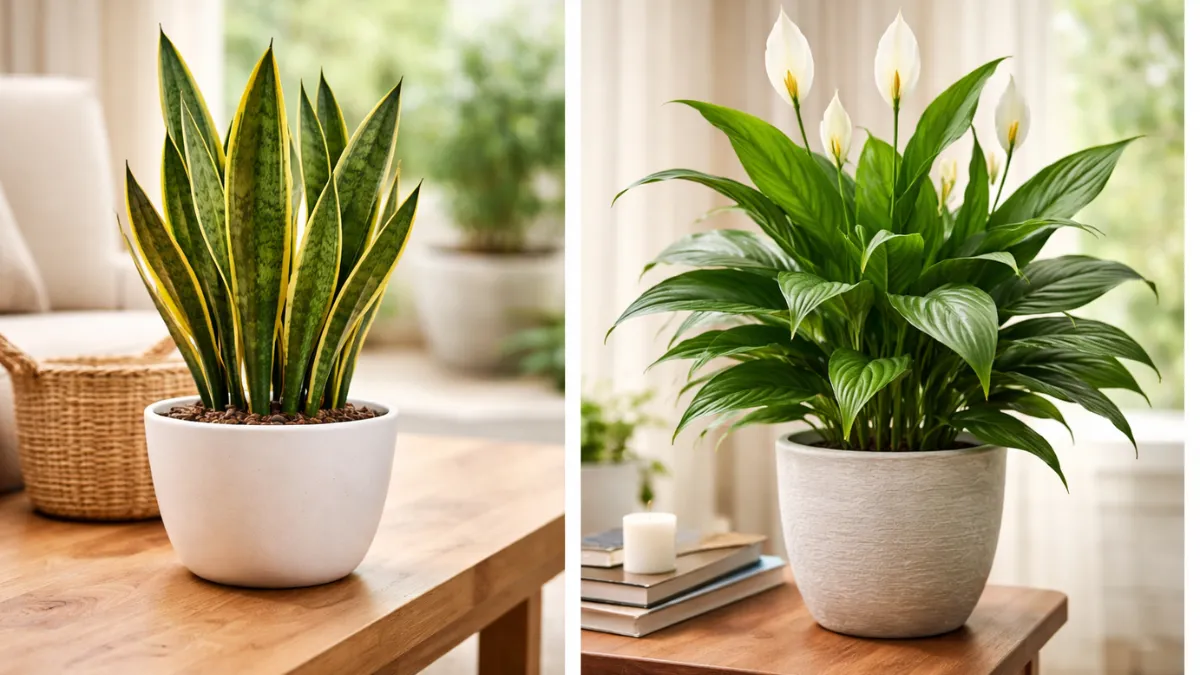
Key Differences:
| Feature | Snake Plant | Peace Lily |
|---|---|---|
| Water need | Low | Medium |
| Light tolerance | High | Medium |
| Flowering | Rare indoors | Regular white flowers |
| Care difficulty | Very easy | Moderate |
Peace Lilies are visually attractive, but they require regular watering. Beginners who tend to forget to water their plants may find caring for them challenging.
Snake Plant vs. Spider Plant for Mold
Some people believe that certain plants can remove mold from indoor air.
There is no concrete scientific evidence that Snake Plants or Spider Plants actively eliminate mold spores from a room.
Plants may slightly improve humidity balance and air circulation, but they should not be considered a solution for mold.
If mold is present, the actual remedies are:
• Ventilation
• Reducing humidity
• Cleaning affected areas
Plants alone cannot solve a mold problem.
Disadvantages of Spider Plants
Spider Plants are easy to grow, but they do have a few minor drawbacks.
1. Browning Leaf Tips
The tips of the leaves on many spider plants turn brown due to the following reasons:
• Minerals present in tap water
• Irregular watering
This does not harm the plant, but it can detract from its aesthetic appeal.
2. Higher Water Consumption
Spider plants tend to dry out faster than snake plants and require more frequent watering.
3. Taking Up Too Much Space
Since they produce numerous small plantlets, they can quickly become overgrown if they are not pruned.
Personal Mistake
I made a mistake early on by placing my spider plant in a spot with very low light. The plant survived, but it stopped producing new plantlets. Moving it to a window with moderate light resolved the issue.
Reality Check: No Plant Is Entirely Care-Free
Even the easiest plants require basic care.
Limitations to Keep in Mind:
• Snake plants can rot if overwatered.
• Spider plants do not thrive in very dark corners.
• Both plants exhibit slower growth during the winter months.
Therefore, beginners should view these plants as low-maintenance options requiring minimal care rather than as plants that require absolutely no care at all.
Practical Tips for Beginners
If you are just starting out with indoor gardening:
1.Start with either a snake plant or a spider plant.
2.Use pots that have drainage holes.
3.Avoid overwatering.
4.Place your plants in a spot that receives indirect sunlight.
5.Gradually learn the proper technique for watering.
You may also find these beginner-friendly guides helpful:
• Indoor Plants That Thrive in Low Light
• A Guide to Growing Indoor Plants
• The Best Plants for North-Facing Windows
These topics can help boost your confidence in caring for plants.
Final Thoughts
For beginners, both the snake plant and the spider plant are excellent choices. However, if you want to keep a plant alive for an extended period with minimal effort, Snake Plants are generally the safer choice.
If you prefer fast-growing, decorative, and trailing plants, Spider Plants tend to be more visually appealing.
In fact, many plant enthusiasts eventually end up keeping both types, as each plant lends a unique beauty to an indoor space.
Written from real indoor plant care experience for IndoorPlantify.