

Reviewed and compiled by IndoorPlantify Horticulture Team — verified botanical sources & seasonal plant health data.
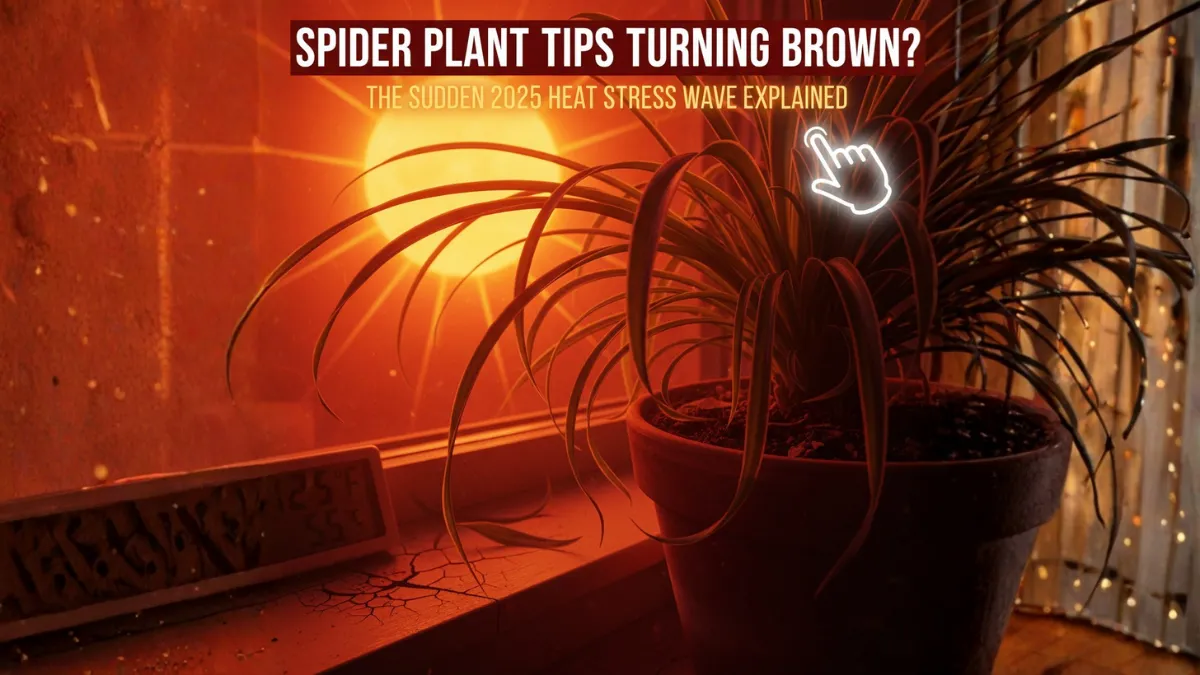
The Heat Wave Struggle: Why Spider Plant Tips Are Turning Brown in 2025 Spider plant life, regarded for their air-purifying powers and newbie-friendly nature, are dealing with an unexpected crisis in 2025. Across many regions, unexpected heat spikes, dry indoor air, and growing humidity imbalance have brought on a new problem: brown, crispy, or burnt leaf recommendations. Data Insight: According to the 2025 Indoor Plant Health Survey, over sixty eight% of houseplant owners noticed brown recommendations on spider plants for the duration of summer heat spikes.
Related News
What causes browning? (It's not just about overwatering.)
Most people think that overwatering isn't the only reason for browning of leaf tips. But this year, in 2025, something different is happening. The main reason is a heat stress wave that directly impacts indoor plants.
1. High Temperatures (above 32°C / 89°F)
To keep spider plants healthy, keep them within a temperature range of 18–28°C, but in most balconies, temperatures now reach 35°C+, causing leaf tips to burn and moisture loss.
2. Low Indoor Humidity
Air conditioners, heaters, and dry weather reduce air humidity. This causes leaves to lose moisture, leading to crispy and brown tips.
3.Mineral (Fluoride and Salt) Accumulation in Tap Water
Spider plants are sensitive to mineral-rich tap water, and increased evaporation during hot summer air can cause salt to accumulate rapidly in the soil, leading to leaf edge burn.
4. Direct Sunlight
The intense summer sun of 2025 can burn leaves, especially those placed near windows.
Spot the Signs Early: Brown Tips vs. Root Rot vs. Heat Burn

| Leaf Condition | Likely Cause | Fix |
|---|---|---|
| Crispy brown tips | Heat stress / dry air | Mist and increase humidity |
| Soft brown patches | Overwatering / root rot | Improve drainage |
| Thin brown lines | Mineral build-up | Switch to filtered water |
Data Pulse : Indoor plants lose 3X more moisture during heat waves, even in AC rooms.
Quick Tips to Save Your Spider Plant (2025 Heat Care Guide)
Mist and Humidity Boost
• Use a humidity tray or humidifier to prevent your spider plant from damaging.
• Lightly mist the leaves twice a day (morning and evening).
Best Place
• Keep the plant in bright, indirect light, but remember to avoid direct sunlight.
• Maintain a temperature of around 20–25°C wherever you keep your spider plant.
Water your plants smartly
Don't pour water directly onto the plant. Filter the water first before watering. And, of course, you can boil and cool rainwater before using it.
Water only when the top of the soil is dry.
• Don't let water accumulate in the pot tray. Always reuse filtered water.
• Perform a mineral detox every 45 days.
• Flush the soil by running clean water through the pot to remove salt buildup.
Avoid Browning in the Summer (Easy Setup That Works)
| Factor | Ideal Range |
|---|---|
| Temperature | 20–28°C |
| Humidity | 50–65% |
| Light | Bright, indirect |
| Watering | Weekly (or when top soil is dry) |
2025 Plant Care Trend : Spider Plants Love Group Housing
Planting spider plants near other moisture-loving houseplants, such as peace lilies and ferns, naturally increases humidity and reduces heat stress.
Final Words
Spider plants are notoriously hardy survivors, but the 2025 heat stress wave has challenged even the most robust indoor plants. By making small adjustments to humidity, temperature, and water quality, you can keep them lush and healthy.