

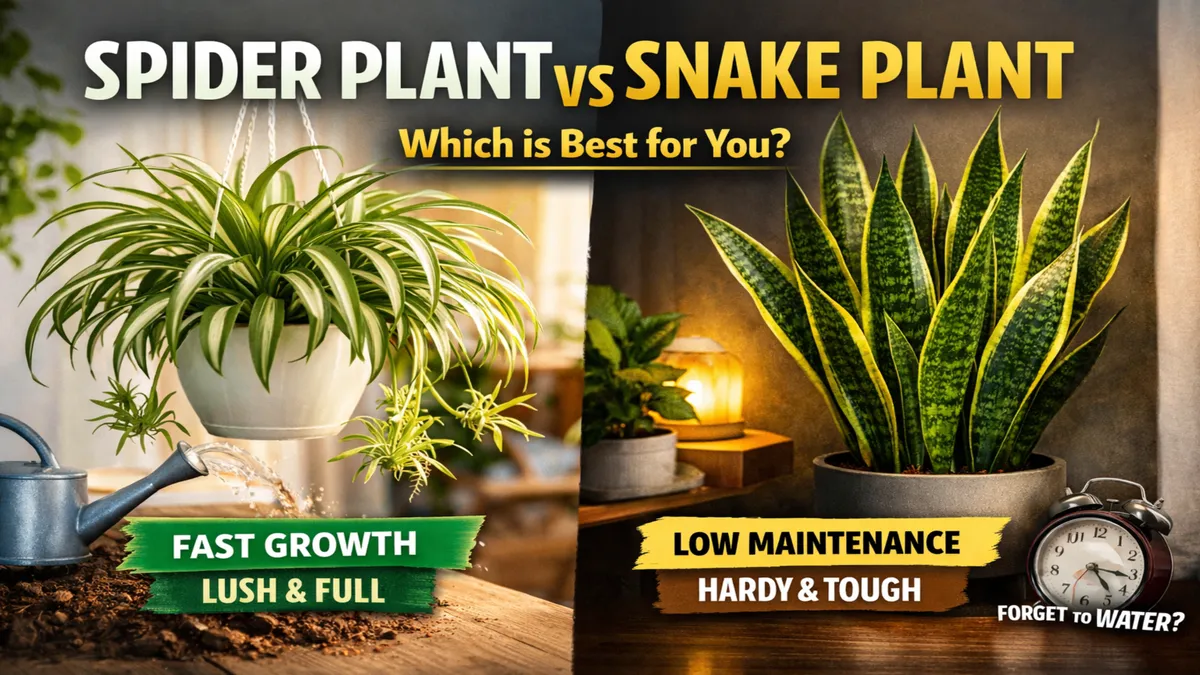
Choosing between a spider plant and a snake plant seems easy, but the right choice depends on how you actually live with plants. Both are popular, easy for beginners, and readily available, yet they behave quite differently indoors. I've grown both in small apartments and brightly lit rooms, and the differences quickly become apparent over time. This comparison focuses on real-world care, not marketing claims, so you can confidently decide which plant is best for your home and routine.
Quick Answer:
Related News

Choose a spider plant if you want fast growth, lush foliage, and a noticeable transformation.
Choose a snake plant if you want a hardy, low-maintenance plant that can survive neglect and low light.
Appearance and Growth Habit
Spider plants have long, arching leaves that spread outwards, making them perfect for shelves and hanging pots. But many people ask which plant looks fuller in small rooms, and spider plants usually win in this regard because they have a more sprawling appearance.
Snake plants grow upright, with stiff, sword-like leaves. They maintain their structure and don't spread out, which makes them ideal for corners or tight spaces. If you're wondering if a snake plant is better for minimalist interiors, the answer is yes because of its clean, upright form.
Light Requirements
Spider plants prefer bright, indirect light. They can survive in medium light, but they grow more slowly and lose their vibrancy. In my own experience, placing one too far from a window resulted in faded leaves within just a few weeks. Many beginners wonder if spider plants can survive in low light, and while they can, they won't thrive.
Snake plants tolerate low light very well. I've kept a snake plant in a spot without direct sunlight for months with no problems. That's why people often ask which indoor plant grows best without sunlight, and everyone always comes back to the snake plant.
Watering and Maintenance
Spider plants prefer evenly moist soil. Letting them dry out too much causes the leaf tips to turn brown, which was a problem I initially had. If you're wondering how often to water a spider plant indoors, expect to water it about once a week, depending on the season.
Snake plants prefer dry soil and don't like being overwatered. One mistake I made was watering it like my other plants, which caused root rot. That's why "Does overwatering kill snake plants?" is such a common question that everyone asks.
Also Read : Spider Plant vs Snake Plant: Which Is Better Indoors? (2026 Test)
Air Quality and Health Claims
Spider plants are often praised for purifying the air, although the effect is minimal in real homes. Still, many plant owners ask if spider plants are good for indoor air quality because they make living spaces feel fresher.
Snake plants release oxygen at night, which is why people ask if snake plants are good for bedrooms. While it's not a magic cure, it is a calming, low-maintenance bedroom plant.
Growth Rate and Propagation
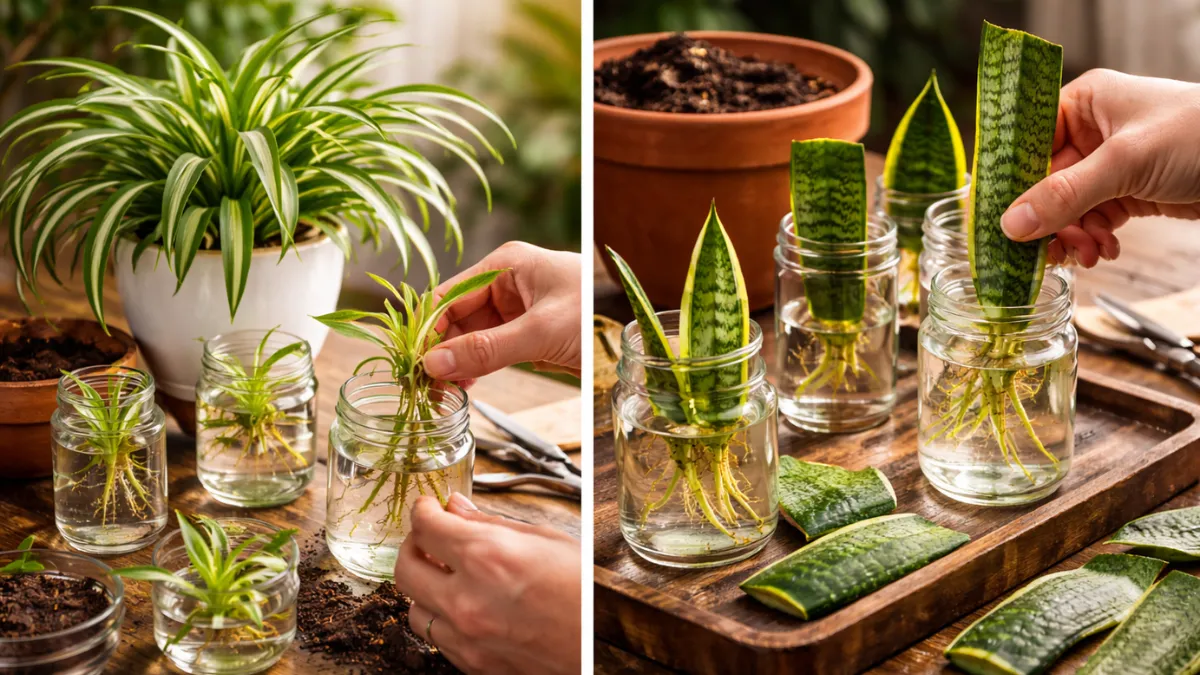
Spider plants grow quickly and produce plantlets. If you enjoy propagation, this is satisfying and visually appealing. Some people often wonder which plant grows faster, the spider or the snake plant, and the spider plant clearly wins.
Snake plants grow slowly but steadily. Propagation works, but it requires patience and time.
Durability and Long-Term Care
Spider plants quickly show stress through browning leaf tips and drooping. They respond well to care but also demand attention. This can be difficult if you travel frequently. Snake plants tolerate infrequent watering, temperature fluctuations, and low humidity. That's why the answer to the question of which indoor plant survives best despite neglect is usually the snake plant.
Quick Comparison Table
| Feature | Spider Plant | Snake Plant |
|---|---|---|
| Light | Bright indirect | Low to bright |
| Water | Moderate | Very low |
| Growth | Fast | Slow |
| Shape | Arching, soft | Upright, rigid |
| Beginner-friendly | Yes | Extremely |
Which one should you buy?
If you enjoy caring for plants, pruning, and watching things grow, you'll likely enjoy a spider plant. If your goal is a plant that will survive busy weeks without any stress, the snake plant is the safer option. A common concern for buyers is which plant is better for first-time plant owners, and frankly, the snake plant is less likely to fail.
Real-Life Experience
I grew both plants in a rented apartment where the lighting wasn't consistent. The spider plant looked beautiful but required regular attention. One thing that didn't work was placing it in a dark corner; its leaf tips quickly turned brown. The snake plant, on the other hand, thrived for months with minimal care, but its slow growth might be boring if you enjoy actively tending to your plants. This comparison is meant to help you choose based on your lifestyle rather than just trends.
Written from real-life indoor plant care experience for IndoorPlantify.