

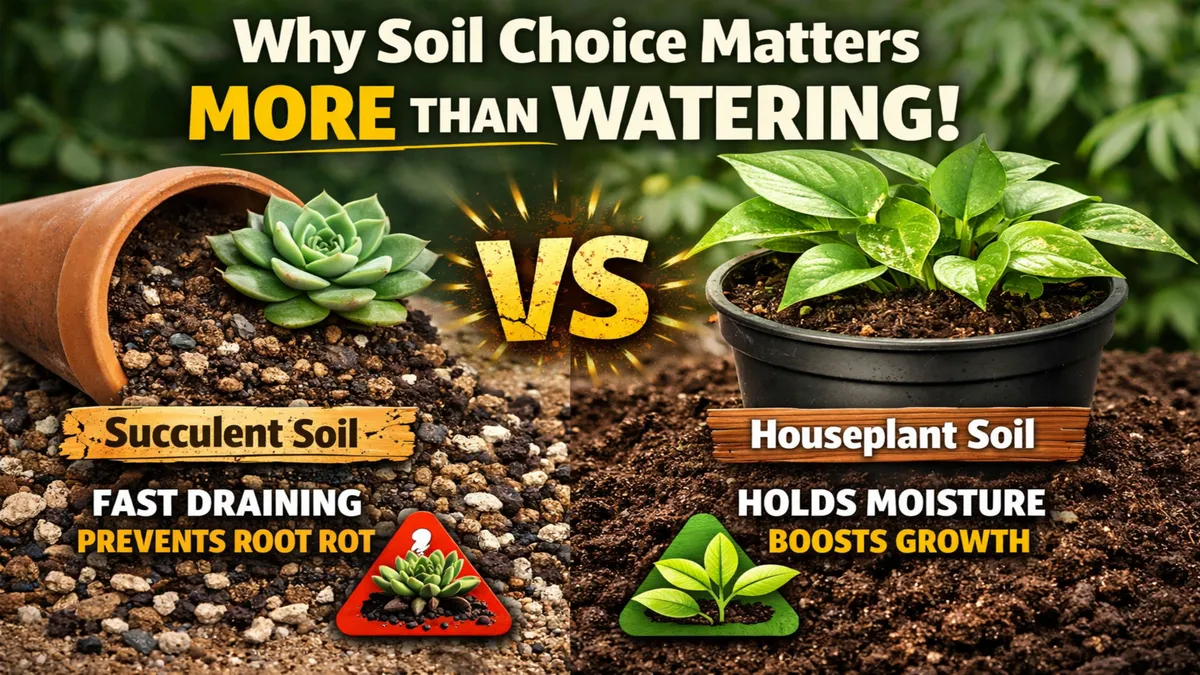
Choosing the right soil is one of those small decisions that quietly determines whether a plant thrives or slowly deteriorates. Many people use the same potting mix for every plant, then wonder why their succulents rot or their houseplants look sickly. Succulents and common houseplants require very different types of soil. One needs fast-draining soil, the other needs soil that retains moisture. Understanding this difference makes plant care easier and less frustrating.
Quick Comparison:
• Best for low light : Standard houseplant potting mix
• Best for rapid growth : Organic houseplant soil
• Best for beginners : Pre-mixed succulent soil
• Best for aeration : Succulent soil mix
Related News
Why Soil Choice Matters More Than Watering
Soil controls how long water remains around the roots. Succulents store water in their leaves and stems, so soggy soil suffocates them. Houseplants typically grow in nature in more nutrient-rich, moisture-retentive soil. When the soil doesn't match the plant type, even proper watering won't help.
Soil also affects oxygen flow, nutrient availability, and root health. A plant in the wrong soil may consistently have yellowing leaves, stunted growth, or root rot, even if light and watering seem correct. Choosing the right soil prevents problems before they start.
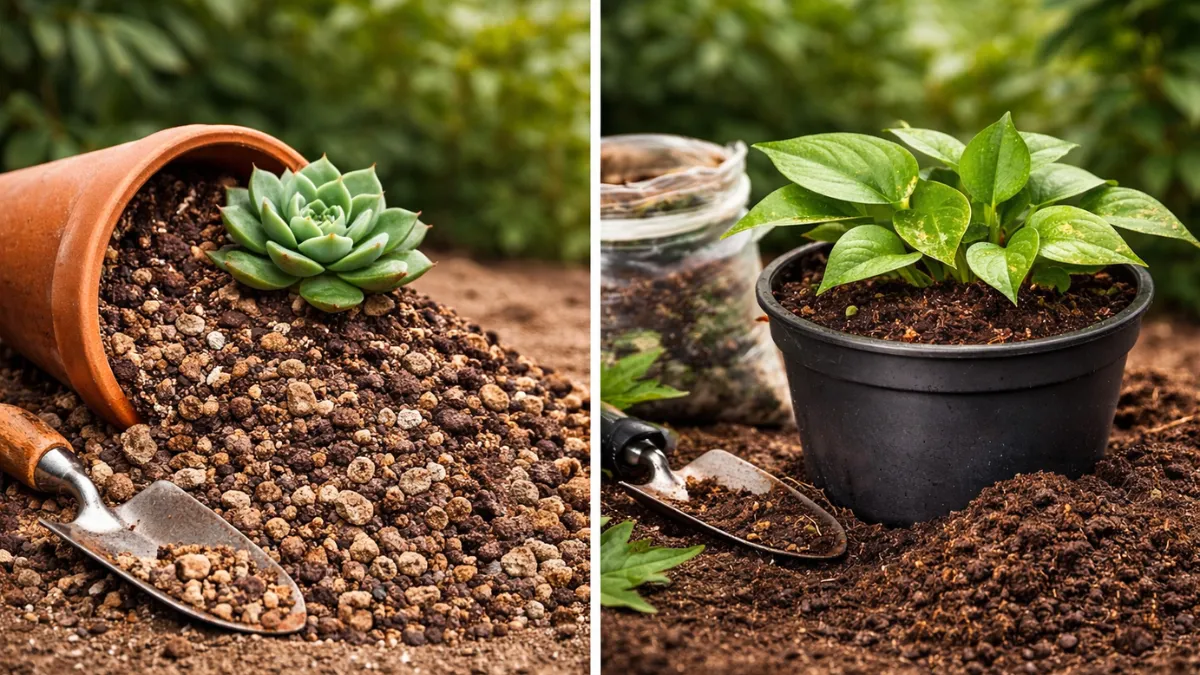
What Makes Succulent Soil Different?
Succulent soil is designed to drain quickly and dry out rapidly. It typically contains granular materials like coarse sand, perlite, pumice, or small gravel. These materials create air pockets so the roots don't sit in water for too long.
This type of soil feels light and loose in your hand. When watered, the water drains quickly instead of being absorbed. This rapid drainage mimics the arid environments in which succulents evolved and protects them from root rot indoors.
What is Houseplant Soil Designed For?
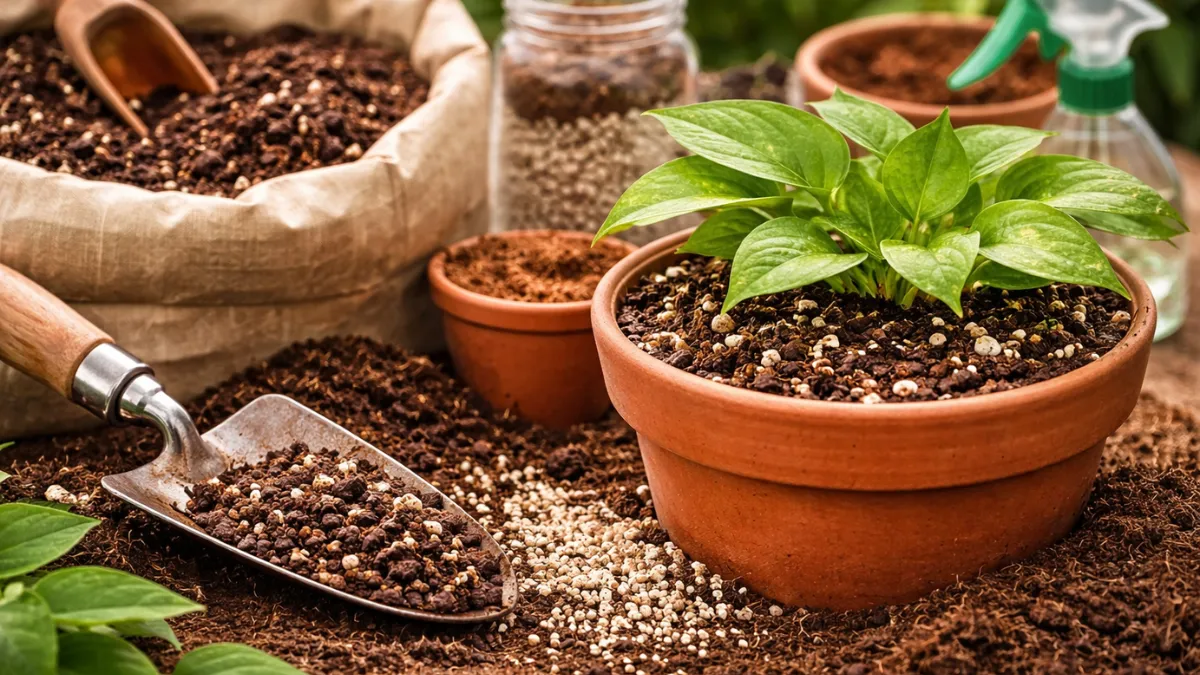
Houseplant soil is designed to retain moisture while also maintaining good aeration. It often contains peat moss or coco coir, compost, and a small amount of perlite. All of these components help retain water and nutrients to provide consistent nourishment to the roots.
Most common indoor plants, such as pothos, peace lilies, and philodendrons, thrive best in soil that remains slightly moist. This soil supports active root growth and consistent moisture levels rather than drying out quickly.
Succulent Soil vs. Houseplant Soil: Key Differences
| Feature | Succulent Soil Mix | Houseplant Soil Mix |
|---|---|---|
| Drainage speed | Very fast | Moderate |
| Water retention | Low | Medium to high |
| Texture | Gritty and loose | Soft and fluffy |
| Root airflow | Very high | Balanced |
| Risk of root rot | Low | Higher if overwatered |
This table illustrates why swapping soils between these plant types often leads to problems.
Can You Use the Same Soil for Both?
Using the same soil mix for both succulents and houseplants rarely works in the long run. Succulents planted in regular potting soil often rot within weeks. Houseplants planted in succulent soil may dry out too quickly and show signs of wilting or stunted growth.
If space or budget is limited, extra perlite can be added to houseplant soil for improved drainage. However, succulent soil alone should not be used for most leafy houseplants without adding organic matter.
How to Make an Easy DIY Mix
For succulents, mix regular potting soil with perlite or coarse sand in a 1:1 ratio. This improves drainage without any complicated ingredients. Avoid fine sand, which compacts and traps water.
For houseplants, use a good quality indoor potting mix and add a small amount of perlite for aeration. This helps balance moisture and prevents the soil from becoming compacted over time.
Common Soil Mistakes to Avoid
Many plant problems stem from soil mistakes rather than watering frequency. Reusing old, compacted soil reduces oxygen and attracts pests. Using garden soil indoors often leads to poor drainage and fungal problems.
Another mistake is choosing your soil based solely on the label. All-purpose mixes are often too heavy for succulents and not ideal for long-term indoor growth. Always check the texture and drainage, not just the packaging claims.
Related Articles:
Best Soil Mix for Indoor Plants (DIY Recipe + Expert Tips)}
How Long Does Good Soil Actually Last?
Even the best soil can't last forever. Succulent soil typically remains effective for one to two years before it starts to break down. Houseplant soil can compact more quickly, especially with frequent watering.
Signs that the soil needs changing include slow drainage, hard crusts on the surface, or a sour smell. Refreshing the soil helps the roots breathe again and often leads to a rapid improvement in plant health.
Final Thoughts
Succulents and houseplants may share your indoor space, but they shouldn't share the same soil. Fast-draining soil protects succulents, while moisture-retentive soil supports leafy plants. Choosing the right soil for each plant type reduces stress, prevents rot, and makes care easier. Once the soil is right, watering and growth become much simpler and more predictable.