

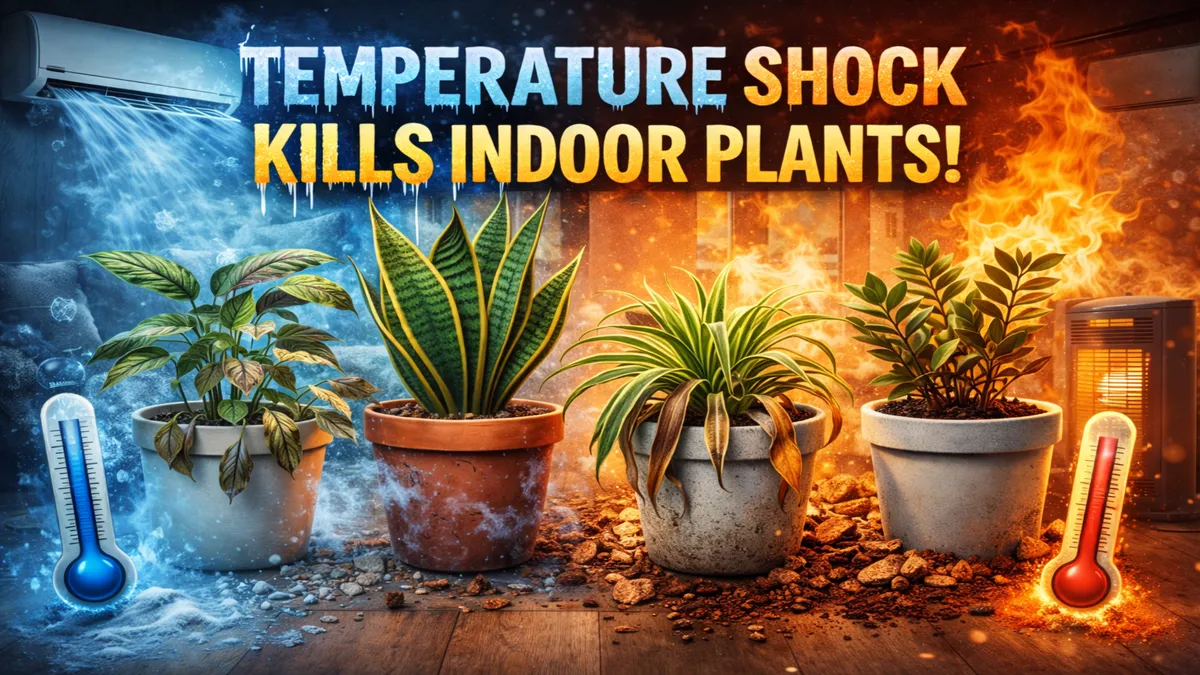
Indoor plants suffer the most when temperatures fluctuate rapidly. Air conditioners, room heaters, and cold winter drafts can shock plants, even if watering and lighting are otherwise ideal. I've seen healthy plants drop their leaves overnight simply due to cold AC air. Temperature shock is subtle, confusing, and often mistaken for disease. Understanding how it happens can prevent long-term damage and unnecessary plant loss.
Quick Comparison:
• Best for low light : Snake Plant
• Best for fast growth : Pothos
• Best for beginners : ZZ Plant
• Best for air purification : Spider Plant
Related News


What Temperature Shock Actually Means for Indoor Plants
Temperature shock occurs when a plant experiences a sudden change in the temperature of the surrounding air. The roots, leaves, and internal cells can't adjust quickly enough. This stress disrupts water flow and slows growth. Even a few hours near an AC vent or heater can cause visible damage.
Plants gradually adapt to stable indoor conditions. But when exposed to repeated blasts of cold, hot, or icy air, the plant goes into survival mode. And the first thing to stop is growth. Leaf damage appears later. Many plant owners adjust watering or fertilizing, but the temperature remains the hidden problem.
How Air Conditioners Stress Indoor Plants
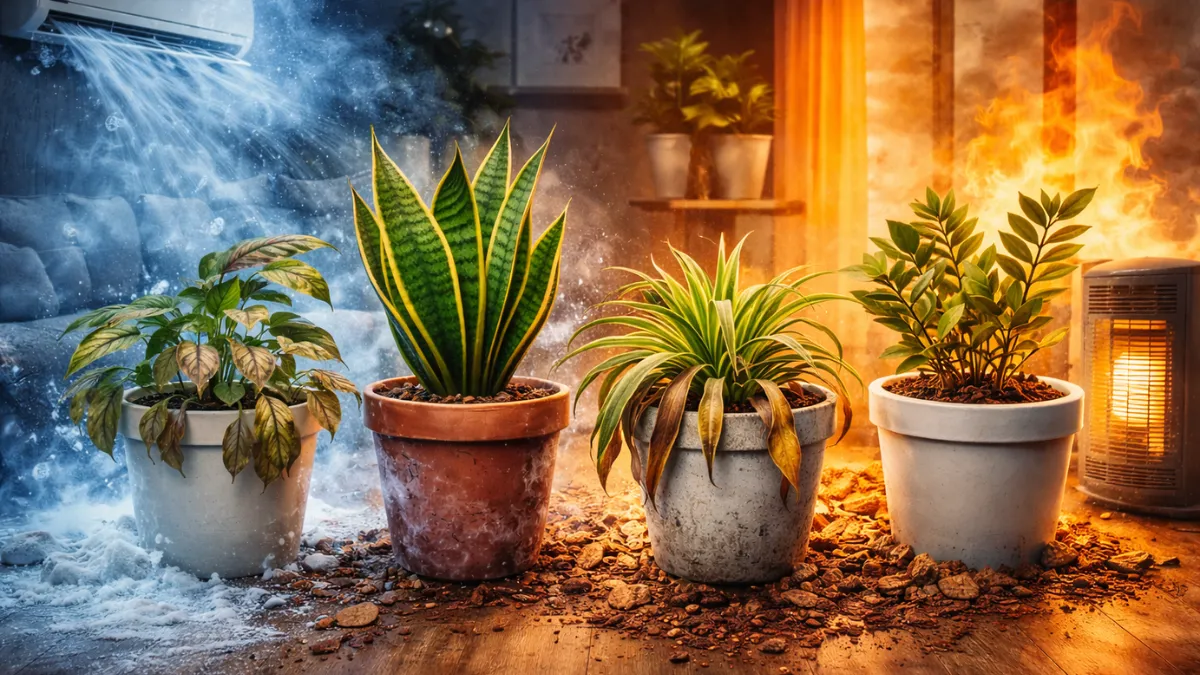
Air conditioners create a flow of cold, dry air that blows directly onto the leaves. This causes moisture to evaporate so quickly that the roots can't keep up. Their leaves curl, the edges turn brown, and delicate plants quickly deteriorate. Even in brightly lit rooms, tropical plants suffer damage when the AC runs daily.
AC units also create temperature fluctuations. The sudden cooling at night after the day's heat confuses the plants. Moving plants closer to windows for light often exacerbates this problem when AC vents are directed downwards.
Damage from Indoor Heaters
Heaters dry out the air and raise the temperature unevenly. Plants placed near radiators or space heaters experience heat stress first, then dehydration. The soil dries out quickly, but the roots are damaged before the dryness is even noticeable.
Hot air damages the tips of the leaves and causes yellow spots. Woody plants survive longer, but soft-stemmed plants react quickly. Continuous use of heaters keeps plants stressed, even if the room feels comfortable to people.
Cold Drafts and Window Chill in Winter
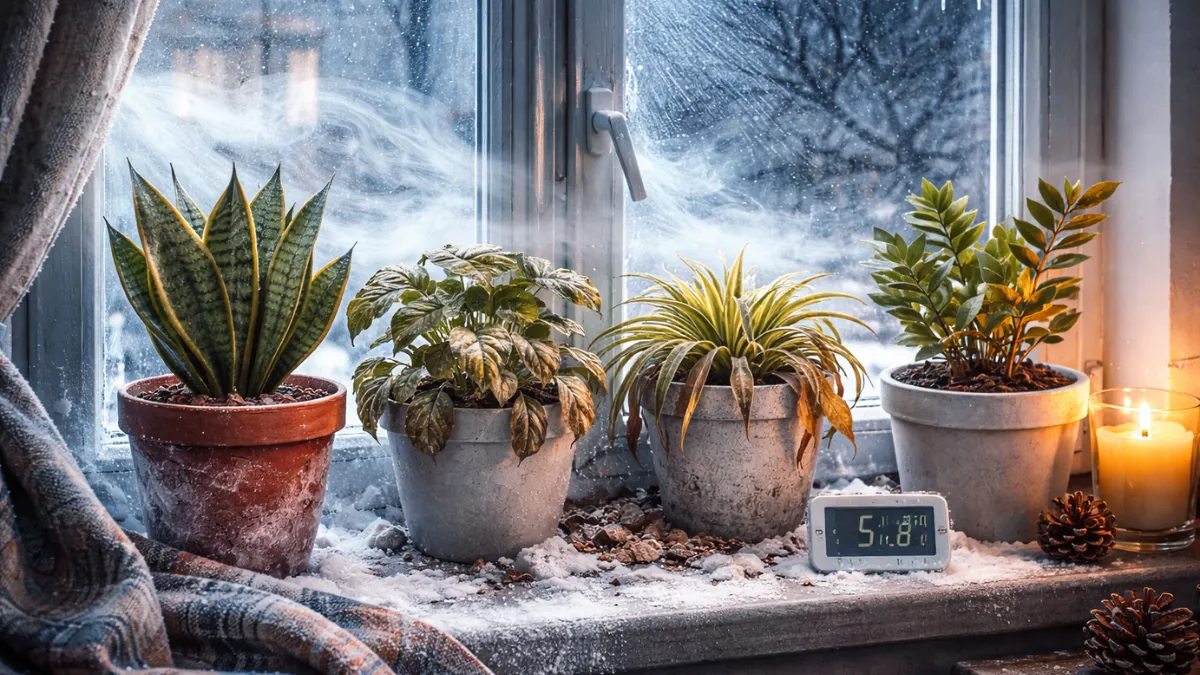
Cold drafts from windows, doors, and gaps cause rapid temperature drops. This leads to tissue damage in leaves that touch the cold glass overnight. This often looks like a disease, but it's actually cold shock.
Winter sunlight can warm the leaves during the day and cool them at night. This repeated cycle weakens the plant cells. Plants near windows deteriorate gradually rather than suddenly.
Common Symptoms of Temperature Shock
Temperature shock doesn't look the same on every plant. The symptoms depend on how long the plant has been exposed to the conditions and the type of plant. Most symptoms appear within a few days, not weeks.
| Symptom | What It Usually Means |
|---|---|
| Sudden leaf drop | Cold or heat shock |
| Brown leaf edges | Dry air or hot airflow |
| Soft, limp stems | Rapid temperature drop |
| Yellow patches | Repeated stress cycles |
| No new growth | Long-term temperature instability |
What won't fix temperature shock
Overwatering will never correct temperature-related damage. Fertilizing can actually increase stress. Excessive pruning won't prevent shock and can slow recovery.
Moving plants between rooms daily is also unhelpful. Plants need stable conditions, not constant relocation. Airflow and proper placement are more important than any quick fix.
Rules for a safe space for year-round stability
Keep plants at least three feet away from AC vents and heaters. Avoid direct airflow on the leaves. Move plants slightly away from windows during extreme cold.
Rooms with stable temperatures are best. Bathrooms and kitchens often experience significant temperature fluctuations. Stable air is more important than perfect lighting for long-term health.
Related Articles:
Indoor Plants That Thrive During Winter – Expert Recommendations
Related Articles:
Winter Flowers Bloom Just Once — Heres What Really Happens
Related Articles:
Artificial vs Real Indoor Plants : Shocking Truth Nobody Tells (2026)
How long does recovery actually take?
Mild temperature shock can resolve in two to three weeks. However, severe damage can take months. Some leaves will never recover and will naturally drop.
New growth is the true sign of recovery. Don't expect damaged leaves to turn green again. Patience and stable conditions are more important than active intervention.
Final Thoughts on Preventing Temperature Shock
Temperature shock is one of the most common problems for houseplants, yet it's often overlooked. Air conditioning units, heaters, and cold drafts gradually weaken plants over time. A stable location, gentle airflow, and consistent temperatures protect plants better than any product. When plants feel secure, growth resumes naturally without any stress or sudden decline.