Learn how to care for a weeping fig indoors with the right light, watering schedule, humidity needs, and the most common mistakes that cause leaf drop and stress.
✨
AI summarized this news · Reviewed by Indoor Plantify
The weeping fig (Ficus benjamina) is one of the most beautiful indoor trees, but it's also known for its sensitivity. Many plant owners bring one home, only to panic a few weeks later when its leaves start dropping. I've grown weeping figs in my apartment and in brightly lit rooms, and once you understand what stresses them, they become surprisingly easy to manage. This guide covers easy indoor care steps and the mistakes that quietly cause problems. so your plant stays healthy, not a source of frustration.
Yes. Weeping figs thrive indoors with bright, indirect light, consistent watering, a stable location, and moderate humidity. Most problems stem from sudden changes, not poor care.
Weeping Fig Indoor Care Basics
Light Requirements
• Weeping figs prefer bright, indirect light.
• Does best near an east-facing or bright north-facing window.
• Can tolerate some morning sun.
• Low light leads to slow growth and leaf drop.
• Best light for indoor weeping figs
• Can Ficus benjamina survive in low light?
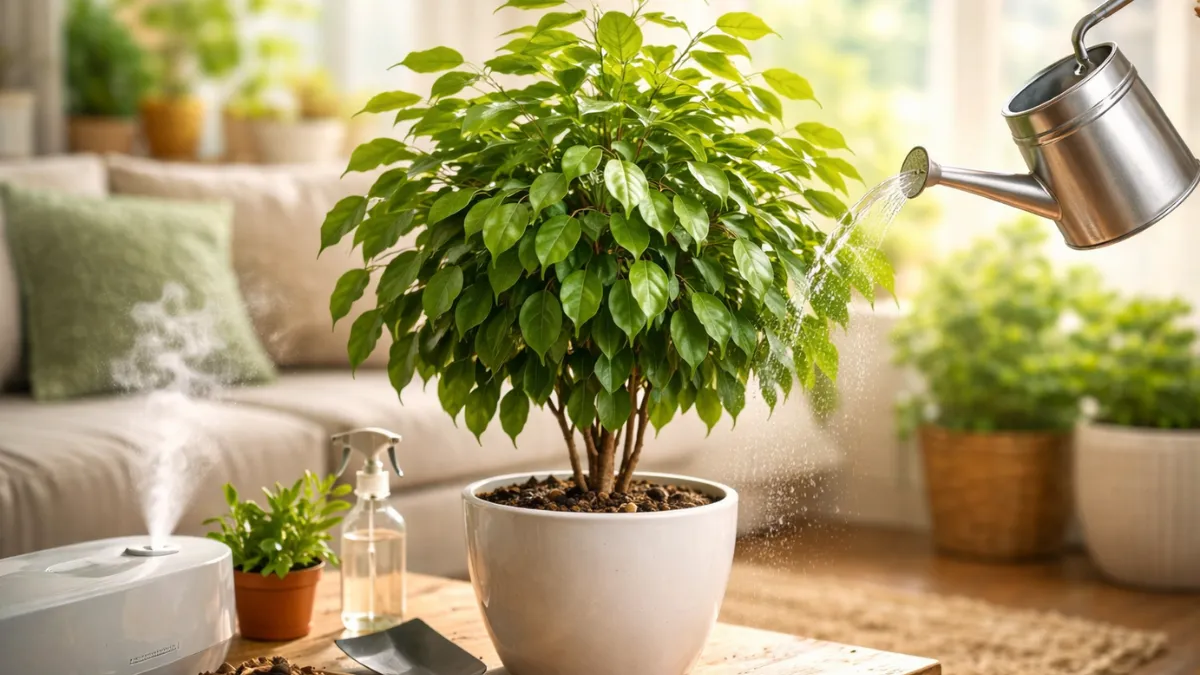
File Photo : Essential indoor setup showing the ideal environment for a weeping fig. My own real-world experience : When I moved my weeping fig from a bright window to a dim corner, its leaves dropped rapidly—even though the watering remained the same.
Watering Schedule
• The quickest way to stress this plant is by overwatering.
• Water only when the top 2 inches of soil feel dry.
• Drain excess water completely.
• Never let the pot sit in water.
• How often to water a weeping fig
• Signs of overwatering in Ficus benjamina
Humidity and Temperature
Weeping figs prefer stable indoor conditions.
Ideal temperature : 65–80°F (18–27°C)
• Avoid AC vents and heaters
• Medium humidity prevents browning of leaf edges
What didn't work : Simply misting daily didn't stop the leaf drop for me—consistent room humidity works much better.
Best Soil and Pot Selection
Factor
Recommendation
Soil type
Well-draining indoor potting mix
Drainage
Mandatory drainage holes
Repotting
Every 2–3 years
• Best soil for Ficus benjamina
• When to repot a weeping fig
Common Weeping Fig Mistakes to Avoid
1. Moving the plant too much
This is the #1 mistake.
Weeping figs absolutely hate being moved. Even changing rooms can cause sudden leaf drop.
• Why does my weeping fig drop leaves after moving it?
2. Overwatering to be safe
Constantly wet soil suffocates the roots and causes yellowing leaves.
• Ficus benjamina root rot
3. Low light locations
The plant might survive in these conditions, but it won't thrive.
• Where to place a weeping fig indoors
4. Ignoring seasonal changes
Growth slows down in winter, and it needs less water.
• Weeping fig indoor care in winter
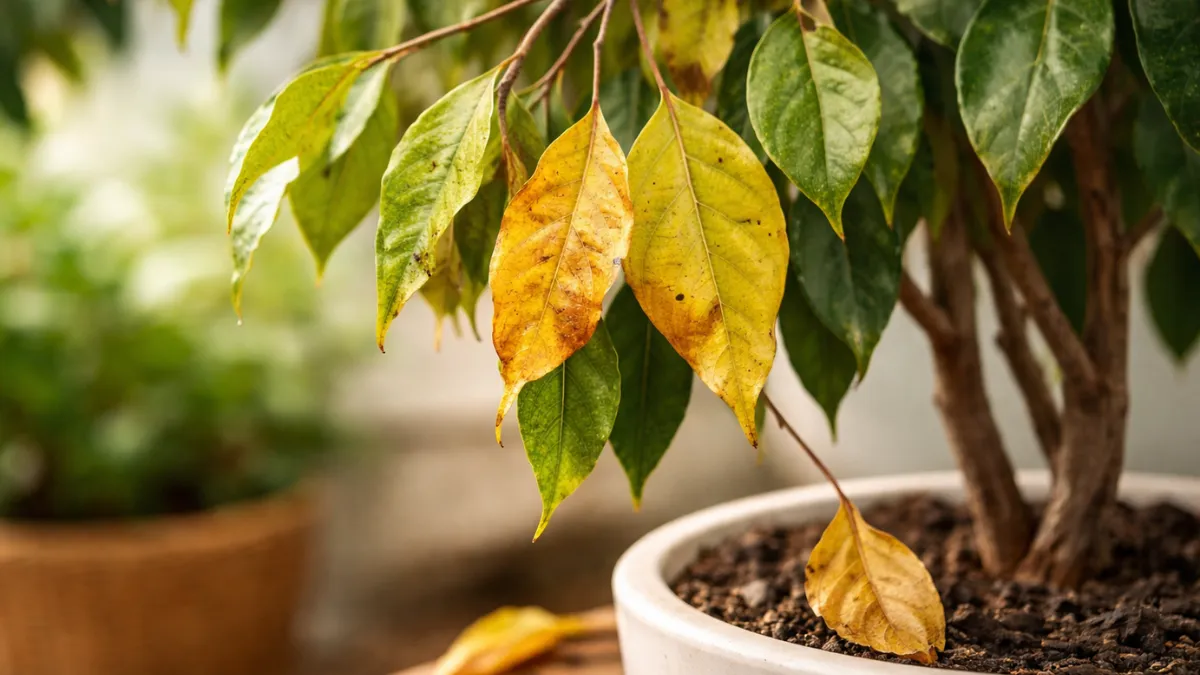
File Photo : Early yellowing leaves indicating stress in a weeping fig plant.
Leaf Drop : Should You Worry?
Some leaf drop is normal, especially when:
• The plant is newly purchased
• Lighting conditions change
• Seasons change
Limitation : Even with proper care, some leaf drop is expected with weeping figs as they are naturally sensitive plants.
Pest and Cleaning Tips
Common pests include spider mites and scale. To prevent these issues, you can use the following methods:
This guide is written to help indoor plant owners truly understand the behavior of the weeping fig, without any fear-based advice or unrealistic promises.
Written for IndoorPlantify from real indoor plant care experience.
Follow Us On Social Media
Join the Discussion
No discussions yet. Be the first to start one!
Expert FAQs
Why is my weeping fig suddenly dropping leaves?
Sudden leaf drop usually happens when the plant experiences environmental changes such as shifts in light, temperature, humidity, or location.
Does moving a ficus benjamina cause leaf drop?
Yes. Even relocating the plant a short distance can stress it because the tree must readjust to new light and watering conditions.
How often should I water a weeping fig indoors?
Water when the top 2–3 inches of soil feel dry and ensure the pot drains well to avoid soggy soil.
Can low light make a weeping fig lose leaves?
Insufficient light is a major cause of leaf shedding. The plant prefers bright, indirect light for steady growth.
What temperature is best for ficus benjamina?
Ficus prefers a warm, stable environment around 65–75°F (18–24°C). Sudden temperature changes can trigger stress and leaf drop.
Is leaf drop ever normal in a weeping fig?
Yes. Ficus trees naturally shed some leaves as part of their growth cycle or while adjusting to new surroundings.
Can overwatering cause ficus leaves to fall?
Overwatering blocks oxygen to the roots, leading to rot and yellow leaves that drop quickly.
Do pests cause leaf loss in weeping figs?
Yes. Spider mites, scale, and other sap-sucking insects can weaken the plant and lead to defoliation if untreated.
Should I worry if leaves drop after bringing a ficus home?
Not always — the plant is sensitive and often reacts to rapid condition changes by shedding leaves until it adapts.
How can I prevent leaf drop in indoor ficus plants?
Keep conditions consistent, provide bright light, avoid drafts, maintain humidity, and follow a balanced watering routine.