

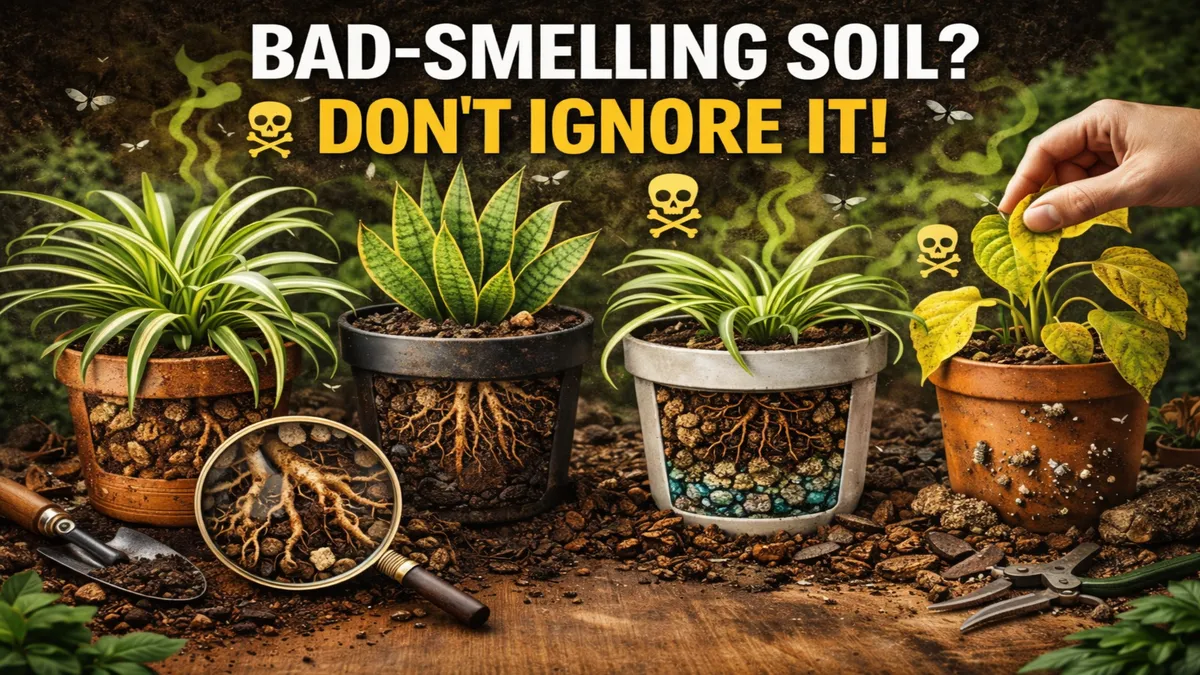
Indoor plants often look fine on the surface, but the soil can tell a different story. A bad smell coming from the pot is usually the first warning sign that something is off below. I’ve dealt with sour, rotten, and musty soil smells more times than I can count. The good news is this problem is common, fixable, and rarely permanent when handled early and safely.
Quick Comparison:
• Best for low light : Snake Plant
• Best for fast growth : Spider Plant
• Best for beginners : Snake Plant
• Best for air circulation : Spider Plant
Related News
What That Bad Soil Smell Really Means
A strong or unpleasant smell from indoor plant soil is not normal. Healthy soil should smell earthy, not sour or rotten. Odors usually mean the soil has turned airless, allowing harmful bacteria to grow. This often happens quietly, long before leaves start showing damage.
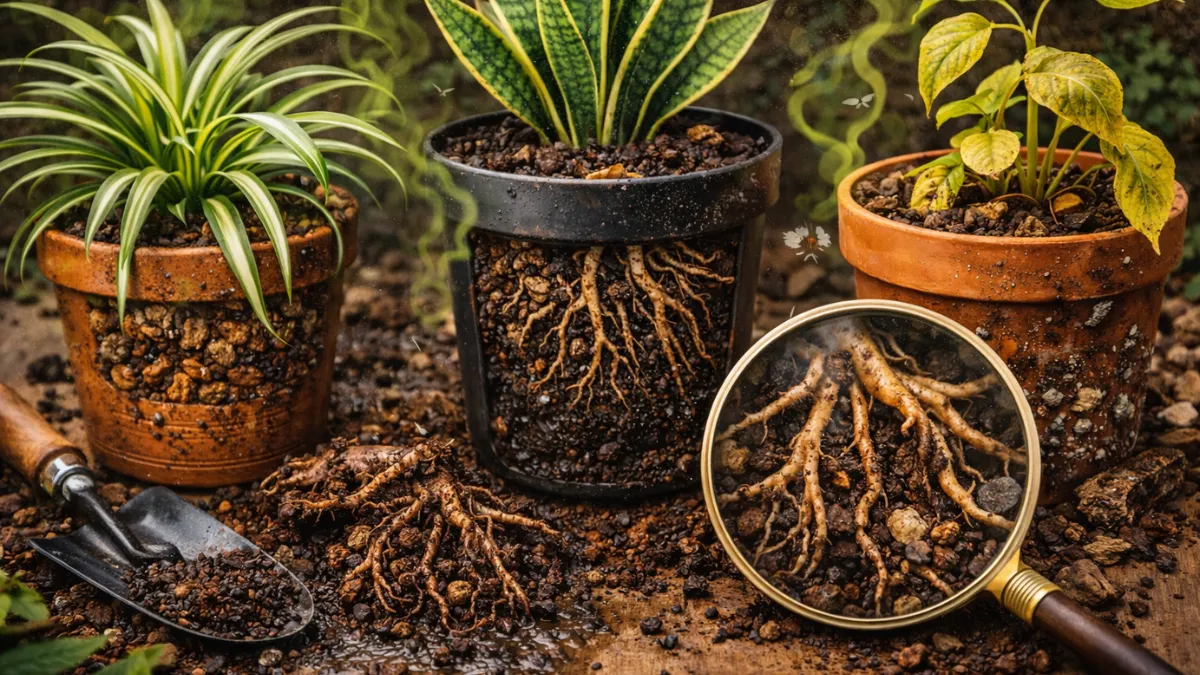
Most soil smells develop from trapped moisture and poor oxygen flow around the roots. When roots cannot breathe, they slowly weaken and begin to decay. The smell you notice is often the result of that hidden breakdown happening underground.
The Most Common Reasons Indoor Plant Soil Smells Bad
Overwatering is the top cause of smelly soil. When soil stays wet for too long, oxygen disappears and anaerobic bacteria take over. These bacteria produce sulfur-like smells that resemble rotten eggs or spoiled food.
Poor drainage plays a close second. Pots without drainage holes or compacted soil mixes trap water at the bottom. Even careful watering cannot save a plant when excess moisture has nowhere to escape.
How Root Rot Creates a Strong Odor
Root rot happens when roots sit in wet soil for extended periods. Healthy roots are firm and pale, but rotting roots turn brown, soft, and slimy. As they break down, they release a foul smell that rises through the soil.
The tricky part is that leaves may still look green during early root rot stages. By the time yellowing appears, the smell has usually been present for weeks.
Related Article:
Common Soil Mistakes Killing Indoor Plants (And How to Fix Them) (2026)
Why Old or Depleted Soil Smells Musty
Soil that has been used for years without refreshing slowly loses structure. It becomes compacted, holds too much moisture, and blocks airflow. This creates the perfect environment for mold and bacteria to grow.
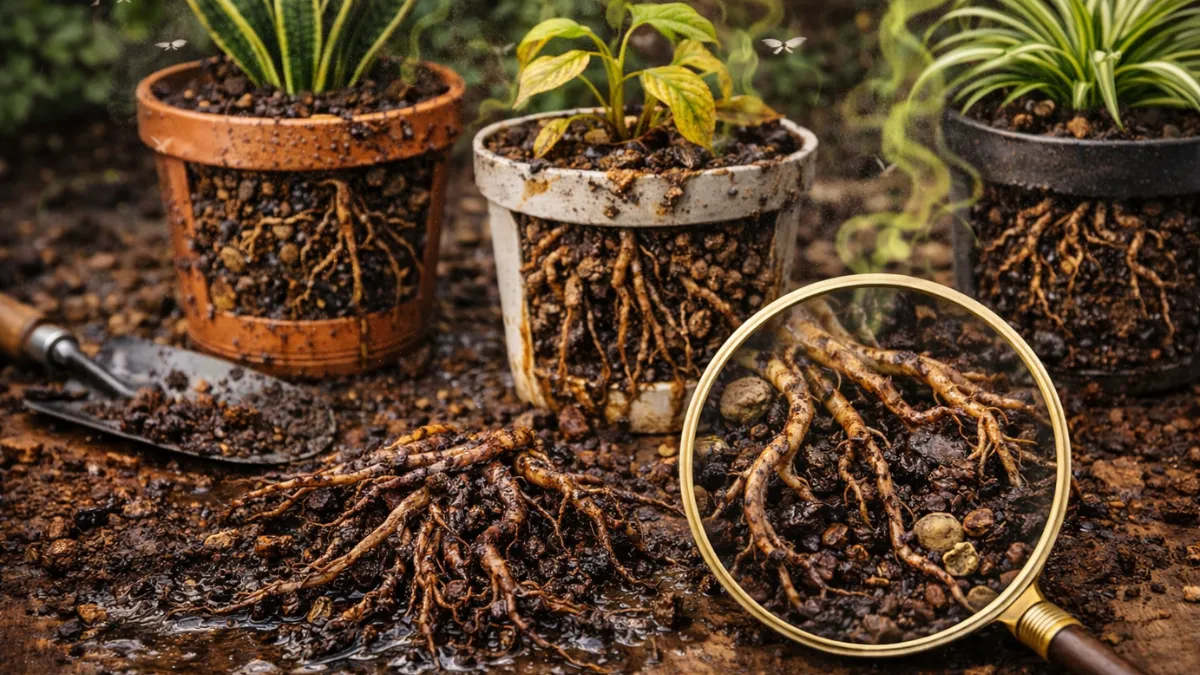
Old soil can also contain decaying organic matter that was never fully broken down. That slow decay process often causes a damp, basement-like smell inside the pot.
Mistake vs Safe Fix Table
| Common Mistake | Why It Causes Smell | Safe Fix |
|---|---|---|
| Overwatering | Removes oxygen from soil | Let soil dry before watering |
| No drainage holes | Traps excess water | Use pots with drainage |
| Old compacted soil | Blocks airflow | Repot with fresh soil |
| Ignoring early odor | Root damage spreads | Act at first smell |
Adding air fresheners, perfumes, or surface sprays will not solve soil odor. These only mask the smell while root damage continues underneath. I’ve seen plants decline quickly after these quick fixes.
Mixing random household powders into the soil without understanding the cause can also backfire. The real solution always involves improving airflow, drainage, and root health, not covering the problem.
Related Article:
Why Indoor Plant Leaves Turn Yellow? Exact Causes & Easy Fixes
Safe Steps to Remove Soil Smell Without Harming the Plant
Start by stopping watering immediately until the top soil feels dry. Gently loosen the soil surface to allow air to enter. This alone can reduce mild odors within a few days.
If the smell persists, remove the plant and inspect the roots. Trim away any soft or dark roots and repot using fresh, well-draining soil. Clean pots before reuse to prevent bacteria transfer.
How Long It Takes for Soil Odor to Go Away
Mild soil smells often improve within three to seven days once watering is corrected. Strong root rot smells may take two to three weeks after repotting to fully disappear.
If the odor remains unchanged after proper care, the root system may be too damaged to recover. At that point, saving healthy cuttings is often the best option.
Related Article:
Snake Plant Tall but Weak? 7 Common Reasons & Easy Fixes
Final Thoughts on Smelly Indoor Plant Soil
Bad-smelling soil is your plant asking for help, not a sign of failure. In most cases, the issue comes down to excess moisture and poor airflow. When addressed early, plants recover surprisingly well. Pay attention to the soil, not just the leaves. Healthy roots always lead to healthier, better-smelling indoor plants over time.