

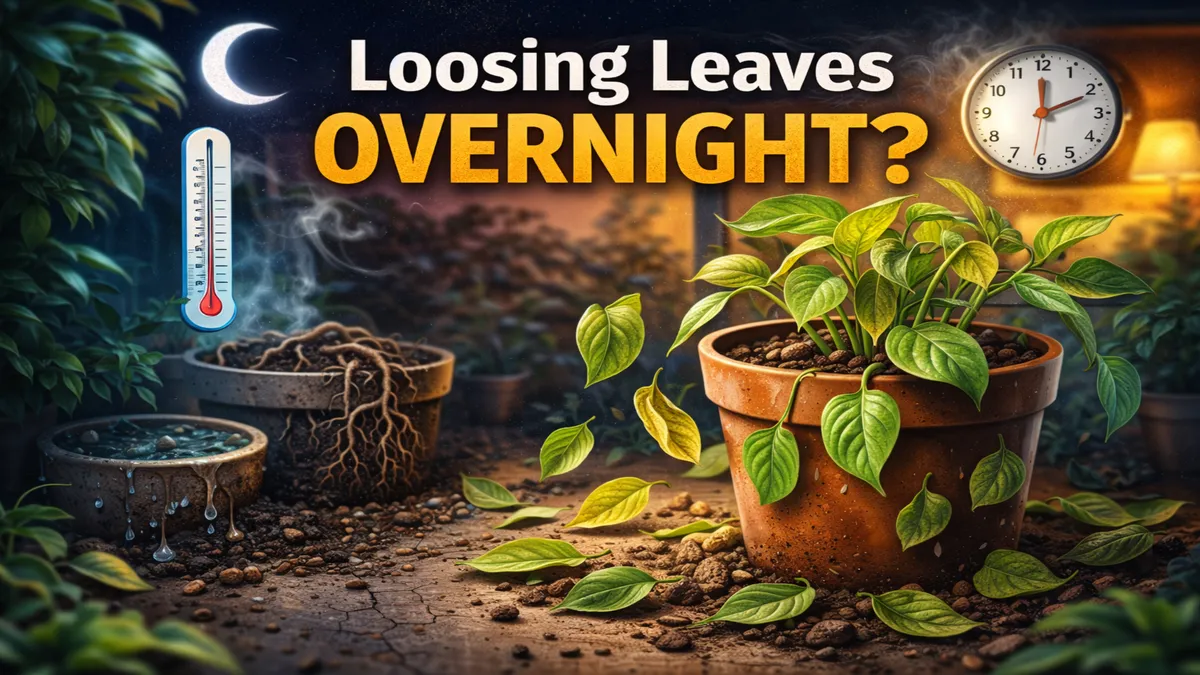
If your indoor plant looks fine at night but wakes up without leaves in the morning, it can be confusing and worrying. This sudden change rarely happens without a reason. Most indoor plants drop leaves overnight because stress builds up gradually during the day. Temperature changes, root problems, or water imbalances often trigger leaf drop when the plant is resting and resetting itself at night.
Quick Comparison:
• Best for low light : Snake Plant
• Best for fast growth : Spider Plant
• Best for beginners : Pothos
• Best for air purification : Areca Palm
Related News



Why Leaves Often Drop at Night
Plants aren't inactive at night. They slow down growth, balance moisture, and release stress accumulated throughout the day. If conditions are wrong, the leaves are the easiest part to sacrifice.
Overnight leaf drop is usually a survival mechanism. The plant is trying to protect its roots and main stem. The cause often begins earlier, but the reaction appears suddenly.
Sudden Temperature Changes Indoors
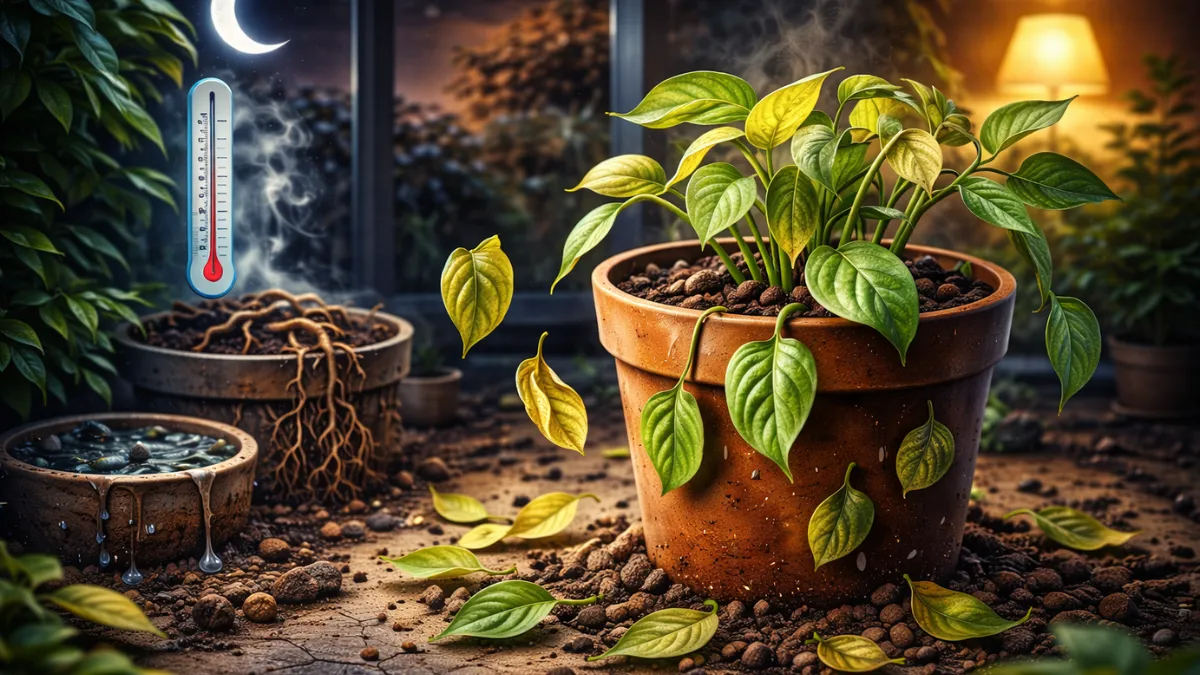
Indoor temperatures often drop at night. Air conditioners, open windows, or heaters turning off can shock plants without you noticing.
Tropical houseplants, in particular, are very sensitive. A draft of cold air near windows or doors can weaken leaf cells, causing the leaves to drop hours later when the plant is resting.
Overwatering That Looks Fine on the Surface
The soil may look dry on top while remaining wet underneath. Roots sitting in soggy soil don't get enough oxygen and slowly begin to rot.
At night, the damaged roots can't support the leaves. The plant then sheds them to reduce stress. This is one of the most common hidden reasons for leaves dropping overnight.
Underwatering Stress
Dry soil causes gradual stress. During the day, plants manage to survive by using stored moisture. But at night, when water flow slows down, leaves can suddenly drop.
This often happens after missing a watering schedule or when heating dries out the indoor air faster than expected.
Root-Bound in the Pot
Roots that have outgrown their pot cannot absorb water evenly. This causes gradual stress, even if watering seems adequate.
At night, the plant adjusts its energy use. This leads to leaf drop because the roots can no longer support the entire canopy.
Related Article:
Why Indoor Plant Leaves Turn Yellow? Exact Causes & Easy Fixes
Weakened Leaf Structure Due to Low Light
Plants kept in low light may appear green, but they are actually weaker. Leaves grown in low light have a thinner structure.
When plants are stressed, the weakest leaves are the first to fall. Leaf drop at night is common because the plant cannot sustain the low-light leaves without the energy from daylight.
Dry Indoor Air at Night
Indoor humidity often drops at night, especially when heaters or air conditioning are running.
Dry air draws moisture from the leaves. Some plants shed leaves quickly to prevent excessive water loss.
Recent Repotting Shock
Even careful repotting causes stress. The roots need time to re-establish themselves in the soil.
Leaf drop a few days after repotting often happens overnight. But this doesn't mean the plant is dying; it simply means the plant needs stability and patience.
Insect Activity After Dark
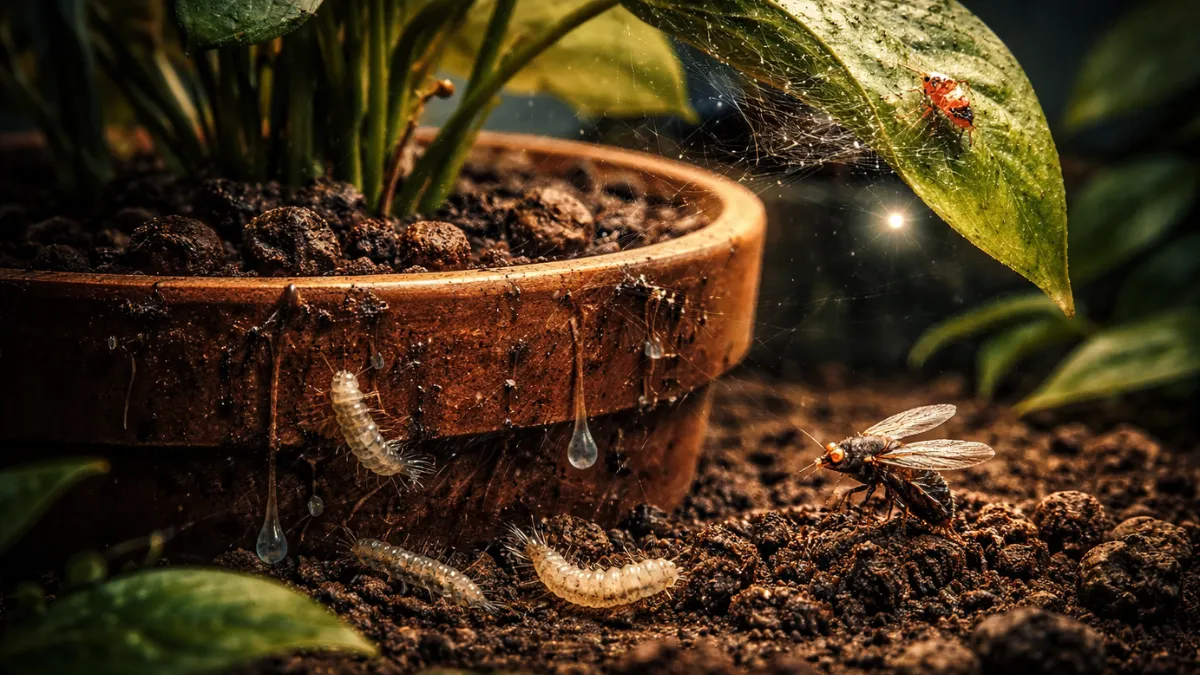
Some insects are more active at night. For example, spider mites and fungus gnat larvae silently damage the leaves and roots.
The plant then reacts by dropping the affected leaves. If the leaf drop is unexplained, always check the undersides of the leaves and the soil surface.
Do's and Don'ts When Leaves Drop Overnight
| Do | Don’t |
|---|---|
| Check soil moisture deeply | Water again immediately |
| Move plant to stable temperature | Shift locations daily |
| Inspect roots and drainage | Assume pests without checking |
| Give time before reacting | Prune heavily right away |
These things will never fix overnight leaf drop
Extra fertilizer won't help. It often makes the stress worse.
• Misting alone won't solve root or temperature problems.
• Frequent relocation only causes more shock.
• Plants recover with stability, not quick fixes.
How long does it take to recover?
Minor stress can cause leaf drop to stop within 7-10 days. Root-related problems often take 3-4 weeks to stabilize.
New leaf growth is a better sign than trying to save old leaves. Dropped leaves rarely grow back.
Related articles:
Why Indoor Plant Leaves Turn Yellow (Real Fixes)
Related articles:
Why Indoor Plant Leaves Turn Yellow : The Updated 2025 Guide to Fixing It Fast
Final Thoughts
Leaves falling off overnight is not a sudden, inexplicable event. It's your plant reacting to pre-existing, underlying stress. The key is to remain calm and observe, rather than rushing into any drastic actions. Address one problem at a time and keep conditions stable. With patience and consistent effort, most houseplants recover naturally and become even stronger than before.