

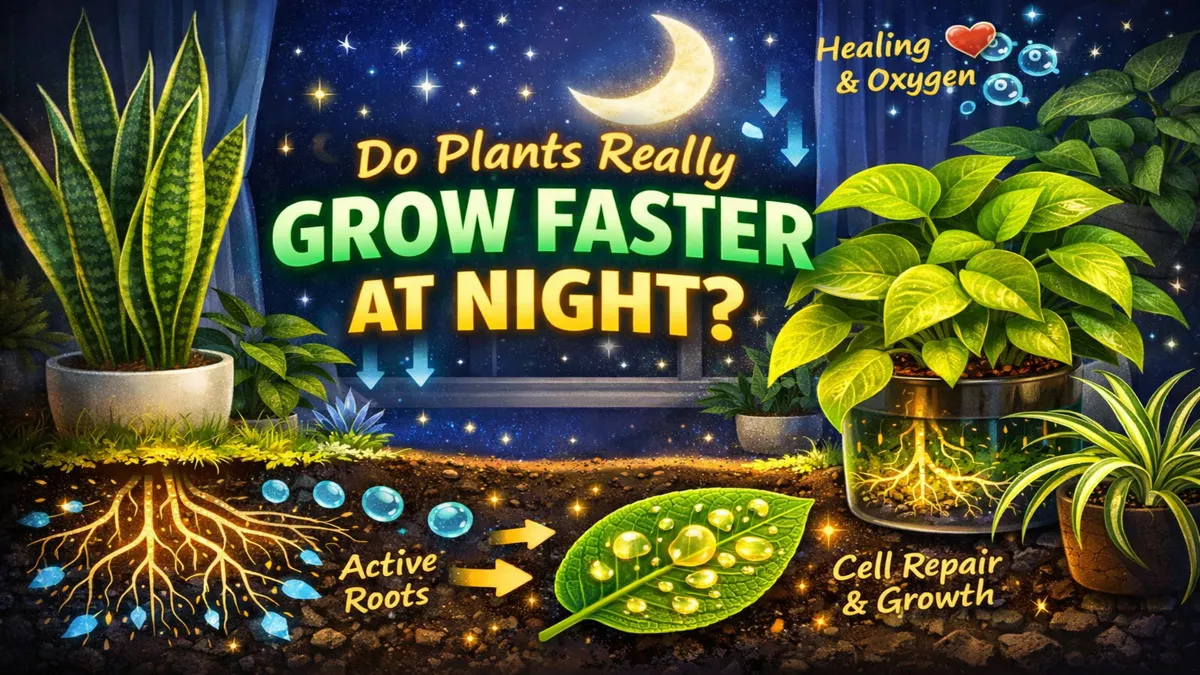
Many indoor plant owners notice something surprising: their plants seem taller, fuller, or fresher in the morning. This isn't an illusion. The nighttime provides a calm environment that allows plants to recover and grow quietly. Without the stress of direct sunlight, plants can focus on internal processes that support continuous growth indoors. Understanding this helps you provide better care without overwatering or over-fertilizing.
Quick Comparison:
• Best for low light : Snake Plant
• Best for fast growth : Pothos
• Best for beginners : ZZ Plant
• Best for air purification : Spider Plant
Related News



What Happens to Indoor Plants After Sunset
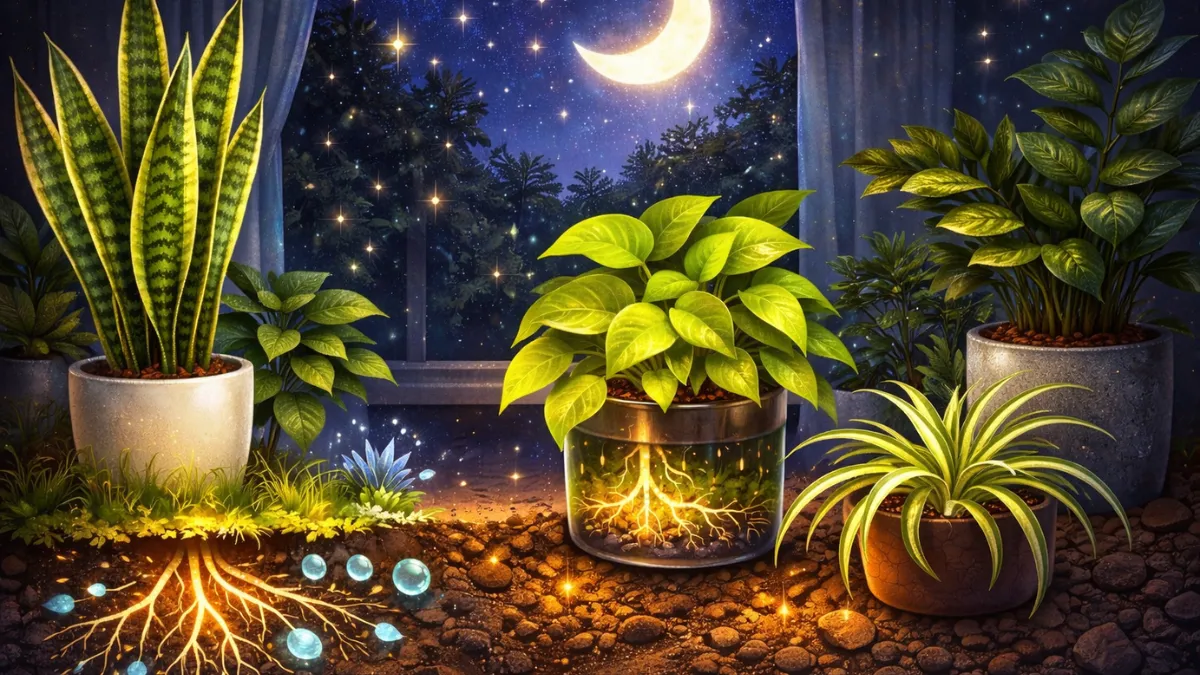
At night, indoor plants shift from feeding to recovery mode. Without direct sunlight, the leaves cease rapid photosynthesis and minimize moisture loss. This calmer state allows the plants to redirect energy towards cell repair and expansion. This growth is quiet, not immediately visible, but continuous throughout the night.
The indoor temperature also stabilizes after sunset. There are fewer fluctuations in heat from windows and electronics. This stable environment supports root activity and water absorption. Roots function more efficiently when the plant isn't losing moisture through its leaves.
Plants' Respiration Becomes More Efficient at Night
Plants respire differently at night. During daylight hours, they balance respiration and photosynthesis. At night, respiration becomes the priority. Oxygen intake increases, releasing energy stored during the day. This energy fuels internal growth processes like cell division and tissue repair.
Because sunlight isn't required, plants aren't in a hurry to use energy. This slower pace reduces stress. Indoor plants benefit especially because artificial light often creates mild stress during the day, which is relieved when the lights are turned off.
Why are roots more active during nighttime hours?
Roots don't depend on light. They respond to moisture, oxygen, and temperature. At night, the soil retains water better because evaporation slows down. This allows the roots to absorb moisture gradually, rather than competing with the transpiration from the leaves.
Nighttime also improves oxygen levels in the soil. Cooler temperatures help create air pockets around the roots. This leads to better nutrient absorption and promotes healthy root expansion, which directly impacts the overall growth of indoor plants.
Less water loss promotes faster cell growth
During the day, indoor plants lose water through their leaves. This process is often accelerated under artificial lights, heaters, or sunny windows. At night, the stomata partially close. Water remains inside the plant for longer.
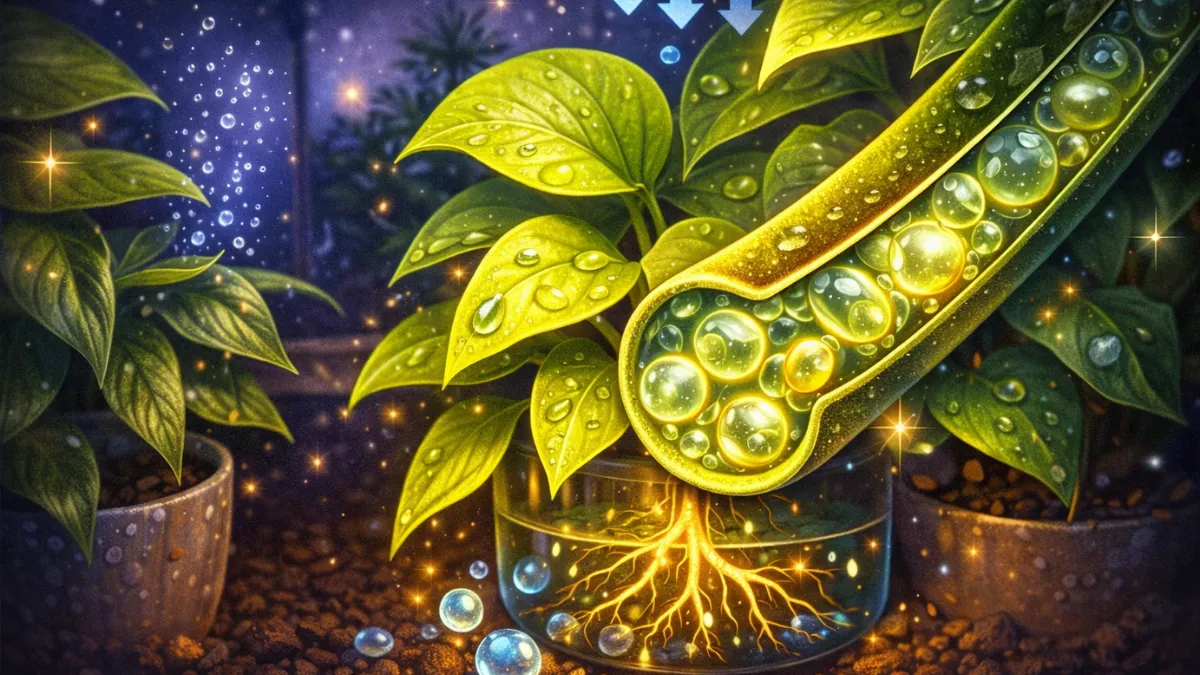
When cells stay hydrated, they expand more easily. Cell expansion is a major reason why plants appear to grow rapidly overnight. This is especially noticeable in plants with soft stems, such as pothos and philodendrons.
Growth hormones function better without light stress
Plant hormones like auxins control the direction of growth and cell elongation. These hormones function more efficiently in the dark. When light isn't pulling growth upwards, the hormones distribute more evenly throughout the stems and leaves.
This balanced hormonal activity helps plants become sturdier rather than just taller. Indoor plants that get proper rest at night develop thicker stems over time and maintain healthy spacing between their leaves.
Related Article:
Easy Indoor Gardening Hacks for Faster Plant Growth
The Indoor Environment Makes Nighttime Growth More Noticeable
Outdoor plants often face wind, temperature fluctuations, and pests at night. Indoor plants do not. The controlled indoor environment makes the effects of nighttime growth more apparent.
Consistent humidity, stable temperatures, and protection from stressors mean that plants can fully utilize the nighttime hours for internal repair and growth. This is why the growth patterns of indoor plants often seem more dramatic than those of outdoor plants.
What Nighttime Growth Won't Fix
Nighttime growth doesn't compensate for poor daytime care. Low light, compacted soil, or nutrient-deficient potting mix will still slow down growth. Plants cannot thrive without basic energy input during the day.
Overwatering at night also won't help. Roots need both water and oxygen. Waterlogged soil overnight can restrict airflow and damage the roots instead of supporting growth.
Common Misconceptions About Plant Growth at Night
| Myth | Reality |
|---|---|
| Plants grow only in sunlight | Growth continues internally at night |
| Darkness means no activity | Respiration and cell repair increase |
| More water at night helps growth | Excess water can damage roots |
| Artificial lights replace night rest | Plants still need dark cycles |
Should you change your care based on nighttime growth?
You don't need to water, fertilize, or spray your plants at night to enhance growth. The best support is consistency. Provide adequate light during the day and allow for darkness at night.
Avoid frequently moving plants or using grow lights overnight. Respecting natural day-night cycles leads to healthier, stronger indoor plants over time.
Related Articles:
Do Bigger Pots Really Help Indoor Plants Grow Faster?
Final Thoughts on Plant Growth at Night
Indoor plants grow faster at night because stress is reduced and internal systems function more efficiently. Darkness aids in hydration, hormone balance, and root activity. You don't need any special care. Simply provide the right light, the right amount of water, and let the plants rest naturally. Over time, this quiet work at night builds strong, healthy plants that you can rely on to thrive.