

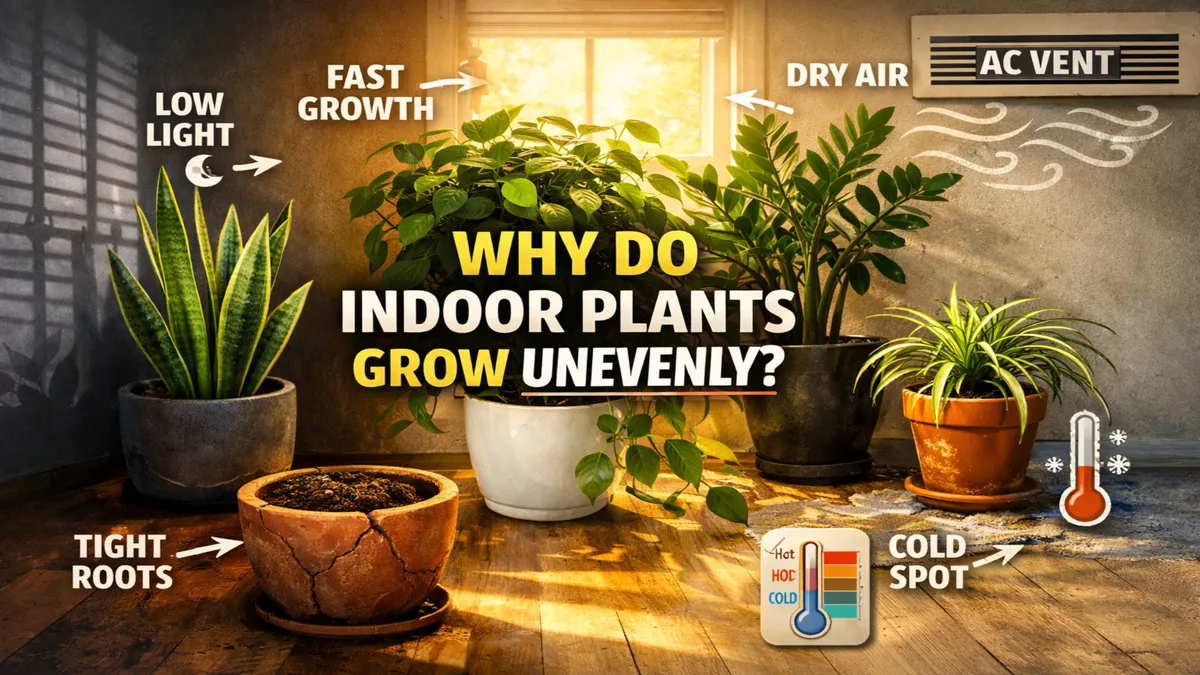
Indoor plants growing in the same room often seem like they should grow identically, but this is rarely the case. One plant might grow tall and bushy, while another remains stunted or bends awkwardly. This can be confusing for anyone, especially when watering and care are consistent. The truth is, subtle differences indoors matter more than most people realize. Light direction, airflow, and even the placement of the pot all quietly influence growth every day.
Quick Comparison:
• Best for low light : Snake Plant
• Best for fast growth : Pothos
• Best for beginners : ZZ Plant
• Best for air purification : Spider Plant
Related News



Indoor light direction is rarely uniform
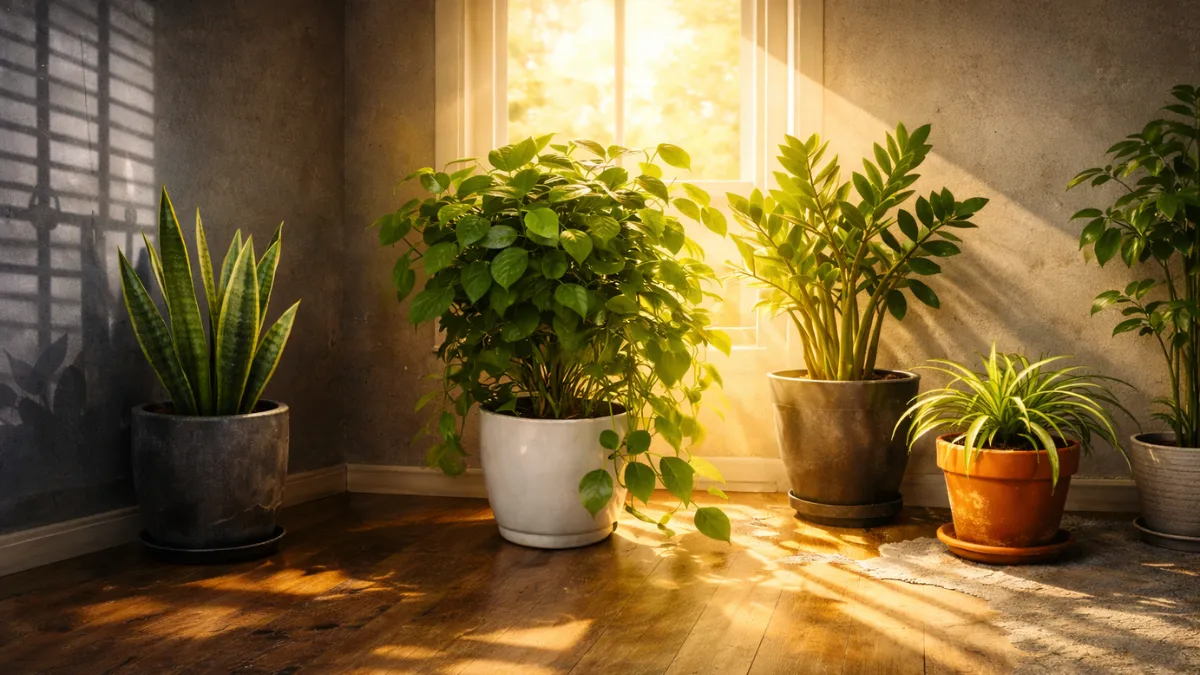
Even in the same room, light isn't distributed evenly. One plant might receive direct side light while another receives only diffused, reflected light. Plants naturally grow towards their strongest light source, leading to leaning, uneven stems, and lopsided leaf growth.
Indoor lighting also changes throughout the day. Shadows from furniture, curtains, or window frames create subtle shifts that plants gradually react to. Over weeks, these changes become visible in the plant's shape.
Differences in airflow affect stem strength
Airflow within a room is never uniform. Plants near doorways, fans, or AC vents receive more air movement than those in quiet corners. This affects how strong their stems become and how evenly their leaves develop.
Low airflow can cause plants to stretch weakly towards the light, while moderate airflow helps stems grow thicker and stronger. Two plants might receive the same amount of light, but they can grow very differently simply due to air currents.
Water distribution isn't as consistent as it seems.
Watering habits often appear uniform, but soil absorbs moisture differently. Air currents or heat can cause one pot to dry out quickly, while another remains damp for longer. The roots silently react to these differences underground.
Over time, uneven moisture leads to uneven root development. Plants with stressed roots grow slowly, droop, or show patchy leaf growth, even if they are watered on the same schedule.
Pot size and root space create hidden imbalances.
Two plants in the same room may not have equal root space. A slightly smaller pot or compacted soil restricts root expansion. This limits nutrient absorption and slows growth on one side or overall.
Roots also grow towards moisture and oxygen. If there are variations in soil compaction within the pot, this can result in uneven growth above ground.
Micro-zones of temperature within a room.
Rooms aren't uniformly stable in temperature. Windows, electronics, walls, and ceilings create warm and cool zones. Plants near windows may experience colder temperatures at night, while those near appliances stay warmer.
These small temperature variations affect the speed and direction of growth. Plants prefer consistency, and uneven temperatures promote uneven growth patterns over time.
Why rotating plants helps, but doesn't fix everything.
Rotating plants helps balance light exposure, but it can't correct air currents, temperature, or root-related issues.
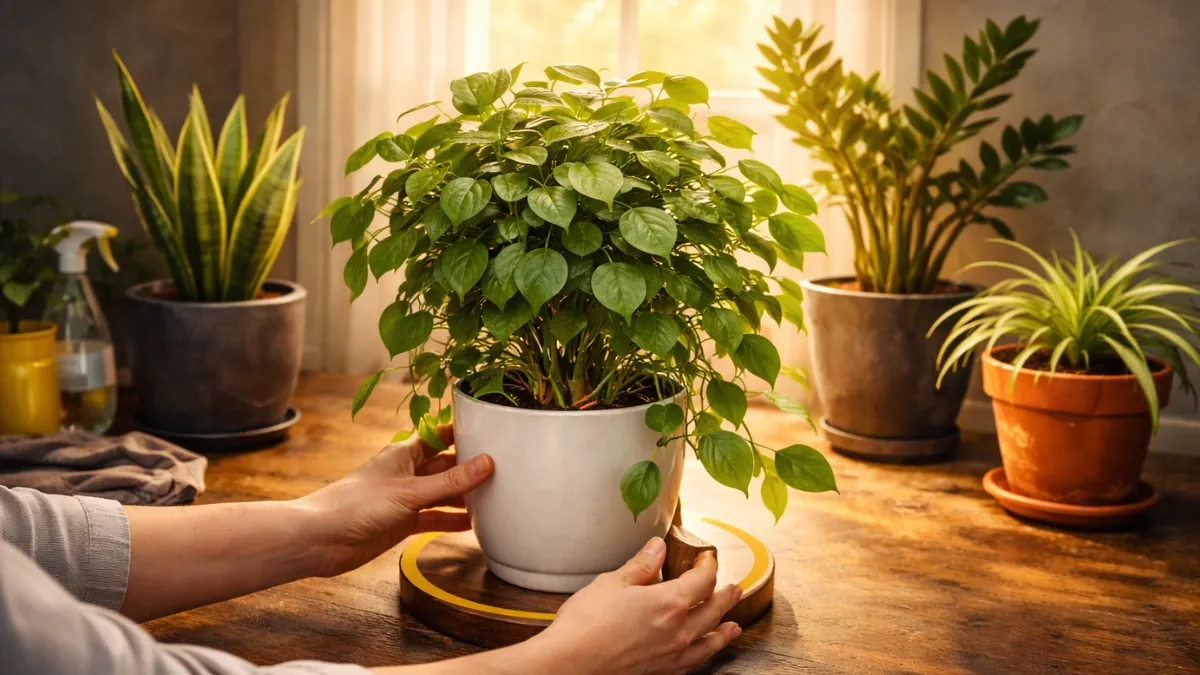
Rotation works best when uneven growth is due to light, not when deeper environmental factors are involved. Relying solely on rotation often leads to gradual improvement, not complete correction.
Common Causes vs. What Actually Works
| Problem Cause | What Will Not Work | What Actually Helps |
|---|---|---|
| Uneven light | More fertilizer | Rotating and repositioning |
| Weak stems | Extra watering | Improved airflow |
| Leaning growth | Bigger pot only | Light balance + rotation |
| Slow side growth | Pruning randomly | Consistent light exposure |
Plants respond to patterns, not intentions
Plants don't respond to how carefully you try. Instead, they respond to recurring patterns. Small, consistent differences in daily care have a greater impact than occasional perfect care.
Understanding this eliminates frustration. Uneven growth isn't a failure. It's feedback from the environment.
Related Article:
Easy Indoor Gardening Hacks for Faster Plant Growth
When Uneven Growth Is Perfectly Normal
Some indoor plants naturally grow asymmetrically. Vining plants, climbing plants, and directionally growing plants naturally follow light and space. For these plants, uneven growth is part of their design, not a problem.
Trying to achieve perfect symmetry often causes more stress than benefit.
Related Articles:
Do Bigger Pots Really Help Indoor Plants Grow Faster?
Final Thoughts on Uneven Growth in Indoor Plants
Uneven growth in indoor plants is usually caused by subtle, often invisible differences rather than outright neglect. Light direction, airflow, soil conditions, and temperature quietly shape plant development. Instead of seeking quick fixes, focus on consistency and observation. Once you understand what your plant is responding to, growth becomes easier, calmer, and more predictable over time.