
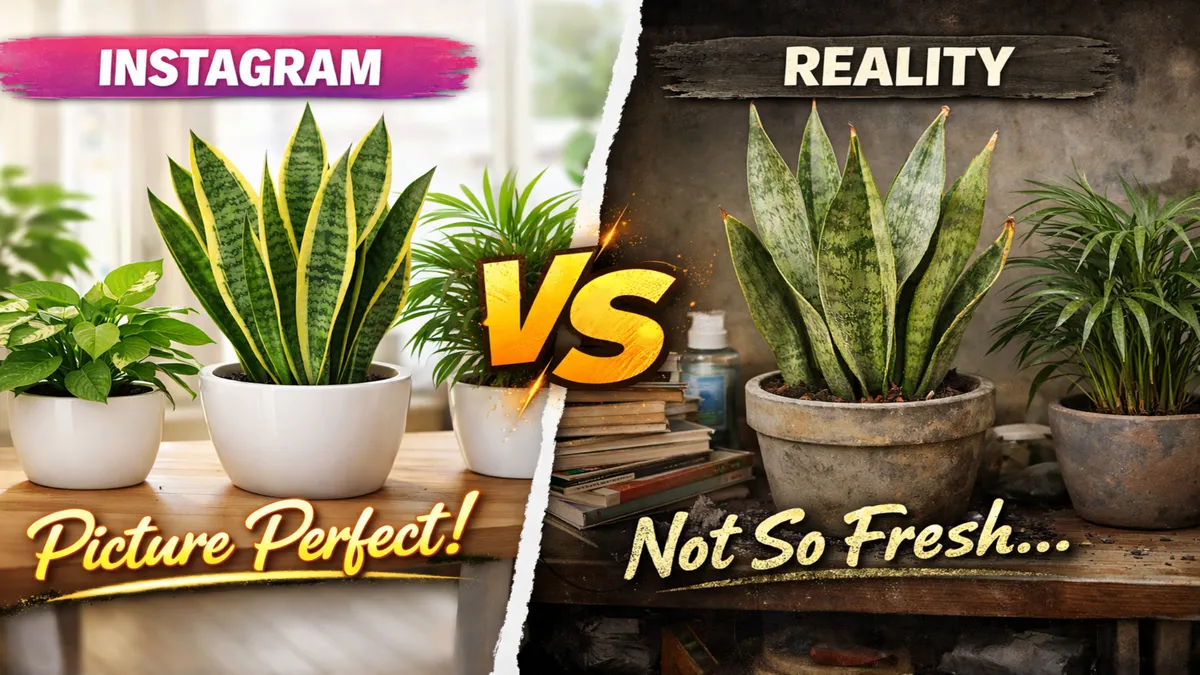
Indoor plants often look stunning in photos, but not quite as good in real life. Their leaves appear shinier in pictures, the colors seem deeper, and the plants look fuller online. This discrepancy causes confusion and disappointment for many plant lovers. This difference isn't because your plant is unhealthy. It depends on how cameras capture light, angles, and details, which the human eye perceives very differently in real indoor spaces.
Quick Comparison:
• Best for low light : Snake Plant
• Best for fast growth : Pothos
• Best for beginners : ZZ Plant
• Best for air purification : Areca Palm
Related News



Camera Lighting Changes How Plants Look
Photos rely on highly controlled lighting. Natural light from a window or soft artificial light makes leaves appear brighter and smoother. Shadows disappear, and the texture of the leaves looks more polished. But in real rooms, uneven lighting creates dull spots, making plants look less vibrant even when they are healthy.
Most plant photos are taken near windows or in bright light. Your home lighting might not match that setup. This difference alone can make the same plant look completely different.
Angles Hide Imperfections You See Every Day
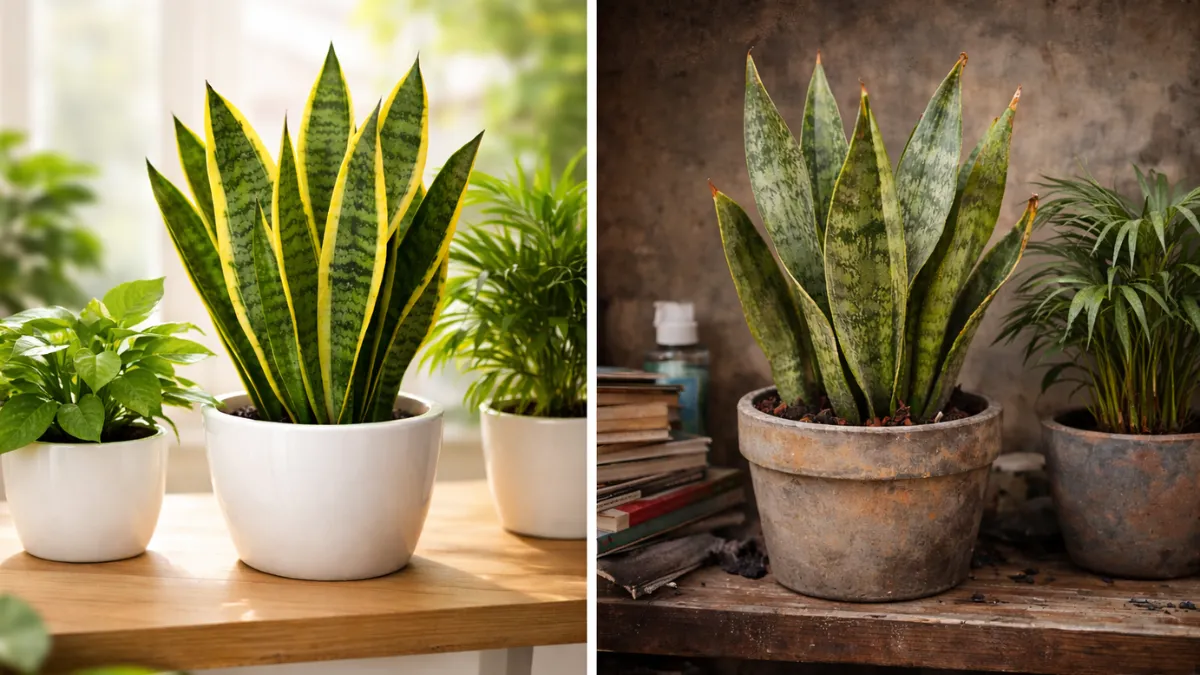
Photos are taken from flattering angles. Damaged leaves, soil stains, or sparse areas are kept out of the frame. The camera focuses on the healthiest parts of the plant. In real life, you see the plant from every angle, including its imperfections.
Your eyes notice asymmetry more than a camera does. A plant that looks balanced in a photo might appear uneven when placed in the middle of a room.
Photo Editing Enhances Color and Contrast
Many plant images are subtly edited. Brightness, saturation, and contrast are often increased. Greens become deeper, and yellowing leaves appear fresher. This editing is subtle but effective.
In real life, leaves reflect surrounding colors, such as walls or furniture. Cameras eliminate these distractions. This is why photos often look cleaner and more vibrant than real-life rooms.
The Growth Stage Matters More Than You Think
Most photos show plants at their peak. They've been recently watered, are free of dust, and are actively growing. Your plant at home might be in a resting phase, which naturally slows growth, and the leaves may appear less vibrant.
Plants don't look perfect every day. Photos freeze a perfect moment. Real life shows the entire cycle, including slower periods and minor imperfections.
Pot Size and Placement Create Illusions
Taking close-up photos of small pots makes plants appear larger. Wide angles exaggerate leaf size. But in reality, the same plant might look smaller when placed on the floor or a shelf.
The background also matters. Clean walls make plants stand out. In cluttered rooms, the foliage blends in and appears less striking.
Real Indoor Conditions Are Less Controlled
Humidity, airflow, and dust affect how plants look daily. Photos are often taken immediately after cleaning the leaves. At home, dust accumulates quickly and dulls the leaves' shine.
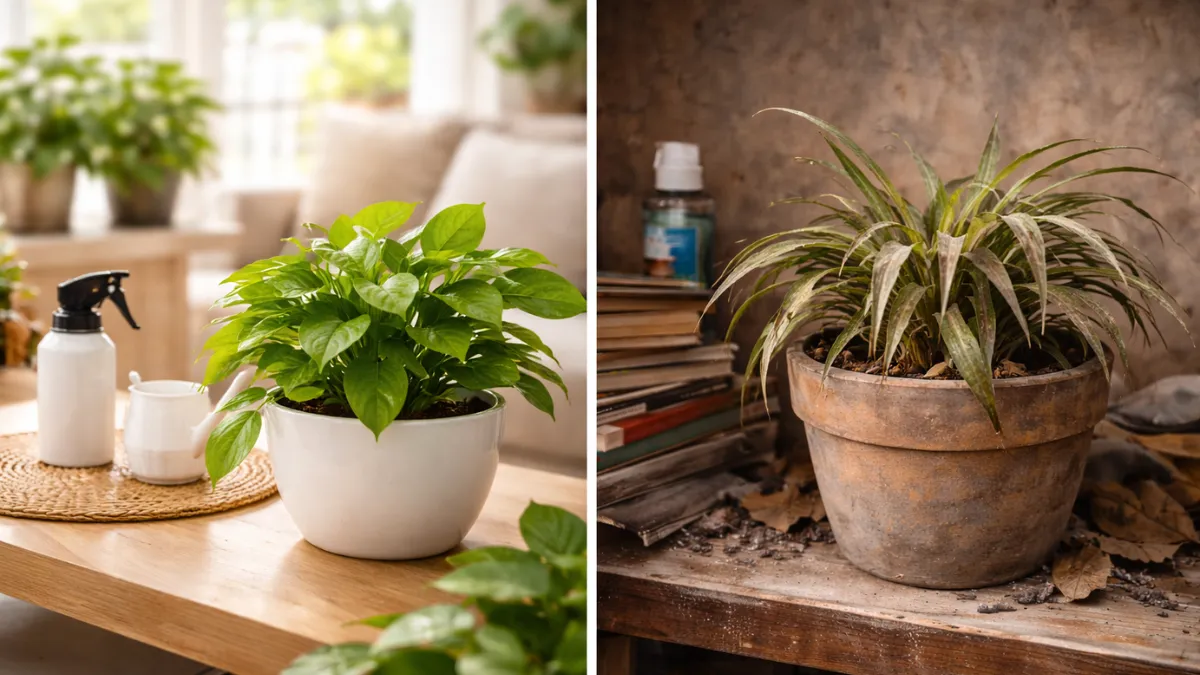
Air circulation also plays a role. Stagnant air makes plants look tired. Photos rarely capture these everyday indoor realities.
Photo vs. Real Life : What Actually Changes
| Factor | In Photos | In Real Life |
|---|---|---|
| Lighting | Soft and balanced | Uneven and mixed |
| Leaf Color | Enhanced green | Natural tones |
| Shape | One perfect angle | All angles visible |
| Cleanliness | Freshly wiped | Dust builds up |
| Growth Stage | Peak condition | Daily variation |
Why Your Plant Is Still Healthy
A plant doesn't need to look picture-perfect to be healthy. Slight color variations, uneven growth, or a less-than-perfect sheen are normal. Trying to replicate a photo often leads to overwatering or using unnecessary products.
What won't work is copying an online setup exactly. Your room, lighting, and airflow are unique. Plants adapt to real-world conditions, not camera setups.
How to Set Realistic Expectations
Focus on consistent growth, not just appearances. Healthy roots, new leaves, and stable color matter more than a glossy finish. Give your plant time to adapt to its environment.
Photos provide inspiration, but real plants live with you every day. Accepting minor imperfections makes plant care more enjoyable and stress-free.
Related articles:
Indoor Plants : Complete Beginner-to-Expert Guide (2026 Edition)
Related articles:
Ice Cream Tulip Is Going Viral in 2025 — The Flower That Looks Like Real Ice Cream
Related articles:
Money Plant Looks Healthy but Not Growing? 7 Reasons and Easy Fixes
Final Thoughts
Indoor plants look different in photos because cameras simplify reality. Lighting, angles, editing, and timing all combine to create an idealized version of the plant. Real life shows the whole story, including imperfections and flaws. Once you understand this, the frustration disappears. Your plant doesn't need to look like the picture to be healthy. It just needs consistent care and patience.