

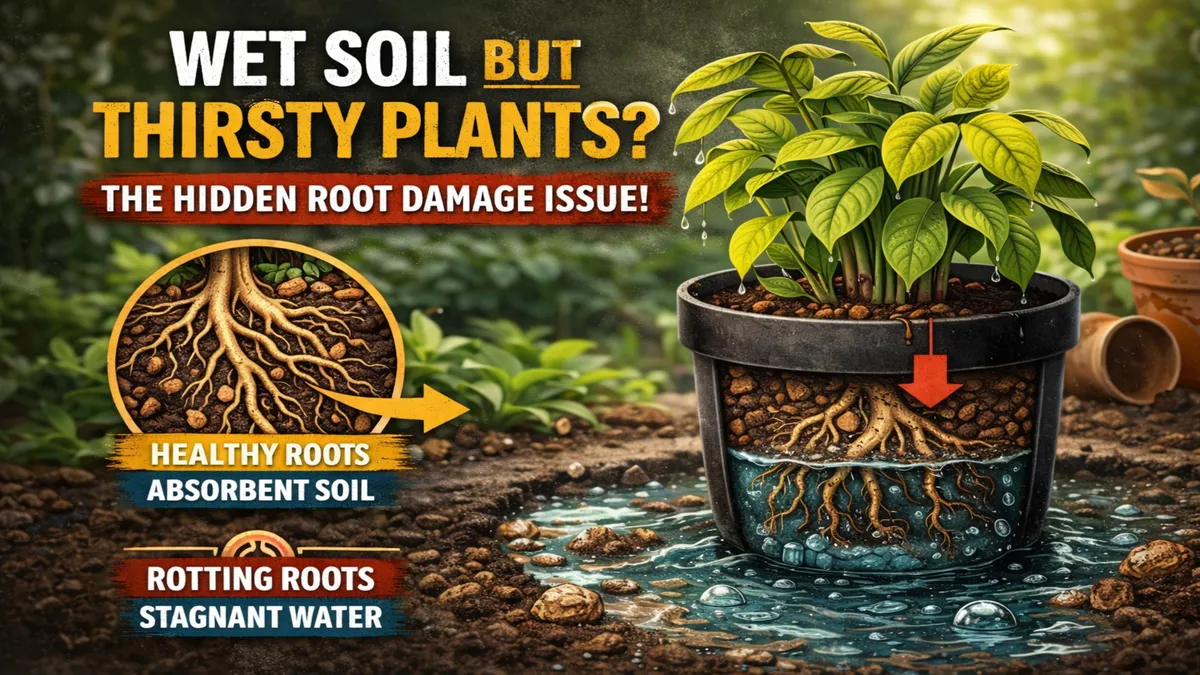
Indoor plants can appear thirsty even when the soil is consistently moist, a situation that confuses many plant owners. I've experienced this problem myself and learned that water in the pot doesn't always mean the water is reaching the roots. When plants stop absorbing water, the problem is usually hidden beneath the surface. Understanding why this happens helps prevent gradual decline and saves plants before permanent damage sets in.
Quick Comparison:
• Best for low light : Snake Plant
• Best for fast growth : Pothos
• Best for beginners : ZZ Plant
• Best for air purification : Spider Plant
Related News
Why Wet Soil Doesn't Always Mean Hydrated Roots
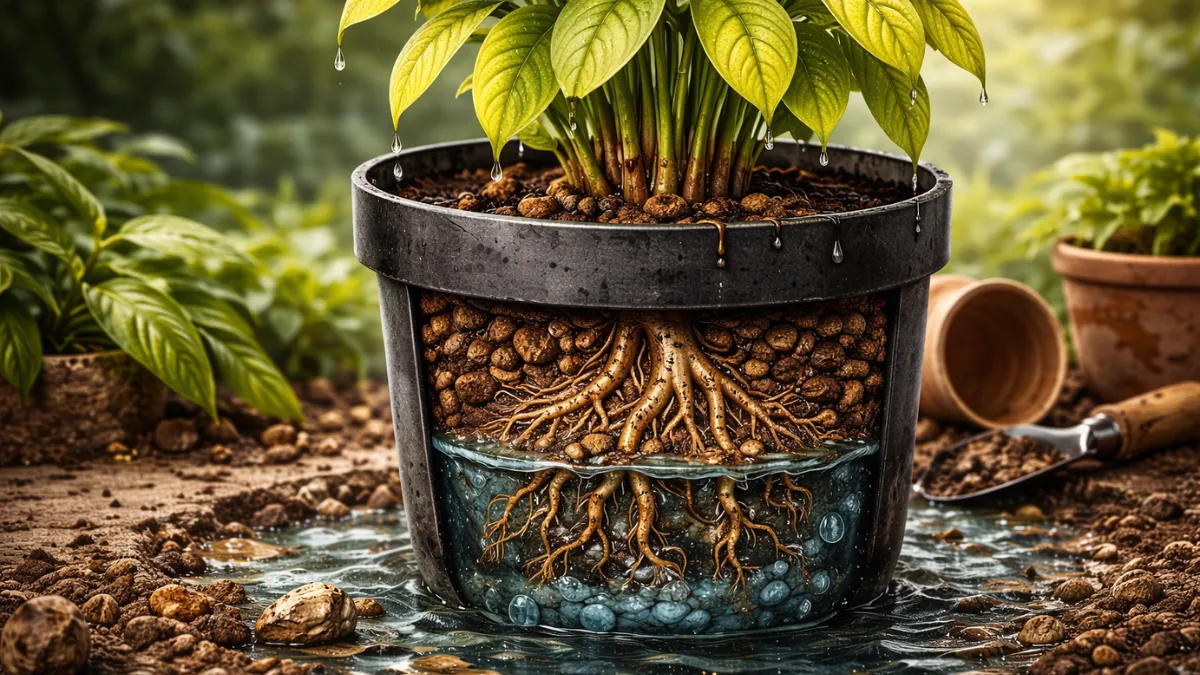
When soil remains wet for extended periods, the roots can actually lose their ability to absorb water. Roots need oxygen just as much as they need moisture. Without air, they weaken and cease to function properly.
Another problem is uneven moisture. Water can pool at the top or around the edges while the root ball remains dry or waterlogged. In either case, the plant shows signs of dehydration, even if the pot feels heavy.
Root Damage is the Most Common Hidden Cause
Roots are living tissue, and once they are damaged, their water absorption slows down or stops altogether. This damage usually occurs gradually and often goes unnoticed until the leaves begin to droop.
Over time, stressed roots lose their fine root hairs. These tiny structures are responsible for drawing water into the plant. Without them, the water remains in the soil and never reaches the plant's system.
How Overwatering Leads to Failure in Water Absorption
Overwatering doesn't mean giving too much water at once. It means watering too frequently without allowing the soil to breathe. Constant moisture suffocates the roots and initiates rot.
Once the roots begin to rot, they can no longer transport water upwards. The plant reacts as if it's underwatered, even though the soil remains wet for days.
Compact or Old Soil Inhibits Water Movement
Soil ages over time. It becomes dense, compacted, and unable to distribute water evenly. Instead of water flowing slowly through the soil, it pools in some areas and bypasses others.
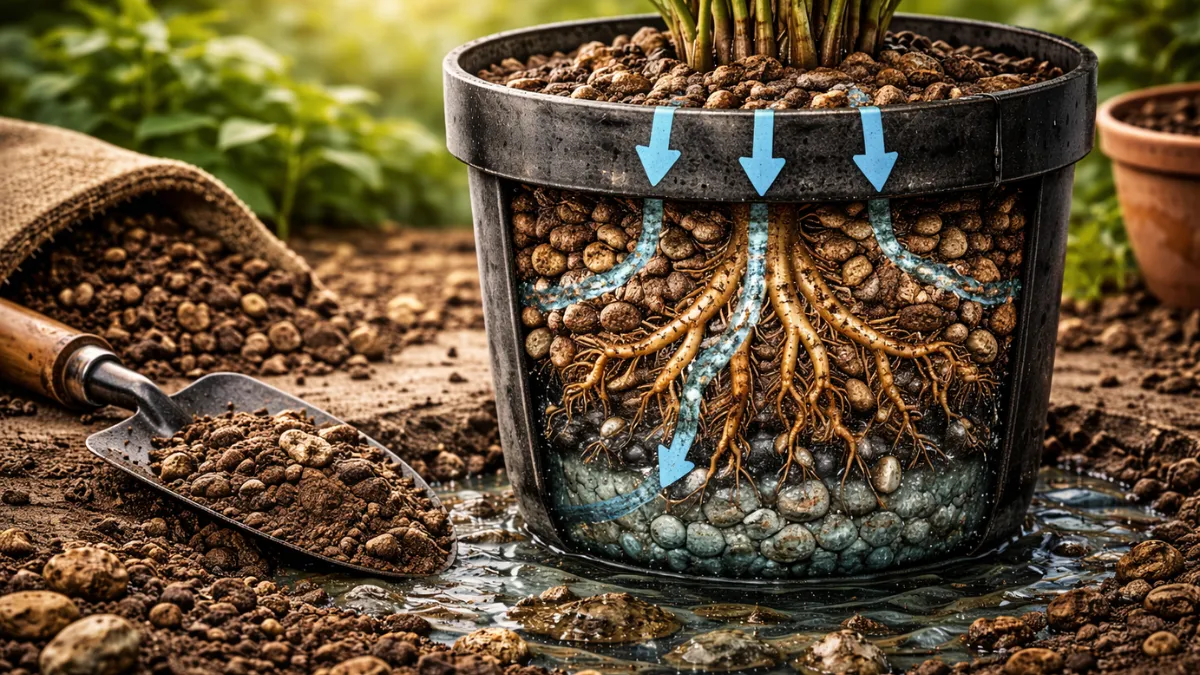
Compact soil also traps salts and minerals. These accumulations interfere with root function and reduce water absorption capacity, making the plant appear perpetually thirsty.
Drainage Problems That Trap Water Below
Poor drainage is another major reason why houseplants stop absorbing water. Pots without drainage holes accumulate water at the bottom, drowning the lower roots first.
Even pots with drainage holes can suffer if the drainage layers become blocked. Roots sitting in stagnant water quickly weaken, while the upper roots dry out and cease to function.
Root-Bound Plants Struggle to Absorb Moisture
When roots lack space, they begin to circle tightly within the pot. This limits their access to fresh soil and pockets of water.
Water often drains straight through root-bound pots without being absorbed. Because the soil can't retain moisture properly, the roots remain dry despite frequent watering.
Common Problems vs. Practical Solutions Table
| Problem Seen | Why It Happens | What Actually Helps |
|---|---|---|
| Wet soil but wilting | Root oxygen loss | Improve drainage and airflow |
| Water drains too fast | Root-bound plant | Repot with fresh soil |
| Soil stays soggy | Compacted soil | Replace old soil mix |
| Leaves yellow and soft | Root rot | Trim roots and dry soil cycle |
Why Misting and Overwatering Won't Help
Overwatering or misting the leaves doesn't fix the water absorption problem. These actions increase moisture stress and accelerate root damage.
The problem isn't a lack of water, but a lack of healthy roots. Until the roots recover, overwatering will only worsen the situation and delay recovery.
How Long Does Recovery Take After Fixing the Problem?
Once the soil and roots are corrected, plants don't recover instantly. Most indoor plants take two to four weeks to re-establish healthy root activity.
The appearance of firm new leaves and the gradual drying of the soil are signs that water absorption has improved. Patience is essential at this stage.
Related Articles:
Indoor Plants : Complete Beginner-to-Expert Guide (2026 Edition)}
Related Articles:
Overwatering Is not the Problem : The Real Reason Your Plants Are Dying}
Related Articles:
Best Soil Mix for Succulents vs Indoor Houseplants (2026)}
Final Thoughts on Water Absorption Problems
When indoor plants stop absorbing water, the problem usually originates below the soil surface. Simply having wet soil doesn't guarantee healthy plants. Roots need air, space, and fresh soil to function properly. Addressing drainage, soil composition, and watering habits will restore balance over time. With minor adjustments and patience, most indoor plants recover completely and continue to thrive without stress.