Indoor plants across the world are slowing down in 2025 due to low light, winter dormancy, poor soil and watering issues. Here’s the most accurate, Google-trending guide to restart healthy new growth fast.
✨
AI summarized this news · Reviewed by Indoor Plantify
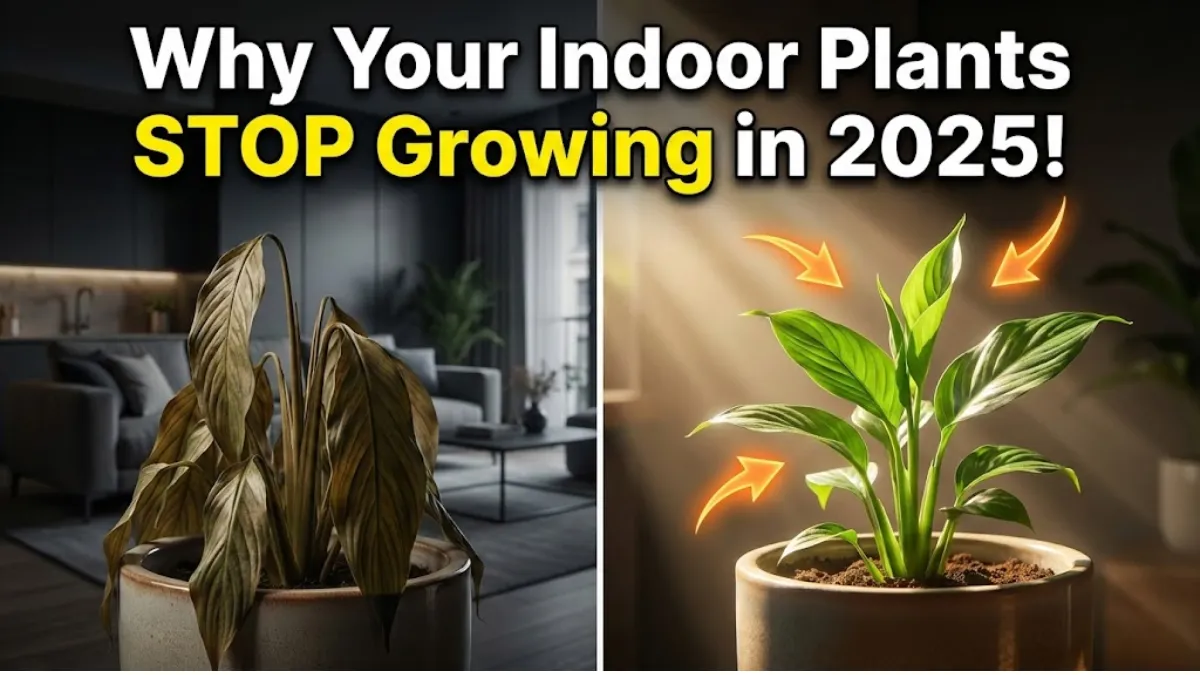
People often have questions like, "Why aren't my plants growing?" and "Has my indoor plant stopped growing?" queries are increasing rapidly. This problem could be due to changes in the weather, the dormant winter months, or low sunlight and poor soil quality. Indoor plant growth is slowing down significantly in homes by 2025. When people don't see any new leaves for weeks, they panic and they rush to Google. This topic is gaining momentum worldwide because more people keep indoor plants in AC-cooled, dimly lit apartments where growth conditions naturally slow down. Now, let's tell you how to fix this problem.
Low light : This is the biggest reason for slow plant growth.
The growth of most house plants slows down when they get too much direct sunlight. If you want to increase the growth of your plants quickly, then keep your plants in indirect sunlight. This problem is occurring more in these plants like Pothos, Philodendron, Rubber Plant, Monstera and Peace Lily. All these plants are facing more problems in photosynthesis. One reason for this could be that they do not get as much light as they need, so their growth gradually slows down and then those plants stop growing their new leaves. There are many solutions to fix this, which we will tell you in detail one by one.
• Place a small grow light on your plants for 2–3 hours.
• Just doing this can help restart growth within 10–15 days.
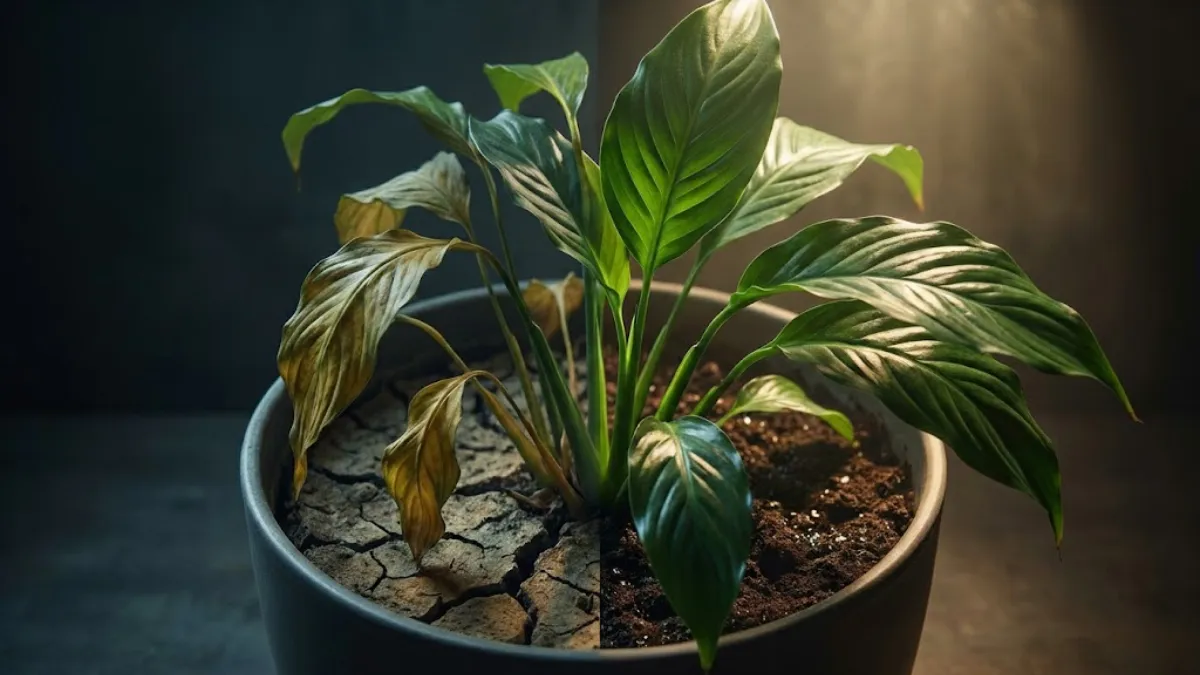
File Photo : A striking before-and-after view showing how indoor plants stop growing due to dry soil, low light and stress — and how proper care brings them back to life.
Water imbalance – over or under watering
• People often encounter this problem :
• The plant isn't growing, but the soil is always wet.
• Inadequate watering causes indoor plants to grow slowly.
Wet soil suffocates the roots, while dry soil prevents them from absorbing nutrients. Both conditions stunt growth.
How to fix it
• Water plants only when the top 1–2 inches of soil are dry.
• Always use pots with drain holes.
• Loosen compacted topsoil to allow for air circulation.
• Balanced watering will promote new growth.
This can be due to nutrient deficiencies and old soil.
Always use good fertilizer for indoor plants and if you use any third party fertilizer then it stops the growth of your plants and change the soil of your plants every month so that the roots of your plants will become strong and it will be easy for them to grow new leaves.
• Use liquid fertilizer every 20–25 days.
• Repot plants every 12–18 months.
• Add perlite/compost to improve the soil texture.
• Nutrient-rich soil always promotes new growth.
Temperature and seasonal sluggishness
Most tropical plants slow down their growth during the colder months. Low temperatures reduce metabolic activity, which inhibits leaf growth.
How to fix this:
• Keep plants away from cold windows.
• Keep the room temperature at a constant range of 18°C–27°C.
• Water the plant less during the colder months.
• Most plants resume growth once temperatures stabilize.
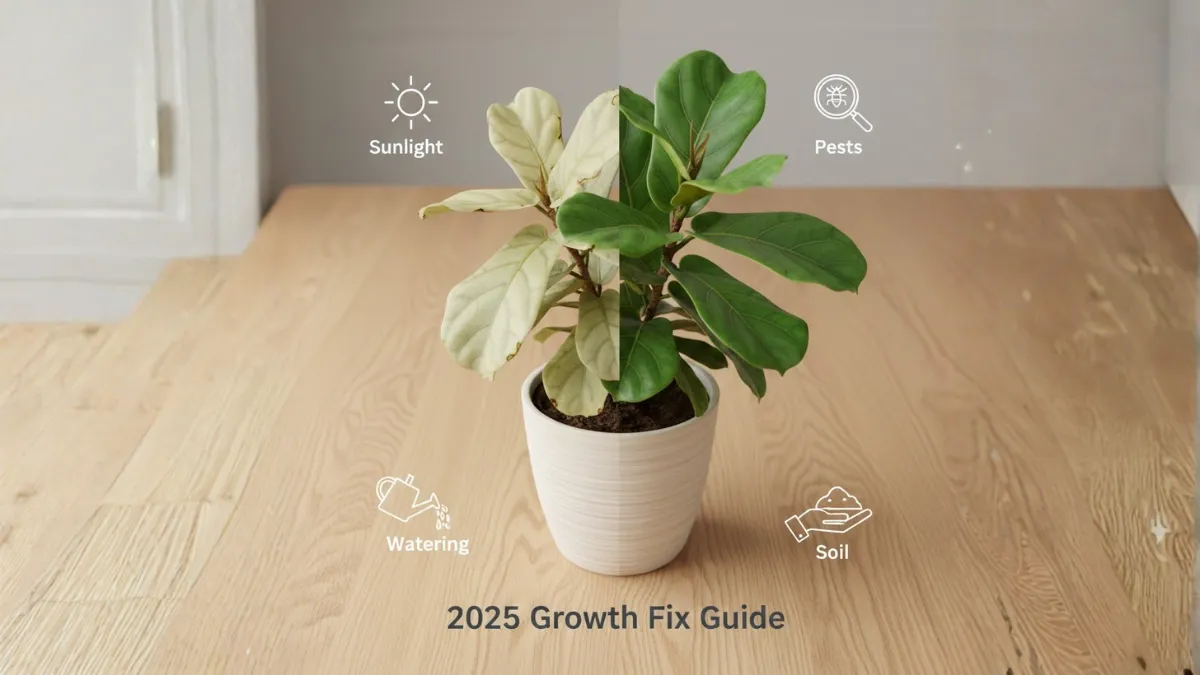
File Photo : A visual guide showing how sunlight, watering, soil quality, and pests affect indoor plant growth in 2025.
Insects hidden inside the plants are hindering their growth.
Small insects often cling to the underside of plant leaves and roots, stunting growth. These insects, including spider mites, thrips, mealybugs, and gnat larvae, sap the plant's energy, leaving no energy for new leaves.
How to Fix :
• Spray neem oil on plants once a week.
• Increase the plant's humidity gradually.
• Remove infected leaves from your plants immediately.
• Growth resumes once the insects are gone.
Root-filled pots
Are our plants not showing any new growth because the roots of the previous plant have filled the pot? When roots tightly encircle the pot, the plant cannot absorb nutrients or water properly, which hinders new plant growth.
How to fix:
• Repot the plant into a slightly larger pot
• Prune any dead roots immediately
• Refresh the soil
• Plants usually show new growth within 2–4 weeks of repotting.
Wrong pot size or wrong soil mix
Why is the plant still not growing after repotting? The reasons
Using heavy, dense, or clayey soil can suffocate the roots. And, of course, large pots stay wet for too long.
How to fix:
• Use an airy mix: cocopeat + perlite + compost
• Choose a pot only 1–2 inches larger.
• Airy soil = faster growth resumption.
Follow Us On Social Media
Join the Discussion
No discussions yet. Be the first to start one!
Expert FAQs
Why are indoor plants experiencing slowed growth by 2025?
Indoor plant growth is slowing down significantly by 2025 due to factors like weather changes, dormant winter months, low sunlight, poor soil quality, and conditions in AC-cooled, dimly lit apartments.
What is the biggest reason for slow indoor plant growth?
Low light is identified as the biggest reason for slow plant growth, affecting photosynthesis in common houseplants like Pothos and Monstera.
How can I quickly restart the growth of my indoor plants if they are suffering from low light?
To restart growth quickly, place plants near a bright window, clean dusty leaves, or use a small grow light for 2-3 hours daily. This can help restart growth within 10-15 days.
How does water imbalance affect indoor plant growth?
Both overwatering, which suffocates roots with wet soil, and underwatering, which prevents nutrient absorption due to dry soil, can stunt plant growth. Balanced watering is crucial for new growth.
What is the recommended watering practice for indoor plants?
Plants should be watered only when the top 1-2 inches of soil are dry. Always use pots with drain holes and loosen compacted topsoil to allow for air circulation.
How often should I fertilize and repot my indoor plants to ensure healthy growth?
It is recommended to use liquid fertilizer every 20-25 days and repot plants every 12-18 months. Adding perlite or compost can also improve soil texture.
How do temperature and seasons impact the growth of indoor plants?
Most tropical plants slow their growth during colder months due to reduced metabolic activity, which inhibits leaf development. Keeping plants away from cold windows can help mitigate this.