

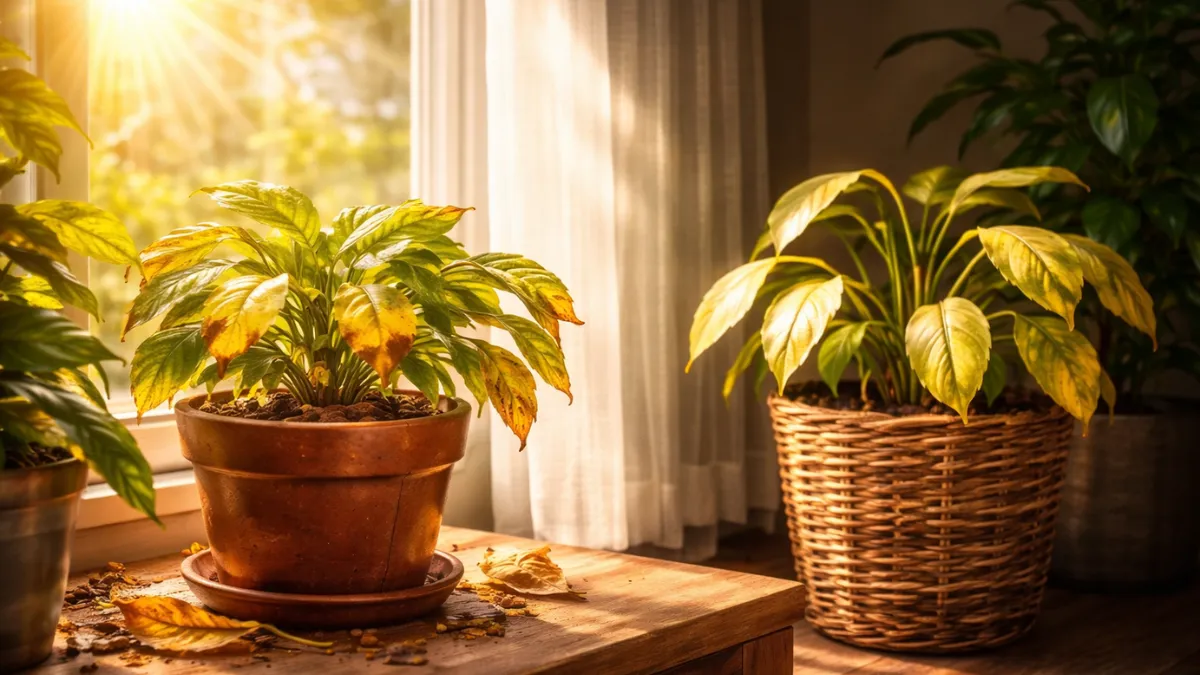
Yellowing leaves on houseplants are one of the most common problems faced by plant owners. This problem often starts with just one leaf and gradually spreads, leading you to worry that your plant is dying. In most homes, yellowing leaves are not caused by disease, but rather by minor mistakes in care. Understanding why leaves turn yellow will help you fix the problem quickly and keep your plant healthy for a long time.
Quick Comparison:
• Best for Low Light : Snake Plant
• Best for Fast Growth : Pothos
• Best for Beginners : Spider Plant
• Best for Air Circulation : Areca Palm
Related News
Why Do Houseplant Leaves Turn Yellow?
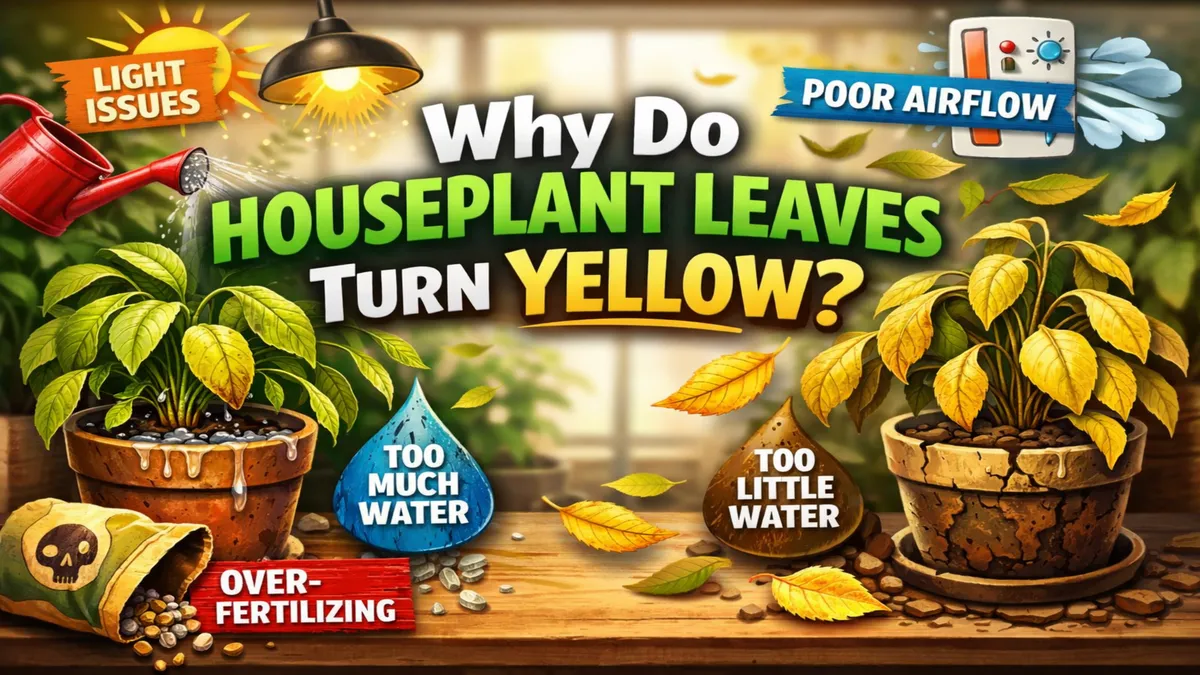
Yellow leaves usually mean your plant is stressed, not sick. Houseplants react quickly to changes in watering, light, or air circulation. When their roots are struggling, the leaves are the first to show signs. Yellowing is the plant's way of minimizing energy loss while it tries to recover.
Many people assume that yellow leaves mean the plant needs more fertilizer. In reality, fertilizing often makes the problem worse. Most yellowing leaf problems stem from environmental factors, not nutrient deficiencies.
Overwatering is the Most Common Cause
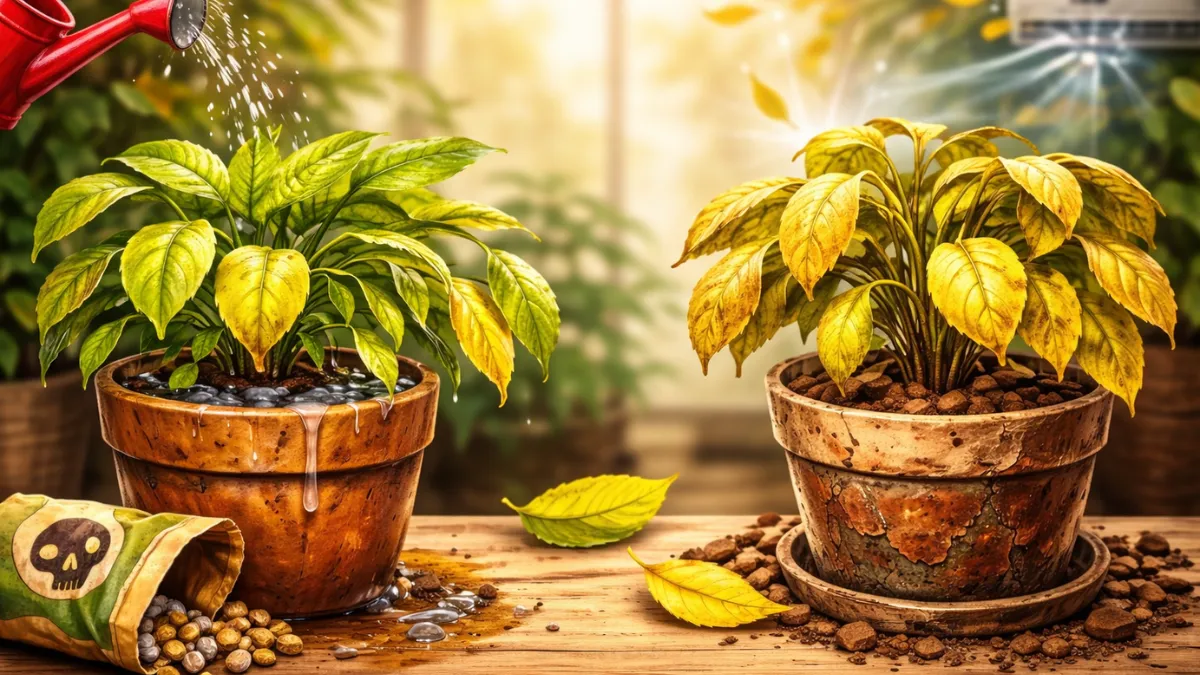
Overwatering is the biggest reason for yellowing leaves on houseplants. This is because when the soil stays wet for too long, the roots can't breathe. This weakens the roots, which then can't transport nutrients to the rest of the plant. As a result, the leaves lose their green color and turn pale yellow.
This problem is common in pots without drainage holes. Even "low-water" plants can suffer if water accumulates at the bottom of the pot. Allowing the topsoil to dry out before watering again often solves this problem.
Underwatering can also cause yellowing leaves.
Plants that receive too little water can also develop yellow leaves, but the texture is different. Their leaves typically turn a lighter yellow, feel dry, and may curl at the edges. This happens when the roots can't absorb enough moisture to support the leaves' functions.
Indoor air is often drier than you might expect, especially near windows or AC vents. Plants may need watering more often than you think, even if the soil looks fine on the surface.
Light problems stress indoor plants.
Light exposure plays a big role in leaf color. Too little light slows down photosynthesis, causing older leaves to yellow and drop. Too much direct sunlight can scorch leaves, turning them yellow or brown.
Most indoor plants prefer bright, indirect light. Sudden changes, such as moving a plant closer to a window, often cause leaves to yellow. Making gradual changes allows plants to adjust without stress.
Nutrient imbalances are less common than you might think.
Yellow leaves aren't always a sign of nutrient deficiency. In indoor plants, nutrient imbalances are often caused by over-fertilizing, not a lack of nutrients. Over-fertilizing damages the roots and prevents them from absorbing water.
If nutrients are the problem, the yellowing usually looks consistent across multiple leaves. Using a diluted fertilizer only during periods of active growth helps prevent long-term damage.
Common Mistakes with Yellowing Leaves and Their Solutions
| Mistake | What Happens | Better Fix |
|---|---|---|
| Watering daily | Roots suffocate | Water only when top soil dries |
| No drainage holes | Root rot develops | Use pots with drainage |
| Too much fertilizer | Leaf burn | Fertilize lightly |
| Sudden light change | Leaf shock | Adjust light slowly |
Related Articles:
Why Indoor Plant Leaves Turn Yellow? Exact Causes & Easy Fixes
Temperature and Airflow Stress Leaves
Indoor plants are very sensitive to temperature fluctuations. Cold drafts from windows or hot air from heaters can cause leaves to yellow and drop. Plants placed near air conditioners often show stress even with proper watering.
Good airflow helps prevent moisture buildup, but constant direct drafts are harmful. Keeping plants in a stable room environment reduces leaf discoloration over time.
When Yellow Leaves Are Normal
Not all yellow leaves are a problem. Older leaves naturally turn yellow and drop as the plant grows new leaves. This is common in plants like pothos, rubber plants, and snake plants.
If only one or two lower leaves are yellowing while new growth looks healthy, there's usually nothing to fix. Focus on the overall health of the plant, not individual leaves.
Related Articles:
Why Indoor Plant Leaves Turn Yellow (Real Fixes)
Related Articles:
Why Indoor Plant Leaves Turn Yellow : The Updated 2025 Guide to Fixing It Fast
Final Thoughts on Yellow Leaves on Indoor Plants
Yellow leaves are usually a warning sign, not a death sentence. Most indoor plants recover after adjusting watering, lighting, and airflow. Avoid quick fixes and give your plant time to adjust. Healthy roots lead to healthy leaves, and slow, consistent care always works better than overcorrecting problems.