

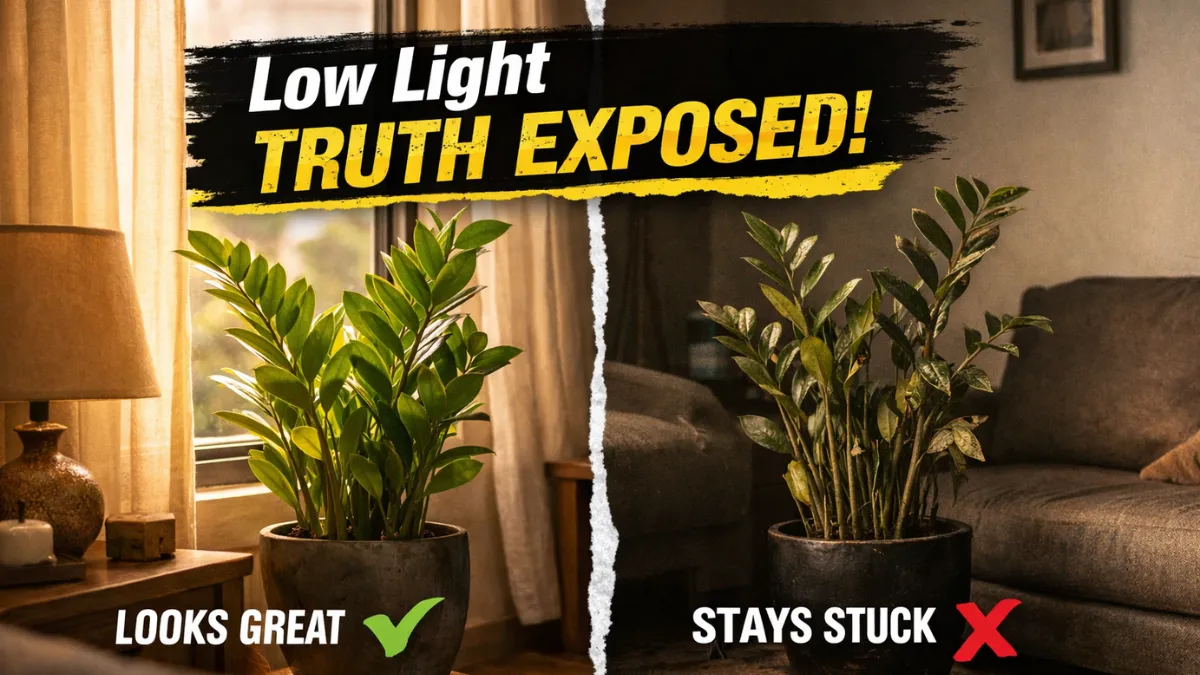
Most people buy the ZZ plant because they hear that it can thrive even in low light conditions. However, after purchasing the plant, they often start experiencing problems within a few weeks, such as the plant stopping its growth, the leaves losing their shine, and many plant owners even saying that the plant looks very boring.
This is the shocker.
The ZZ plant didn't fail.
Our homes misunderstood it.
Related News
I've grown ZZ plants in rented flats, air-conditioned bedrooms, dark corners, balconies, and even in offices where the lights stay on all night. But I've seen people make the same mistake over and over again.
Read this before buying or growing this plant.
People are searching for this plant for the wrong reasons, which is why Google is suddenly showing it everywhere. And most websites are simply repeating incomplete information. This leads to people not understanding the plant properly, their problems remain unresolved, and they conclude that the ZZ plant is useless.

Why is this happening all of a sudden?
Every year, whenever people move into new homes, set up new apartments, or redesign their rooms, searches for the ZZ plant increase. And this year, the question is being asked much more frequently.
Such as:
• Smaller apartments.
• Increased use of air conditioning.
• More homes with "low light" conditions.
People want a plant that won't die easily.
So they search for things like "best low-light indoor plant," and the ZZ plant comes up at the top of Google's results. That's why Google is suddenly showing it everywhere.
But here's the problem.
People are confused about whether they should keep their ZZ plant in low light or bright light, and this often confuses new plant parents.
Most people get this part wrong.
The ZZ plant can survive.
That doesn't mean it will thrive. You still need to take proper care of it.
And nobody explains this clearly.
What most people misunderstand:
These are some common misconceptions.
People think :
Low light means no sunlight at all. This doesn't mean your ZZ plant needs absolutely no sunlight.
But some people place their ZZ plants.
places like:
* A corner
* Behind a sofa
* A windowless bathroom
* Under the stairs
Then they wait for their ZZ plant to grow, but if you put your plant in these places, it will never thrive.
Why Online Advice Fails in Real Homes
Most guides are written from studios, greenhouses, or well-lit Western homes. They say "low light," but what they mean is that you shouldn't keep your plant in direct sunlight all day, but only for a few hours.
Indian apartments are different
Small windows.
Buildings blocking the light.
Air-conditioned rooms with the curtains drawn. And online advice providers ignore this reality. That's why even after doing everything right, people's problems aren't solved, and they end up feeling confused.
Some signs that this plant behaves differently indoors
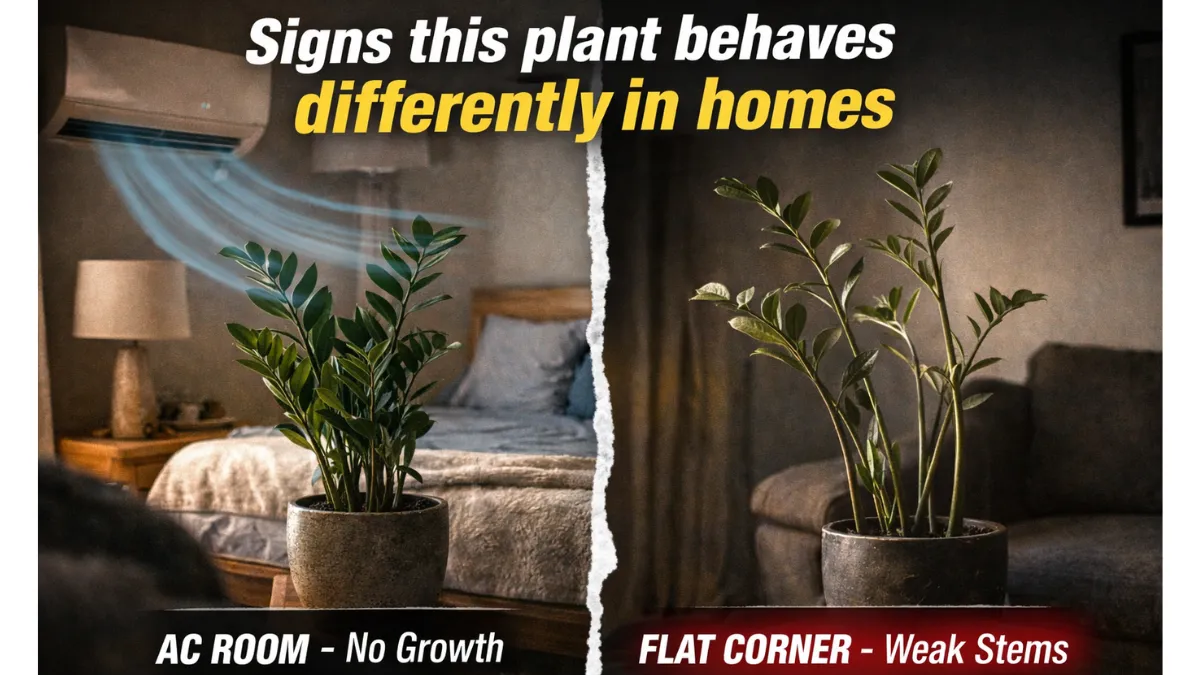
Example of an air-conditioned room
In an air-conditioned bedroom, ZZ plants often look fine, but they never grow.
The main reason is that the cool, dry air and very stable temperature of the AC slow down the plant's internal rhythm, causing it to go into survival mode. If you're doing this, your plant is giving you these signs:
• The leaves remain green.
• No new shoots appear.
• There is no visible damage.
People think it's healthy, but in reality, it's stagnant.
Now the question arises: should we remove it or wait?
Important update : You shouldn't leave it like this, as doing so slows down the plant's recovery.
Example of a low-light flat or apartment
In flats with limited daylight, ZZ plants grow slowly. You might see long stems, widely spaced leaves, or a lighter green color.
The plant is searching for light, not growing
Many people compare it to the snake plant and think they behave similarly. But that's not the case. The snake plant can tolerate darkness better, while the ZZ plant can thrive even with minimal care.
And this difference is very important.
What actually works in real Indian homes
Small changes that make all the difference
You don't need direct sunlight or daily care.
You need :
• A bright room, not a dark corner
• Indirect daylight, even if minimal
• Occasional relocation
I keep my ZZ plant near the window for 2-3 weeks, then move it slightly further inside. This small change helps it grow tremendously.
Another thing most guides overlook: dust
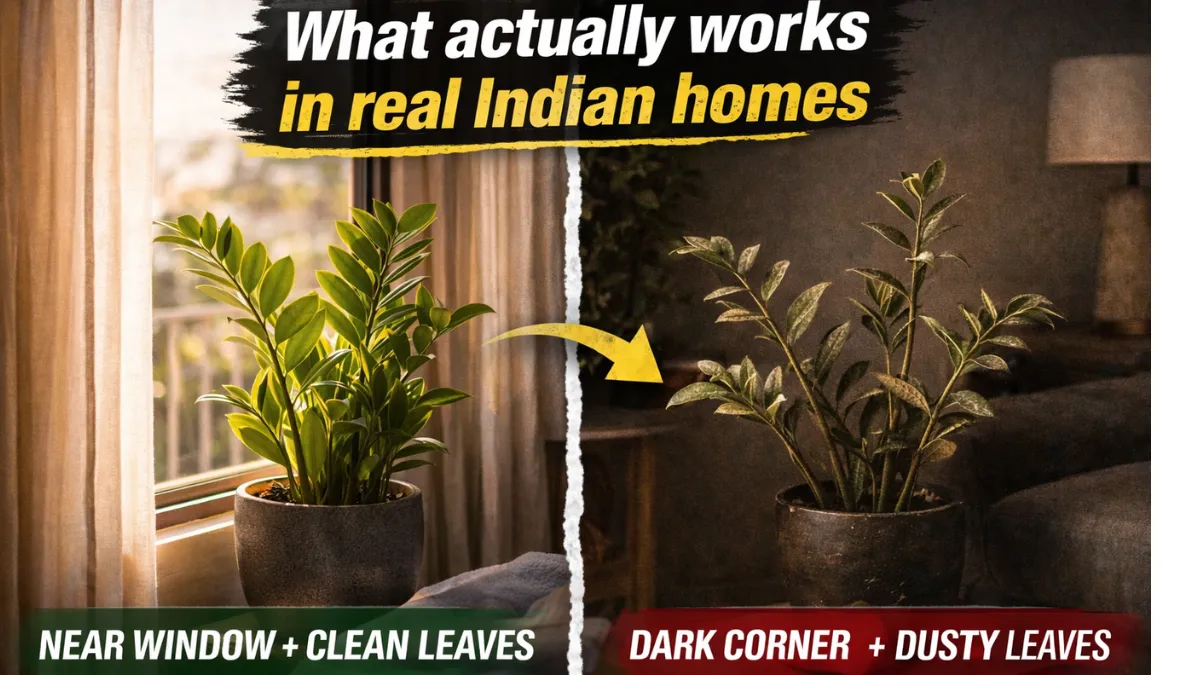
Dust easily accumulates on ZZ plant leaves. In apartments, dust blocks more light than you think. Wipe the leaves thoroughly every 10-15 days. Growth improves significantly.
What to completely ignore
Ignore advice that says
• It likes darkness
• Never move it
• A strict rule of watering once a month
Watering frequency depends on the weather, pot size, and room temperature. In summer apartments, once a month is often too little. In winter, it might be too much.
Most people get these things wrong and then blame the plant.
What mistakes do people still make even after reading the guide?
The biggest mistake: doing nothing.
Because the plant stays alive, people stop paying attention to it.
I've seen ZZ plants survive for two years without growing. But then they suddenly rot because the watering schedule remains the same while the light levels decrease even further.
Another mistake is comparing it too much to money plants or snake plants. Every plant reacts differently indoors. If you've read our guides on snake plants or pothos, you'll see the difference clearly.ZZ plants need consistent, gentle care, not neglect.
Also Read : Your Snake Plant Is Tall But Weak : Heres What Nobody Told You
A brief conclusion
The ZZ plant isn't some magical low-light plant. Rather, it's a resilient survivor.
If you understand it a little and aren't afraid of it, it becomes one of the most low-maintenance indoor plants you can own. No drama. No daily stress.
Just don't put it in complete darkness and forget about it.
Most of the confusion disappears when you stop asking, "Will it survive?"
and start asking, "Is it behaving normally?"
This small shift in perspective changes everything.