

Quick Answer
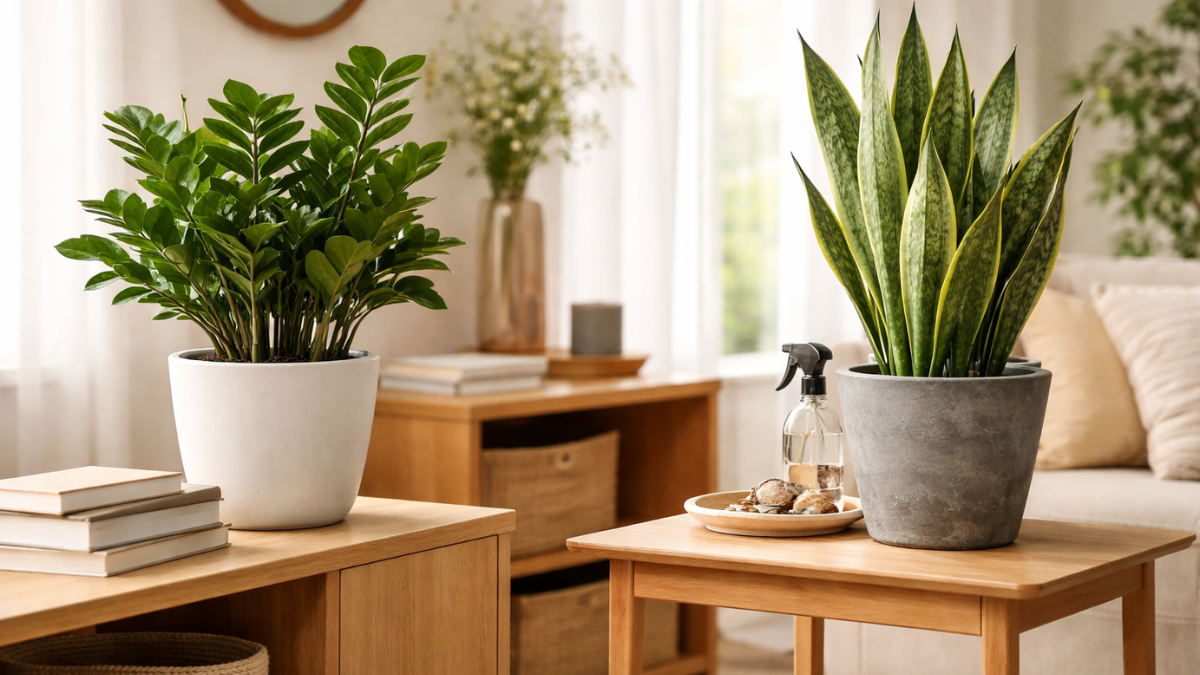
The ZZ plant and the Snake plant are both popular indoor houseplants that are very easy to care for, but they are not identical.
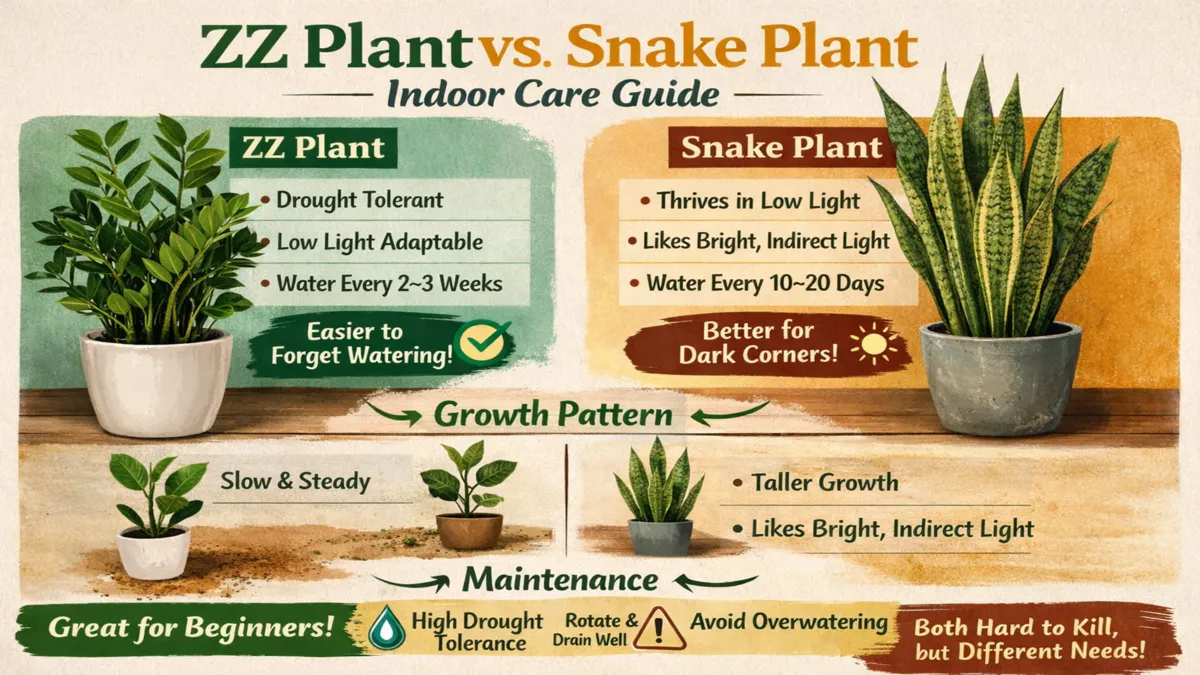
• ZZ plants tolerate neglect and drought better.
Related News
• Snake plants tolerate low light conditions better.
If your primary concern is making mistakes with watering, the ZZ plant is generally the safer choice. If your home has very dark corners, the Snake plant tends to perform slightly better.
Both of these plants are excellent choices for beginners and are popular subjects in many "ZZ vs. Snake Plant" care discussions on Reddit, largely because they manage to survive in conditions where other plants would fail.
Indoor Care Guide: ZZ Plant vs. Snake Plant
When people search for information regarding the care of ZZ plants versus Snake plants indoors, they typically want to know which plant is easier to keep alive.
Based on real-world experience with indoor gardening, both of these plants are incredibly difficult to kill; however, there are some subtle differences in their daily care requirements that are worth noting.
Let's compare them in detail.
1. Light Requirements
ZZ Plant
ZZ plants naturally grow beneath the tree canopies in Africa. Consequently, they are capable of surviving in very low-light indoor environments.
However, there is one fact that many care guides tend to overlook
ZZ plants grow significantly faster when placed in medium, indirect light.
While they will survive in dark corners, their growth rate will be considerably slower.
Ideal Lighting:
• Low to medium, indirect light
• Avoid harsh, direct sunlight
• Can even thrive under standard office lighting
Snake Plant
Snake plants (Sansevieria / Dracaena trifasciata) are also renowned for their ability to survive in low-light conditions. In many homes, these plants are placed in hallways, bedrooms, and bathrooms.
However, what they actually prefer is:
• Medium to bright, indirect light
• A little bit of morning sun is also generally fine
In very dark rooms, Snake Plants can survive, but the rate at which they produce new leaves slows down significantly.
Reality Check
Both of these plants can survive in low-light conditions, but neither of them truly thrives in the dark.
They merely survive. it does not necessarily mean they are growing well.
2. ZZ Plant vs. Snake Plant Care Guide: Watering
Most problems associated with indoor plants stem from improper watering practices.
Beginners, in particular, often seek information on how to water ZZ Plants versus Snake Plants, as neither of these plants appreciates being overwatered.
Watering the ZZ Plant
ZZ Plants store water within their thick, underground stems (rhizomes).
For this reason, they are highly tolerant of drought conditions.
General Watering Guidelines:
• Water every 2–3 weeks
• Allow the soil to dry out completely
• Reduce watering during the winter months
My Personal Experience
On one occasion, I forgot to water a ZZ Plant for nearly a month, yet it remained perfectly healthy.
Such a high level of drought tolerance is rarely seen among indoor plants.
Watering the Snake Plant
Snake Plants also store water within their thick leaves.
However, they are slightly more sensitive to wet soil conditions.
General Watering Guidelines:
• Water every 10–20 days
• Allow the soil to dry out completely
• Use a well-draining soil mix
Beginners often make a common mistake: watering Snake Plants too frequently, which can lead to root rot.
Simple Rules
Forget to water it = The ZZ plant survives much better.
Water it too frequently = The Snake Plant can suffer damage quickly.
3. Growth Pattern
Another interesting difference that is rarely discussed.
ZZ Plant Growth
ZZ plants grow slowly, yet steadily.
New shoots emerging from the soil appear as complete, fully formed stems.
They typically experience growth during these seasons:
• Spring
• Summer
Indoors, their height typically reaches 2–3 feet.
Snake Plant Growth
Snake Plant leaves grow directly upward from the base of the plant.
Indoors, they can grow even taller:
• Often reaching 3–4 feet
• Some varieties grow even taller than that
They also spread gradually via underground roots (rhizomes).
Limitations
When kept indoors, neither of these plants grows rapidly.
If you expect rapid growth similar to plants like Pothos or Monstera you may find both of these plants to be quite slow-growing.
4. Difficulty of Maintenance
If we compare maintenance factors alone:
| Care Factor | ZZ Plant | Snake Plant |
|---|---|---|
| Water tolerance | Extremely drought tolerant | Moderate drought tolerance |
| Light tolerance | Good in low light | Slightly better in low light |
| Pest problems | Very rare | Rare |
| Growth speed | Slow | Slow to moderate |
Overall Difficulty:
Both are plants suitable for beginners.
However, many indoor gardeners still consider the ZZ plant slightly easier because mistakes made during watering cause less harm.
Also Read : Snake Plant vs ZZ Plant : Best Choice for Small Apartments?
5. Benefits of the ZZ Plant vs. the Snake Plant
Many articles claim exaggerated benefits for these plants. The reality is far more modest.
Air Purification
Both plants were included in NASA's Clean Air Study, which tested plants capable of removing small amounts of indoor air pollutants.
However:
In actual homes, the air-purifying effect is very limited unless you have a large number of plants.
Therefore, they can offer a little help, but they are not a substitute for proper ventilation.
Aesthetic Benefits
Both plants are excellent choices for modern interior design.
ZZ Plant
• Glossy, dark green leaves
• Simple yet sophisticated appearance
• Popular in office settings
Snake Plant
• Tall, upright leaves
• Strong, architectural form
• Suitable for modern and Scandinavian interiors
Low-Stress Gardening
One often-overlooked benefit is the confidence it instills in beginners.
Plants that survive despite neglect help new plant owners gain experience without the constant heartbreak of losing their plants.
6. Benefits of the ZZ Plant (Why Many Beginners Prefer It)
Some practical benefits of the ZZ plant include:
1. Extreme Drought Tolerance
ZZ plants can survive for long periods without watering.
2. Survival in Low Light
They thrive in apartments with limited natural sunlight.
3. Pest Resistance
In many indoor environments, these plants rarely attract pests.
4. Long Lifespan
With basic care, they can survive indoors for many years.
My Personal Mistake
Initially, I planted a ZZ plant in a decorative pot that lacked drainage holes.
The soil remained wet for too long, and one of the stems turned yellow.
The plant recovered after I repotted it into soil with proper drainage.
Therefore, even hardy plants require basic drainage.
7. Common Misconceptions (Reality Check)
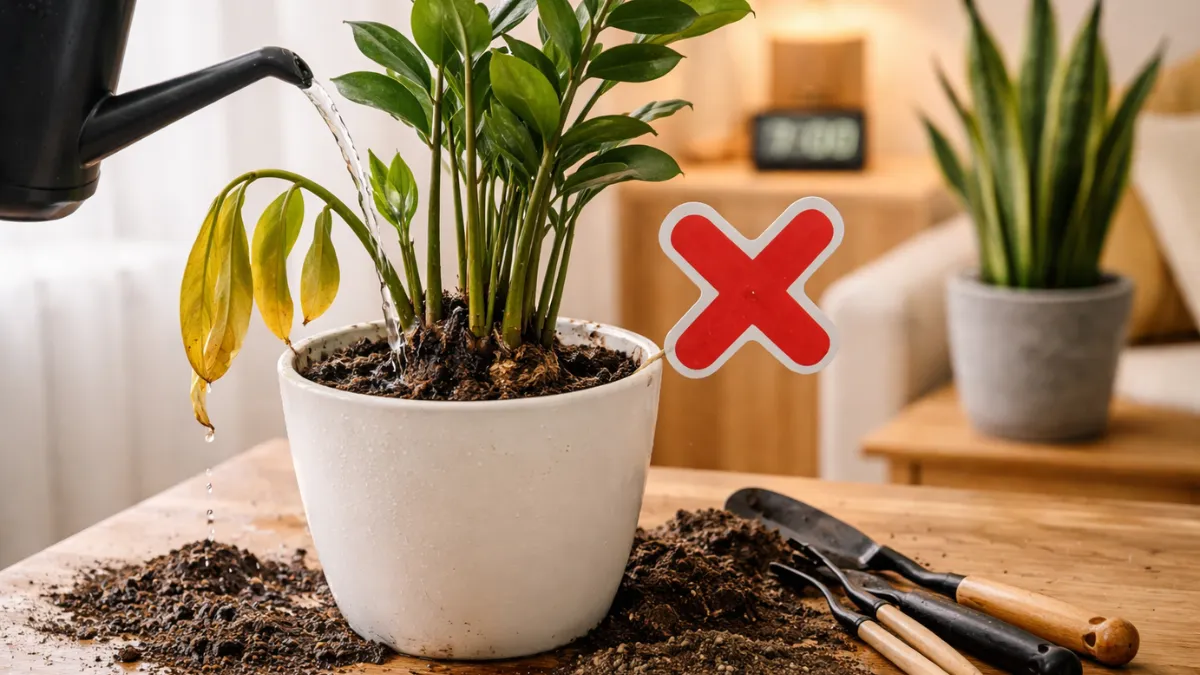
Misconception: These plants never die.
Truth:
They can die from consistent overwatering or if grown in soil lacking proper drainage.
Misconception: They can grow in total darkness.
Truth:
They can survive in low-light conditions, but they still require some amount of light.
Misconception: They significantly purify indoor air.
Truth:
This effect is observed under laboratory conditions, but is minimal in actual home environments.
Practical Care Tips
If you want any of these plants to thrive indoors
Use fast-draining soil.
A mixture of the following:
• Potting soil
• Perlite
• Coarse sand
works very well.
Always choose pots with drainage holes.
Stagnant water causes the most harm to these plants.
Rotate the plants periodically.
This ensures uniform growth.
Clean the leaves.
Dust hinders light absorption.
Which plant should you choose?
Choose a ZZ Plant if you:
• Tend to forget to water your plants
• Travel frequently
• Want a low-maintenance plant
Choose a Snake Plant if you:
• Have very dark rooms
• Prefer tall, upright-standing plants
• Want to add more visual height to your decor
In fact, many indoor gardeners eventually keep both plants together, as they complement each other.
Written from real indoor plant care experience for IndoorPlantify.