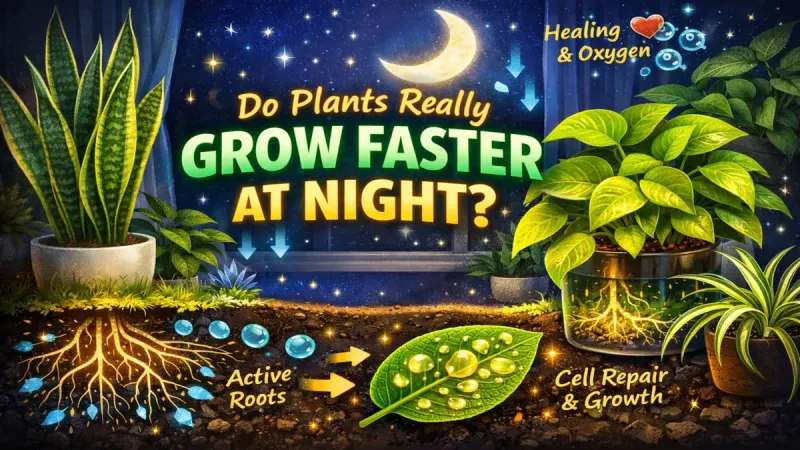
Indoor Plants Grow Taller at Night
Indoor plants recover and grow quietly during the night. · Absence of sunlight stress allows focus on cell repair and expansion. · Understanding nighttime growth aids in better plant care.
Read Full ArticleIndoor plants recover and grow quietly during the night. · Absence of sunlight stress allows focus on cell repair and expansion. · Understanding nighttime growth aids in better plant care.
Read Full Article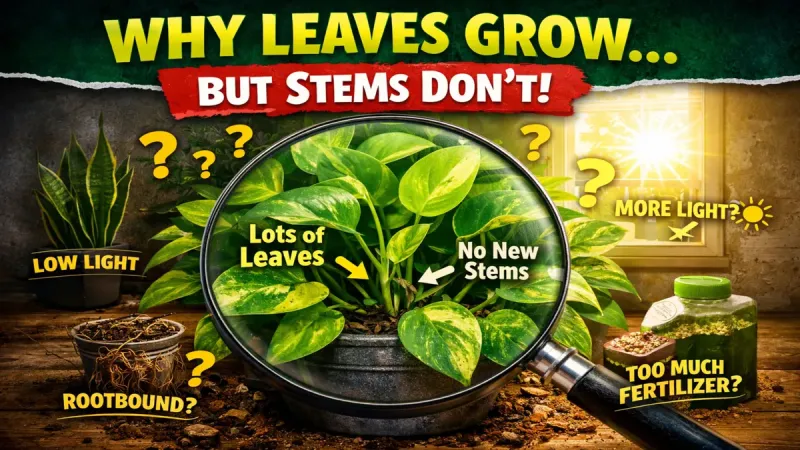
Indoor plants often grow leaves without developing new branches, a common but confusing observation. · This occurs because plants prioritize survival, allocating energy to leaves for photosynthesis in limited indoor environments. · Avoid overwatering, over-fertilizing, or constant movement; understand this natural growth pattern and allow plants to thrive.
Read Full Article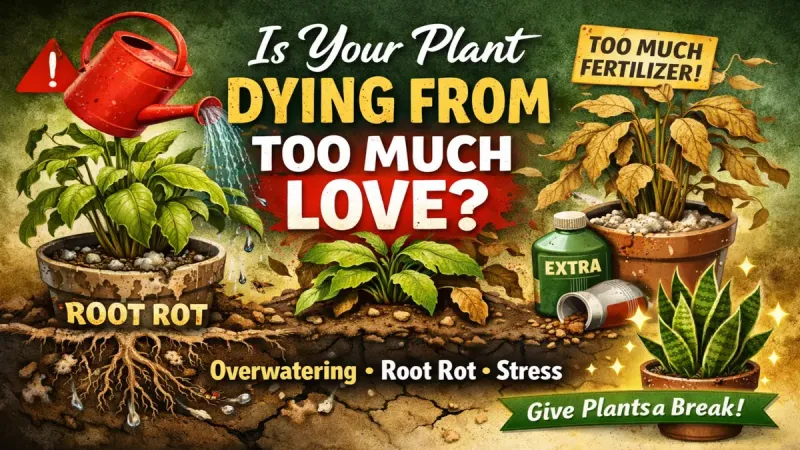
Despite good intentions, over-caring, especially overwatering, often harms indoor plants. · Constant watering, fertilizing, and repotting disrupt plants' natural rhythm and essential root needs. · Understanding the balance plants require is crucial for their long-term health and to prevent accidental damage.
Read Full Article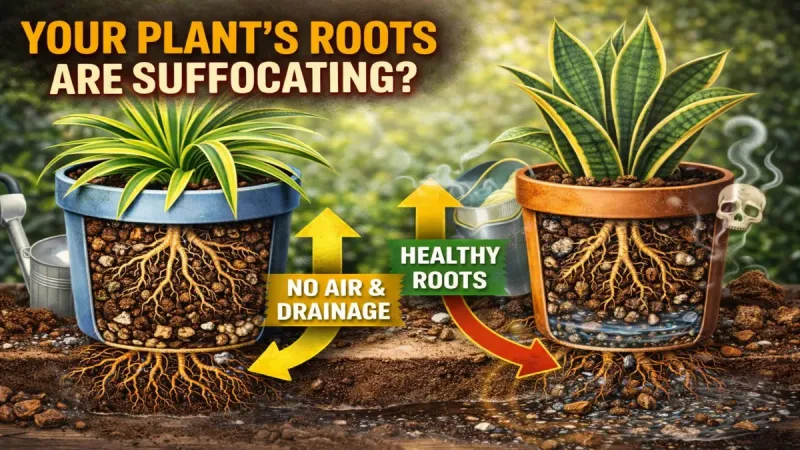
Root suffocation occurs when indoor plant roots don't get enough air in the soil. · It's primarily caused by compacted soil, poor drainage, or consistent overwatering. · Early detection of this gradual weakening is crucial to save plants before visible damage.
Read Full Article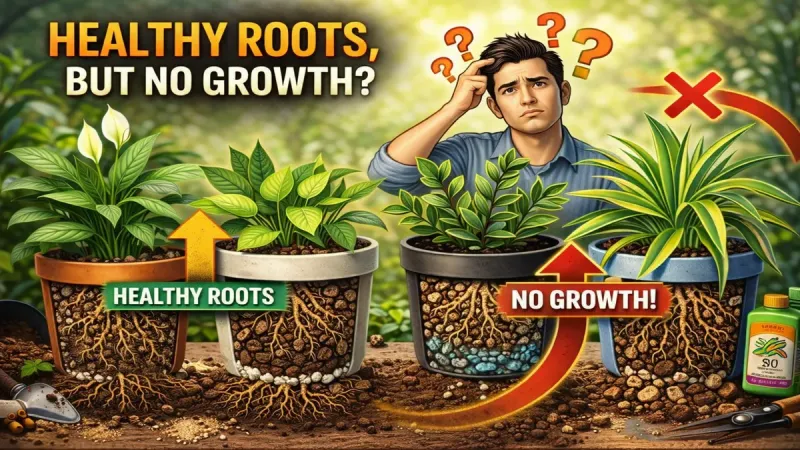
Healthy-looking roots can be inactive, preventing plant growth despite appearing fine. · Plant growth depends on more than just roots, requiring specific environmental signals. · Key factors include light, space, nutrients, and the plant's internal balance.
Read Full Article
Indoor plants can appear thirsty despite moist soil, confusing many owners. · Roots need oxygen; prolonged wetness deprives them, hindering water absorption. · Uneven moisture distribution can also prevent water from reaching the roots.
Read Full Article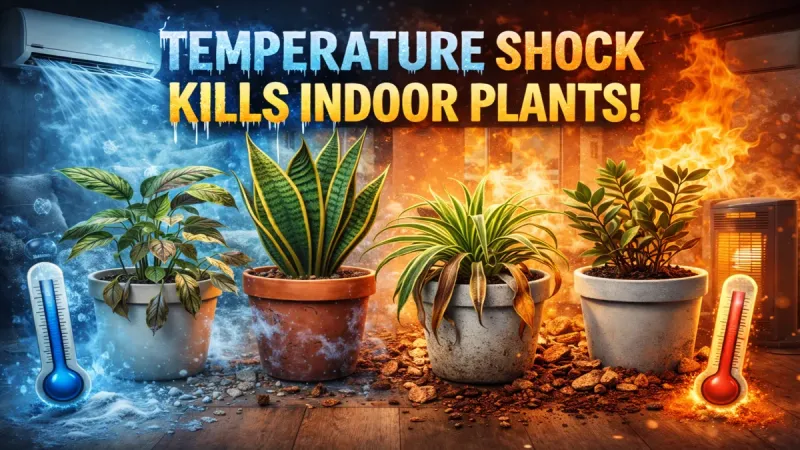
Rapid temperature fluctuations from AC, heaters, or drafts severely stress indoor plants. · Temperature shock disrupts water flow and can cause healthy plants to drop leaves overnight. · Often mistaken for disease, understanding this phenomenon prevents long-term damage and plant loss.
Read Full Article