

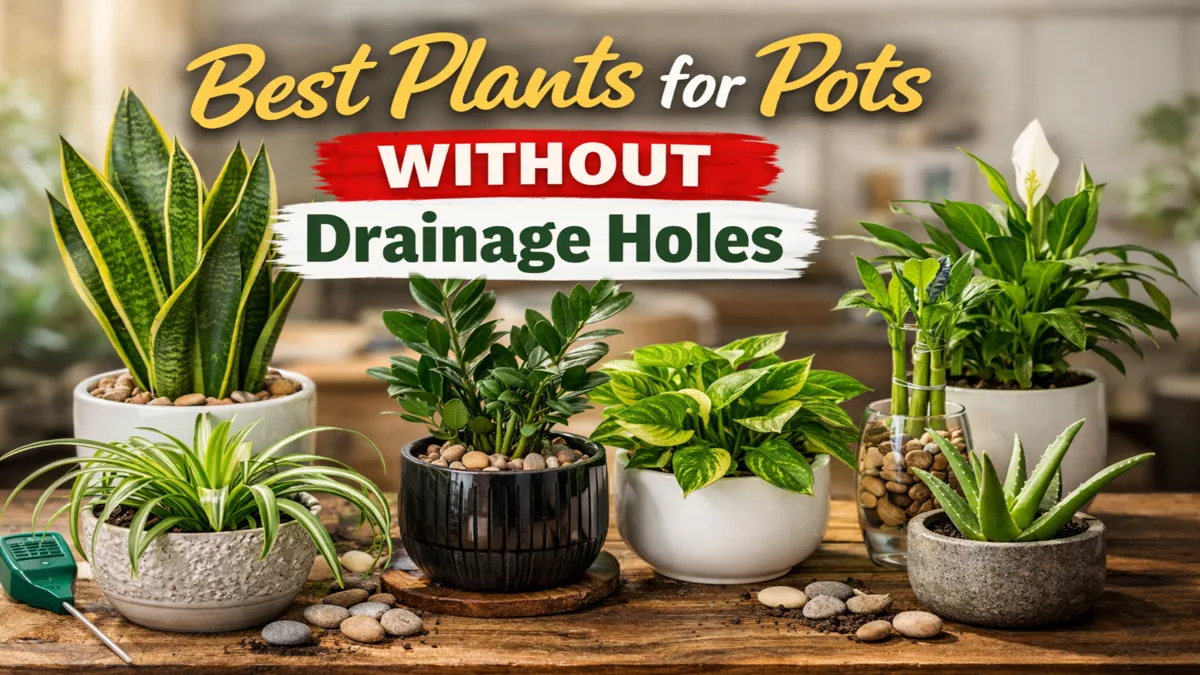
If you have ever purchased a beautiful planter without drainage holes, you may have asked yourself this question: Can I grow plants in this?
The answer is—yes.
Related News
However, not every type of plant can survive in such an environment. Some plants tolerate excess moisture better than others.
In my experience, choosing the right plant is even more important than choosing the right pot. If you select the right plant, everything else becomes much easier.
Let's explore some of the best indoor plants that can thrive even in pots without drainage holes and how you can keep them healthy.
1. Snake Plant (Sansevieria)
The Snake Plant is one of the safest choices for pots without drainage holes.
These plants store water within their thick leaves. This means they do not require frequent watering.
In my experience, overwatering is the only thing that causes them harm. Therefore, you should water them very sparingly.
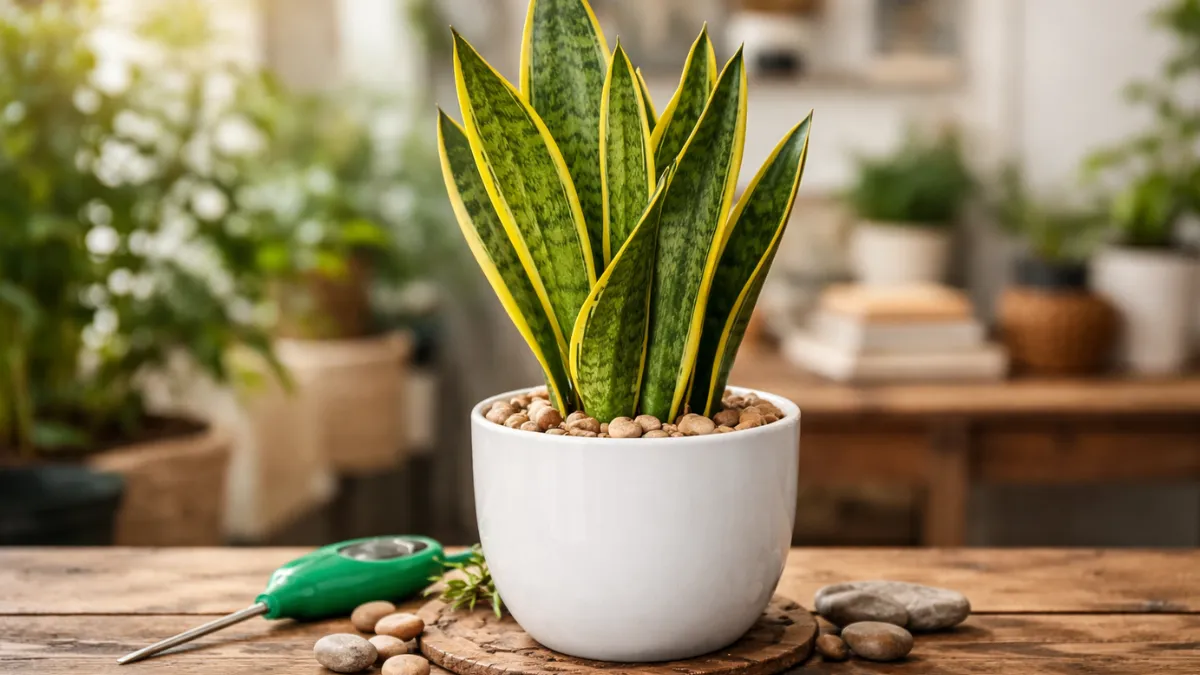
If the soil feels even slightly damp, do not water it again.
2. ZZ Plant (Zamioculcas zamiifolia)
The ZZ Plant is nearly impossible to kill.
It grows from thick rhizomes (underground stems) that store water. Consequently, this plant can survive even if the soil remains damp for extended periods.
I once kept a ZZ Plant in a ceramic pot without drainage holes for several months. With careful watering, the plant remained perfectly healthy.
Depending on the conditions in your room, water it just once every 2–3 weeks.
3. Pothos (Money Plant)
The Pothos is an extremely resilient plant that adapts easily to almost any environment.
It can thrive in both soil and water. That is precisely why it thrives much better than many other plants in pots without drainage holes.
However, I made a mistake early on—I overwatered it, as I assumed it loved water.
Consequently, its leaves turned yellow.
As soon as I cut back on watering, the plant bounced back immediately.
Therefore, keep the soil slightly moist, but not soggy.
4. Lucky Bamboo
Lucky Bamboo doesn't even require soil.
It grows perfectly well in containers filled with water, making it the ideal plant for pots without drainage holes.
All you need to do is:
• Change the water every 7–10 days.
• Use clean, chlorine-free water.
One downside is that it grows somewhat more slowly compared to plants grown in soil.
However, from a decorative standpoint, this plant looks absolutely stunning.
5. Peace Lily
If you exercise caution, the Peace Lily can survive even in low-drainage conditions.
When they need water, they give a clear signal—their leaves begin to droop.
This is actually quite helpful.
Instead of guessing, you can simply wait until the plant tells you itself.
In my experience, this plant is quite easy for beginners, though it can be somewhat sensitive to overwatering. Therefore, always water sparingly.
6. Spider Plant
Spider plants are adaptable and hardy plants.
They do not like soggy soil, but they can tolerate excess moisture for short periods.
If you are using a pot without drainage holes, place a layer of pebbles at the bottom. This helps prevent the roots from sitting directly in the water. I have tried this method myself, and it has made a noticeable difference in the health of the roots.
7. Aloe Vera
Aloe Vera stores water in its thick leaves, much like a cactus.
For this very reason, it thrives even in areas with poor drainage.
However, there is one crucial rule:
Never water it too frequently.
In fact, when it comes to Aloe Vera, it is safer to underwater it than to overwater it.
I once made a mistake I used to water it every week, which caused its roots to start rotting. Once I increased the watering interval to every 2–3 weeks, it recovered completely.
How to Grow Plants in Pots Without Drainage Holes (Essential Tips)
Choosing the right plant is only half the battle.
You also need the right technique.
Use a Layer of Pebbles
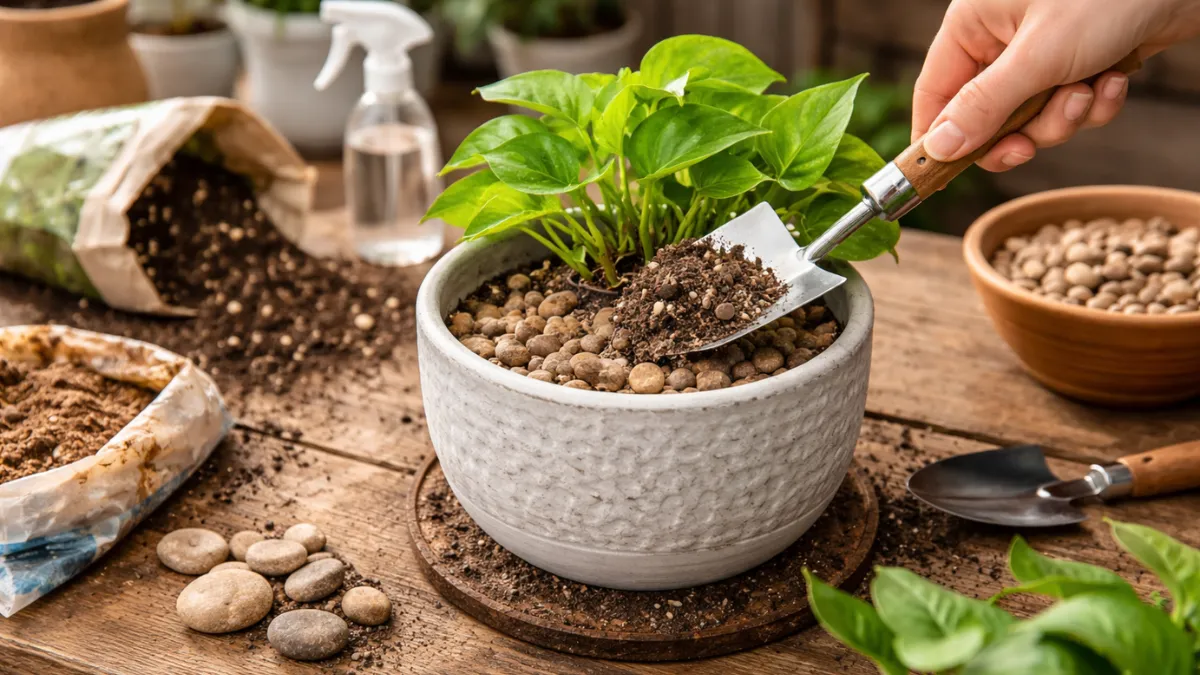
Place a layer of small stones or pebbles at the bottom of the pot.
This creates a reservoir where excess water can collect, preventing it from stagnating around the roots.
Water Less Than Usual
This is the most important rule.
Without drainage, there is nowhere for excess water to escape. Therefore, always water less than you normally would.
Check the Soil Before Watering
Do not stick to a rigid watering schedule.
Insert your finger into the soil to check its condition. If the soil feels moist, wait a little longer before watering.
Adopting this simple habit can prevent most common problems.
Use Light, Aerated Soil
Heavy soil retains water for far too long.
Instead, use a soil mix that allows water to drain easily (for instance, by adding sand or coco peat). This helps regulate moisture levels within the soil.
A Fundamental Drawback
Despite all these tips, pots without drainage holes are never considered truly ideal.
They always carry a higher inherent risk of root rot. If you are a complete beginner, you may encounter some mistakes and corrections.
This is perfectly normal.
Final Thoughts
It is possible to grow plants in pots without drainage holes but it requires extra attention.
You must water carefully, keep a close eye on your plant, and avoid overdoing anything.
If you start with beginner-friendly plants such as the Snake Plant, ZZ Plant, or Pothos your chances of success increase significantly.
In my experience, once you realize just how little water these plants actually need, everything becomes much easier.
Start simply. Observe closely. Make gradual adjustments.
That is the key to success.
Also Read :
Can Indoor Plants Survive Without Drainage Holes? What You Must Know
Best Pots for Indoor Plants in India (Plastic vs Ceramic vs Clay – 2026 Guide)
Best Indoor Plants for Self-Watering Pots (Smart Gardening)
Written for IndoorPlantify, based on real-world experience with indoor plant care.