
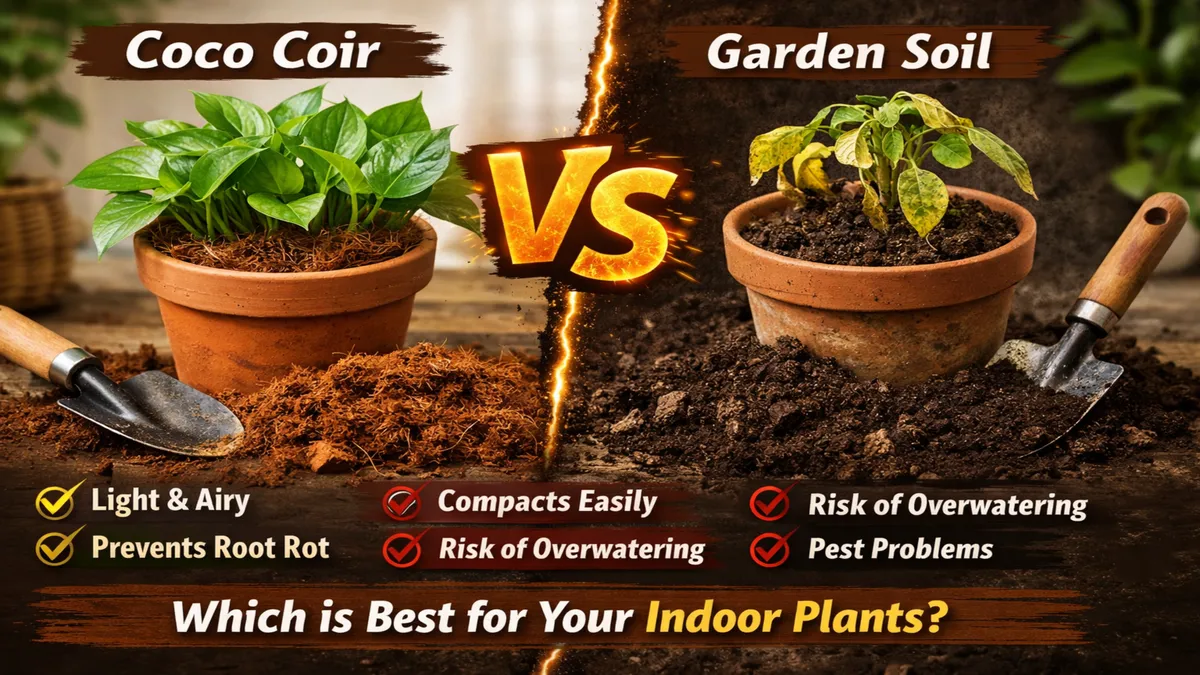
Caring for indoor plants often begins with a confusing question: Should you use coco coir or garden soil? I faced this same dilemma when my indoor plants initially looked healthy but then gradually stopped growing. The problem wasn't light or water – it was the growing medium. Coco coir and garden soil behave very differently indoors. Understanding how each works can save your plants from root problems and stunted growth.
Quick Comparison:
Related News
• Best for low light : Coco coir
• Best for faster growth : Garden soil (when properly mixed)
• Best for beginners : Coco coir
• Best for air circulation : Coco coir
What is Coco Coir and How Does It Work Indoors?
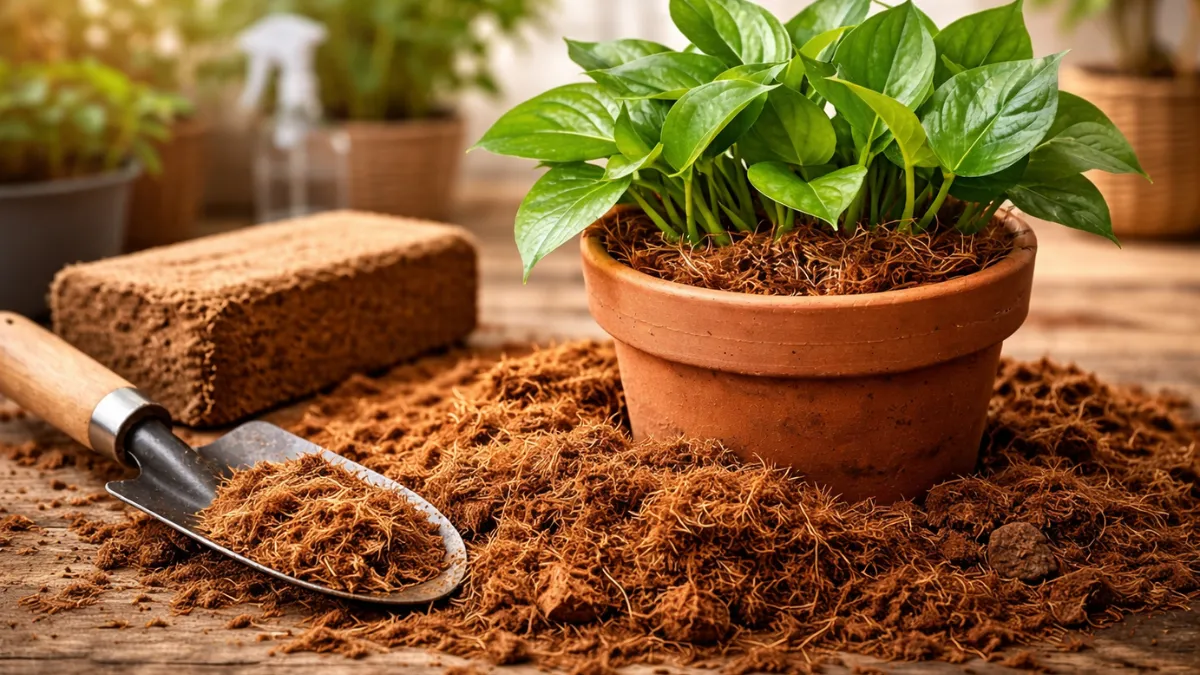
Coco coir is made from the fibers of coconut husks. It's lightweight, clean, and designed to retain moisture while still allowing air to reach the roots. Indoors, this balance is crucial because potted plants don't dry out as quickly as soil outdoors.
Another reason coco coir works well indoors is its consistency. It doesn't easily compact, so roots can breathe even after months of watering. This makes it a safer option for enclosed spaces where airflow and sunlight are limited.
What is Garden Soil and Why Can It Be Tricky Indoors?
Garden soil comes from outdoor ground and contains natural minerals and microbes. While this sounds healthy, it often becomes dense in pots. Indoors, this density can restrict airflow and cause excess water to accumulate around the roots.
Garden soil also varies greatly. One batch might drain well, while another remains soggy for days. This inconsistency is why many indoor plants struggle when planted directly in garden soil without any modifications.
Also Read : Spider Plant vs Snake Plant: Which Is Better Indoors? (2026 Test)
Water Retention and Drainage Differences
Coco coir retains water evenly and releases it gradually. This helps prevent sudden drying out, which is useful for those who tend to forget to water on time. At the same time, it drains excess water efficiently, reducing the risk of root rot.
Garden soil, however, behaves differently. It can retain too much water at the bottom of the pot while the top appears dry. This uneven moisture can confuse plant roots and lead to yellowing leaves or stunted growth.
Root Health and Air Circulation Comparison
Roots need oxygen just as much as they need water. Coco coir naturally creates air pockets, keeping roots healthy even in small pots. This is especially helpful for indoor plants placed in corners or dimly lit rooms.
Garden soil compacts over time. As it compacts, air circulation decreases. This gradually suffocates the roots, which is why plants may look fine initially but start to decline after a few months.
| Factor | Cocopeat | Garden Soil |
|---|---|---|
| Air circulation | Excellent | Poor to moderate |
| Compaction risk | Very low | High |
| Root rot risk | Low | High indoors |
| Consistency | Stable | Varies widely |
Nutrients: What's Lacking in Each
Coco coir contains virtually no nutrients. This might sound negative, but it gives you control. You decide when and how much fertilizer to add, reducing the risk of over-fertilizing indoor plants.
Garden soil contains nutrients, but they are unpredictable. Some soils are nutrient-rich, while others are deficient. Indoors, excess nutrients can also lead to salt buildup, which damages roots over time.
Indoor Pest and Disease Risk
Coco coir is typically sterile when purchased. This means there's less chance of fungus gnats, soil mites, or harmful bacteria being introduced into your home.
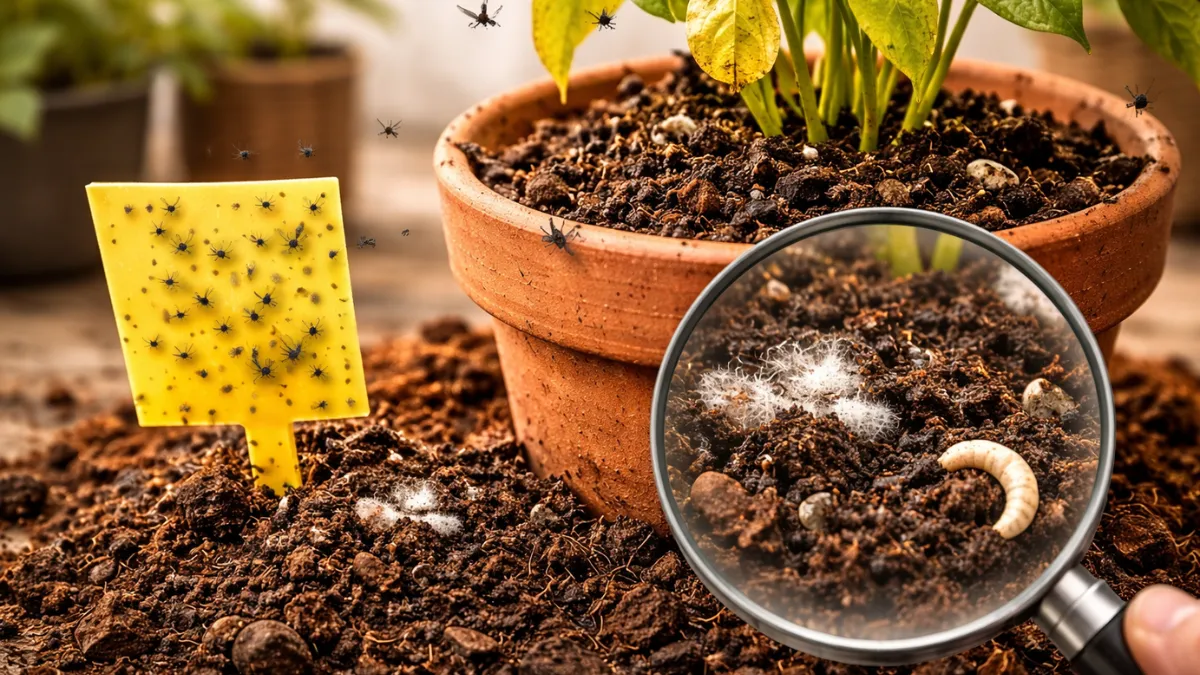
Garden soil can contain insects, eggs, or fungal spores. This is normal outdoors, but indoors it can quickly become a pest problem that spreads to other plants.
Which is Better for Different Indoor Plants?
Coco coir works best for foliage plants like snake plants, pothos, philodendrons, and peace lilies. These plants prefer well-aerated roots and consistent moisture levels.
Garden soil can work for indoor plants only if it's properly amended with sand, compost, or perlite. Unamended, it's rarely suitable for long-term indoor use.
Related Articles:
Fastest Growing Indoor Plants (Quick Results at Home)}
Can You Mix Coco Coir and Garden Soil?
Yes, mixing the two can create a good balance. Coco coir improves drainage and aeration, while garden soil adds nutrients. This mix works well for larger indoor pots where moisture is easier to control.
A common mistake is using too much garden soil. If the mixture feels heavy when wet, the roots will still struggle. The goal is a light, fluffy texture that drains well.
What Common Mistakes Do People Make?
Many people believe that garden soil is natural and therefore superior. However, they forget that indoors, conditions are artificial, so the growing medium needs to be adapted to limited light and airflow.
Another mistake is using only coco coir for extended periods without fertilizer. While plants may survive, their growth will be stunted due to nutrient deficiencies.
Final Thoughts on Coco Coir vs. Garden Soil
For most indoor plants, coco coir is a safer and easier option for beginners. It promotes healthy roots, reduces the risk of pests, and manages water better in confined spaces. Garden soil only works if it's properly amended and monitored. If your goal is consistent growth and fewer problems indoors, start with coco coir and gradually adjust nutrients based on the plant's response.