

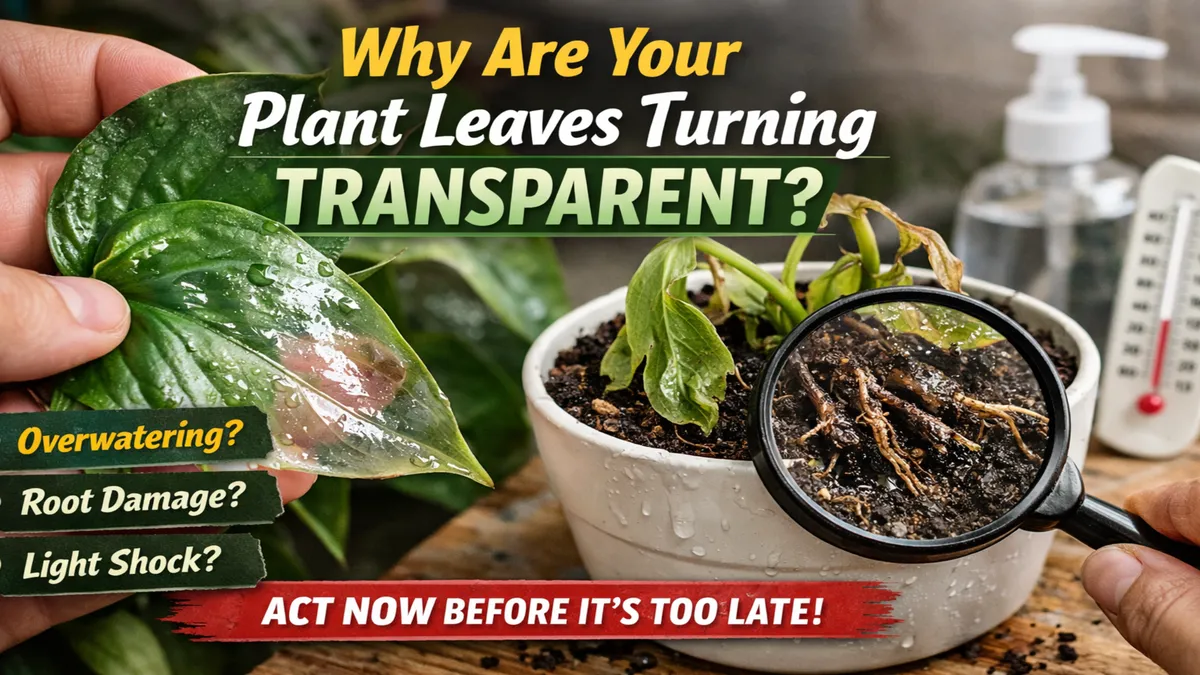
Transparent leaves on an indoor plant can be a cause for concern, especially if the plant appeared healthy just a few days ago. This problem often indicates internal cell damage, a water imbalance, or environmental stress. I first noticed this on one of my houseplants when the leaves gradually turned glassy after a sudden water change. It's important to understand the exact cause, as transparent leaves are usually an early warning sign—not a final stage—which means recovery is still possible.
Quick Answer:
Related News



Why Do Indoor Plant Leaves Turn Transparent?
Transparent leaves typically occur when the plant's cell structure is damaged due to overwatering, swelling, temperature shock, root damage, or excessive humidity. The cells become overwatered or collapse, giving the leaf a clear or glassy appearance.
How Transparent Leaves Actually Form (Plant Cell Explanation)
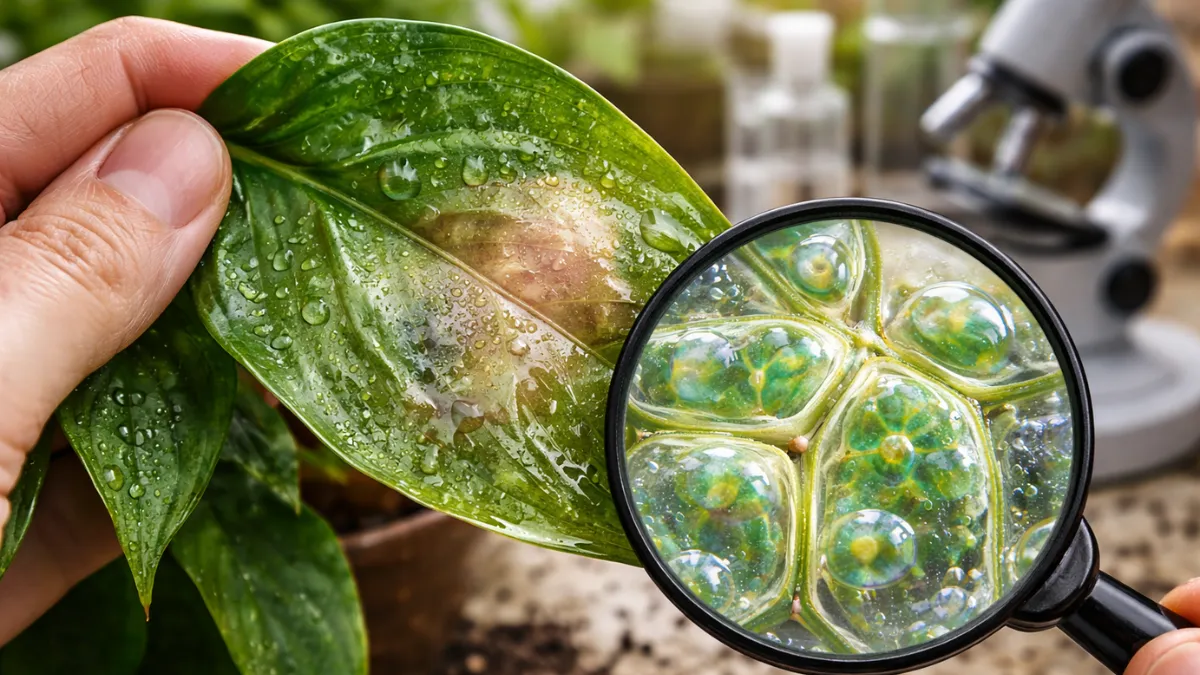
Leaves appear green because the chlorophyll inside healthy cells reflects light. When cells become damaged or filled with water, their structure breaks down. This allows light to pass through them instead of being reflected, making the leaves appear transparent.
Many plant growers ask why plant leaves turn transparent instead of yellowing. The key difference is timing—transparent leaves indicate early structural damage, while yellow leaves usually indicate nutrient or aging problems.
1. Overwatering is the most common cause
Overwatering suffocates the roots and prevents normal water flow. When the roots cannot regulate water properly, excess water accumulates within the leaf cells.
This condition often leads to edema, which many growers recognize when they notice transparent patches on the leaves of indoor plants after watering.
Signs of transparency due to overwatering:
• Glassy patches
• Soft or sticky leaves
• Wet soil for several days
• Slow plant growth
In my own experience, reducing the frequency of watering stopped the transparency immediately within two weeks.
2. Edema: Damage from water pressure inside leaves
Edema occurs when roots absorb water faster than the leaves can absorb it. This internal pressure damages the cell walls, causing transparency.
This explains why transparent spots appear overnight on indoor plants when watering conditions suddenly change.
Plants most vulnerable to edema:
| Plant Type | Risk Level |
|---|---|
| Pothos | High |
| Peperomia | Very High |
| Caladium | High |
| Begonia | Medium |
| Snake Plant | Low |
If edema damage is detected early, it is often reversible.
3. Sudden Light Exposure Shock
Moving plants from low light to bright light can damage the sensitive tissue in leaves.
Many plant owners report that leaves become transparent after moving the plant near a window because the cells cannot adapt quickly to the intensity of the bright light.
This causes local tissue breakdown.
I once moved a peace lily from a shaded corner to direct sunlight, and within a few days, transparent spots appeared on several leaves.
4. Root Damage or Early Root Rot
Healthy roots regulate water and nutrient balance. Damaged roots disrupt this process, leading to abnormal water retention within the leaves.
Root problems often cause plant leaves to turn pale even when the soil appears dry. Causes of root damage:
Overwatering:
• Poor drainage
• Hard soil
• Fungal infections
Root rot is serious, but can be corrected if detected early.
5. High humidity reduces normal water loss
Plants lose water through transpiration. When humidity is too high, this process slows down.
This causes excess moisture to remain within the leaves, leading to Why do plant leaves appear watery and transparent in humid rooms.
This commonly occurs in the following areas:
• Bathrooms
• Closed rooms
• Poor air circulation
Improving ventilation can help correct the balance.
6. Temperature stress weakens leaf cells
Sudden temperature drops or cold winds can damage leaf cells.
This causes transparent spots to appear on plant leaves after exposure to cold.
Cold weakens cell walls, causing fluid to leak out and damage the structure.
Avoid keeping plants near:
• Air conditioners
• Cold windows
• Winter winds
Consistent temperatures are essential for cell health.
7. Salt Harm from Fertilizers
Excessive fertilizer application causes salt accumulation in the soil, which damages root and leaf tissue.
When people notice that the leaves of indoor plants turn transparent after fertilizing, many assume fertilizer is the cause.
Too much fertilizer draws water from the cells and weakens the structure.
If fertilizer damage is suspected, rinse the soil with clean water.
Visual Comparison: Healthy vs Transparent Leaves
| Feature | Healthy Leaf | Transparent Leaf |
|---|---|---|
| Color | Solid green | Glass-like areas |
| Texture | Firm | Soft or fragile |
| Structure | Thick | Thin or weak |
| Light reflection | Opaque | Light passes through |
Can Transparent Leaves Recover?
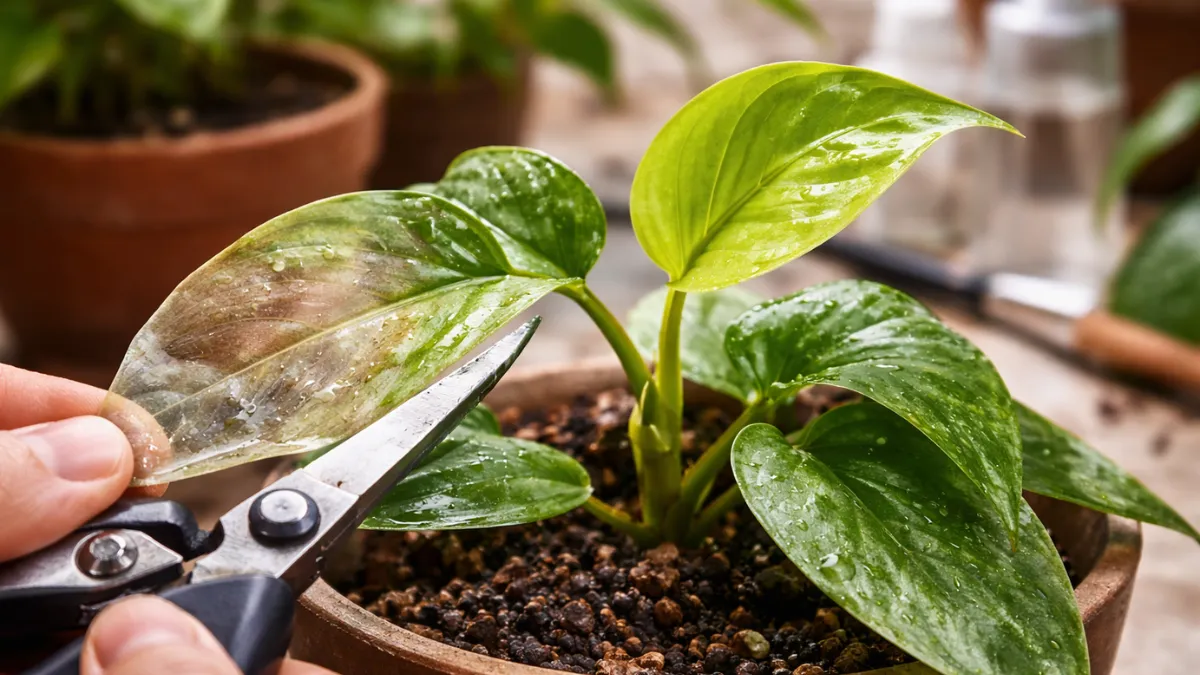
Yes, but only if the damage is mild.
Many growers wonder if the leaves of a transparent plant can turn green again. The answer depends on the severity.
Recovery is possible if:
• The cause is corrected quickly
• The roots are healthy
• The damage is minimal
However, completely transparent leaves rarely look the same.
New growth will be healthy once conditions improve.
Immediate Steps to Prevent Transparency from Spreading
If you notice early transparency, take immediate action.
Step 1: Check soil moisture
• Water only when the topsoil is dry.
Step 2: Improve drainage
• Ensure the pots have drainage holes.
Step 3: Provide consistent light
• Avoid sudden changes in light.
Step 4: Inspect the roots
• Healthy roots are white and strong.
Step 5: Improve Airflow
•Helps restore moisture balance.
These steps address the underlying cause of how to fix transparent indoor plant leaves.
What Didn't Work (Real Experience)
Spraying the leaves with water didn't help and actually made the situation worse. Excessive humidity slowed evaporation and worsened the water imbalance.
Reducing the frequency of watering was the only real solution.
Problem : Severely damaged leaves cannot be repaired.
Once the cells are completely destroyed, the affected areas will not regenerate. Recovery only applies to new growth.
However, correcting the conditions can prevent further damage.
When Transparent Leaves Are a Serious Warning
Transparency accompanied by these signs means immediate action is needed:
• Soft stems
• Musty odor
• Rapid leaf fall
• Black roots
These symptoms indicate extensive root damage.
Related articles:
Why Your Indoor Plant Soil Is Turning White : The 2025 High-Search Google Guide to Fixing It Fast
Related articles:
Spider Plant Tips Turning Brown? The Sudden 2025 Heat Stress Wave Explained
Related articles:
Snake Plant Leaves Turning Mushy This Winter? The Root Rot Outbreak No One Is Talking About!
Prevention Checklist (Long-Term Prevention)
To prevent transparency:
• Use well-draining soil
• Avoid overwatering
• Maintain consistent light
• Maintain moderate humidity
• Check the roots occasionally
These methods address the root causes of how to prevent transparent leaves on indoor plants.
The ultimate goal is to be clear
This guide helps indoor plant owners quickly identify the root cause of transparent leaves and take appropriate action before the plant is permanently damaged.
With the right care changes, most plants recover quickly and produce healthy new growth.
Written from real experience caring for indoor plants for IndoorPlantify.