
If your indoor plants keep dying and you can't figure out why, you are not alone. Most people assume that plants die because they forget to water them. But the truth is often quite the opposite.
The biggest mistake? Overwatering.
Yes, giving your plant more water than it needs can kill it and often much faster than simply neglecting it. I, too, lost many plants when I first started out because I operated under the assumption that "more care = more water." But that approach simply doesn't work.
Related News
Let's break this down in a simple, practical way so you can fix the issue right away.
How to Fix It Quickly
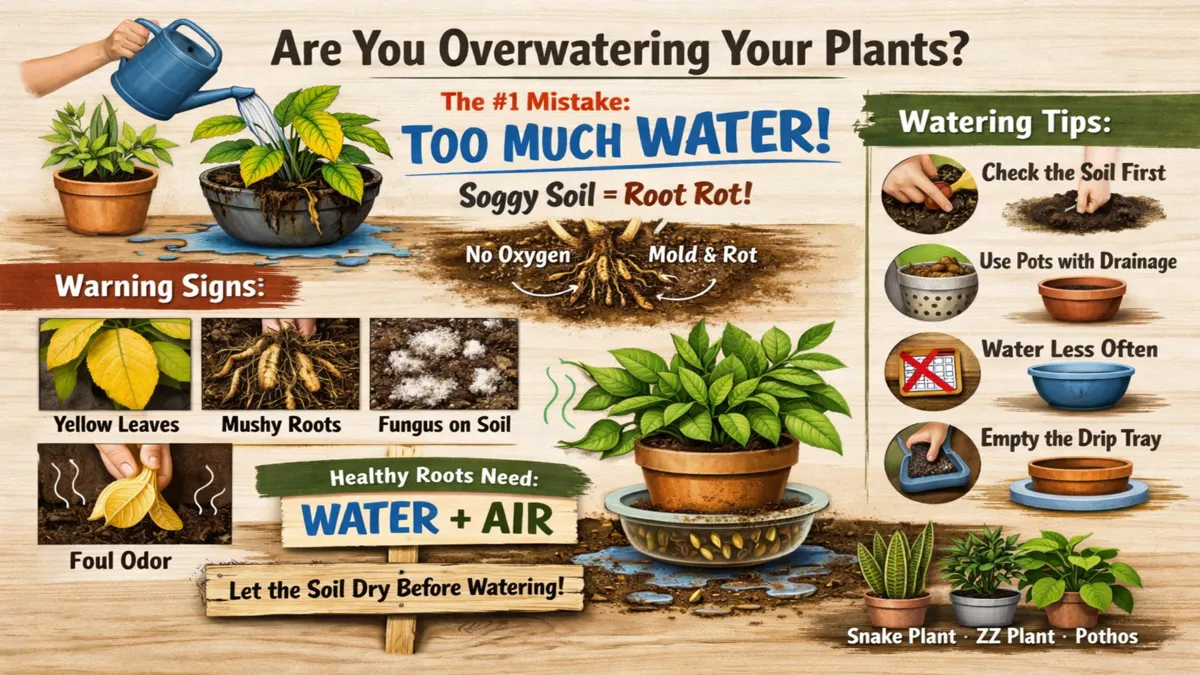
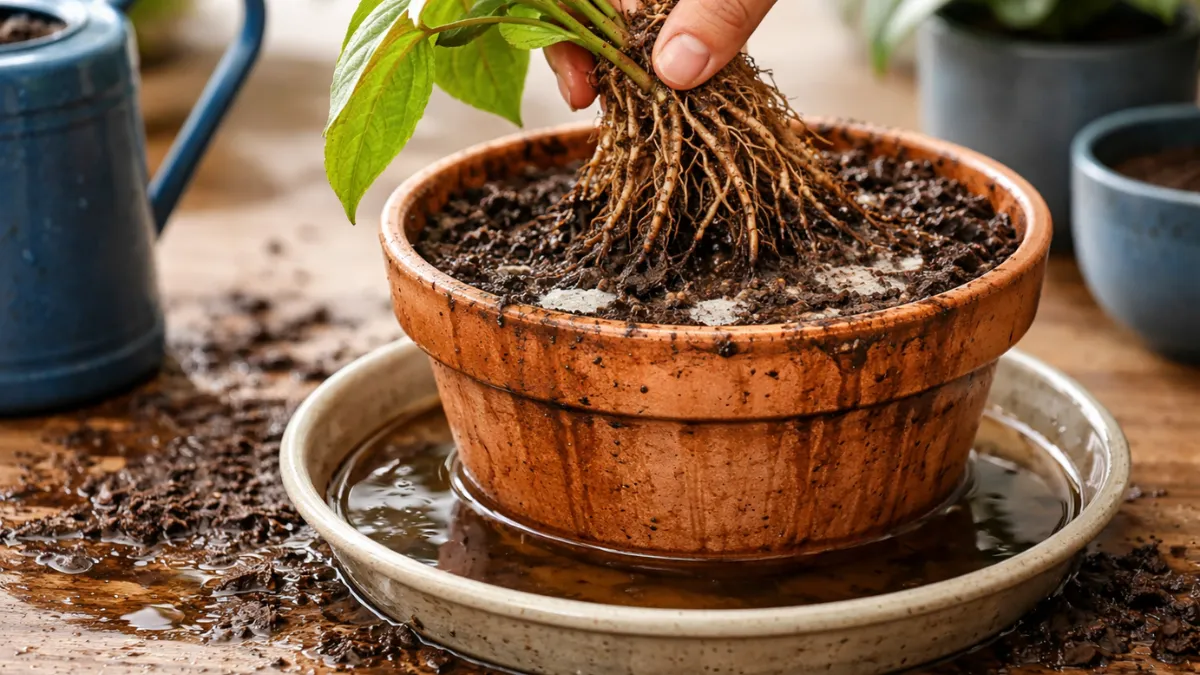
• Overwatering suffocates a plant's roots.
• Soggy soil blocks oxygen = roots rot.
• Most indoor plants prefer slightly dry soil.
• Water only when the top 1–2 inches of soil feel dry.
• The risk increases in pots without drainage holes.
• Yellow leaves + soft stems = warning signs.
Also Read : Best Indoor Plants for Self-Watering Pots (Smart Gardening)
Also Read : How to Revive a Dying Indoor Plant (Step-by-Step Guide)
Why Is Overwatering So Dangerous?
Plants don't just need water they also need oxygen within the soil.
When the soil remains constantly wet:
• Air pockets disappear.
• Roots cannot breathe.
• Fungi (mold) proliferate rapidly.
• The roots begin to rot.
This condition is known as root rot, and once it sets in, saving the plant becomes extremely difficult.
My Own Experience:
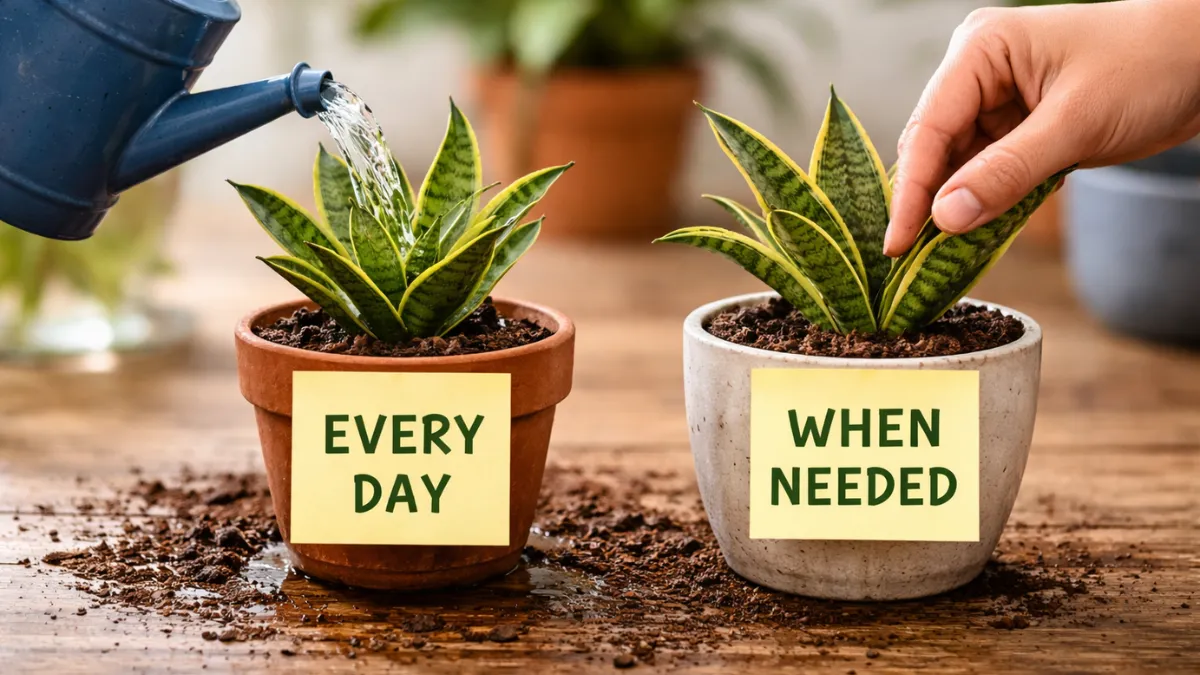
When I first started indoor gardening, I used to water my plants every single day, thinking it would accelerate their growth. Within just a few weeks, the leaves turned yellow, and the roots became soft and mushy. That was when I realized the real problem wasn't neglect, but rather excessive care. Signs That Indicate You Are Overwatering Your Plants
Most people misinterpret these signs and end up watering even more—which only makes the situation worse.
Common Symptoms:
• Yellowing leaves (especially the lower ones)
• Soft or mushy stems
• Foul odor coming from the soil
• Rapid leaf drop
• Mold or fungus growth on the soil surface
• Slow growth or a complete lack of growth
Important Note:
These symptoms can also resemble those of underwatering but the condition of the soil reveals the true story.
How to Water Indoor Plants Correctly
Watering isn't just about following a routine or habit it's about timing.
Follow this simple rule:
Insert your finger into the soil.
If the top 1–2 inches of soil are dry = Water the plant.
If it is still moist = Wait.
Tips for Better Watering:
• Always use pots that have drainage holes.
• Water deeply, but less frequently.
• Pour out any excess water that collects in the drip tray.
• Adjust your watering schedule according to the season.
Also Read : How to Save Your Indoor Plants From Root Rot – Step-by-Step
The Biggest Myth (Reality Check)
Myth : Water your plants every day to keep them healthy.
Reality : Most indoor plants actually prefer slightly dry soil.
These plants include:
• Snake Plant
• ZZ Plant
• Pothos
In fact, they thrive and grow much better when watered less frequently.
Personal Experience:
When I cut back on watering switching to once every 7–10 days (depending on the plant) my plants stopped turning yellow and began to grow rapidly. Watering less actually improved their overall health.
A Common Mistake Most People Make
Even after learning about the harmful effects of overwatering, many people still make this mistake:
They follow a fixed watering schedule.
Example : I water every Sunday.
This can be risky because:
• Weather conditions are constantly changing.
• Indoor humidity levels fluctuate.
• A plant's needs do not remain constant.
The Better Approach:
Water based on the soil's moisture level, rather than by looking at a calendar.
Some Limitations You Should Be Aware Of
Even if you water correctly:
• Poor-quality soil can retain moisture for longer periods.
• Soil takes longer to dry out in low-light conditions.
• Soil in larger pots tends to stay wet for longer.
Therefore, watering isn't the only factor the surrounding environment matters too.
Useful Tips to Avoid Overwatering
Do This:
• Use soil that drains water easily.
• Choose pots that have drainage holes.
• Check the soil's moisture level before watering.
• Place plants in appropriate lighting conditions.
Avoid Doing This:
• Watering mindlessly according to a fixed schedule.
• Using decorative pots that lack drainage holes.
• Keeping the soil constantly wet.
• Ignoring early warning signs.
Conclusion
If your plants are dying despite all your best efforts, don't blame yourself—you are simply making the most common mistake.
The truth is quite simple:
Plants don't need more water; they need better watering habits.
Once you correct this single mistake, you will notice a massive difference. The leaves will be healthier, growth will be more robust, and your plants will truly thrive for the long haul.
Written for IndoorPlantify, based on real-world experience in caring for indoor plants.