

You wake up, look at your plant, and find that it is completely dead.
The leaves are withered, the stems have gone soft, or perhaps the entire plant has collapsed overnight.
Related News
It seems sudden but the truth is:
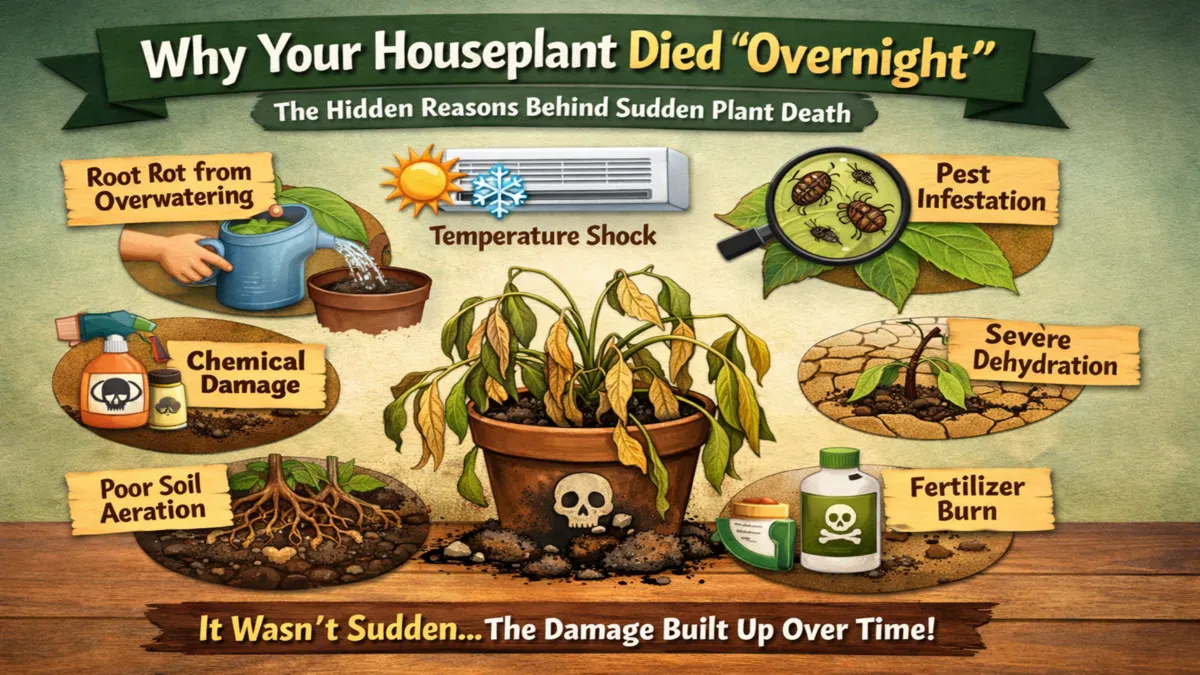
Indoor plants almost never die overnight.
What actually happens is that the damage has been quietly accumulating over several days or weeks and you only notice it when it is already too late.
I myself once lost a healthy-looking plant in just a single night only to realize later that the problem had actually begun long before.
The Short Answer (What Actually Happened)
Your indoor plants may appear to die overnight due to the following reasons:
• Root rot caused by overwatering
• Shock from sudden temperature changes (AC, heaters, cold drafts)
• Severe water deprivation following a period of prolonged neglect
• A pest infestation that has spiraled out of control
• Chemical or fertilizer burn
• Lack of oxygen in the roots
• Sudden environmental changes (lighting, location)
Also Read : Best Indoor Plants for Self-Watering Pots (Smart Gardening)
Also Read : How to Revive a Dying Indoor Plant (Step-by-Step Guide)
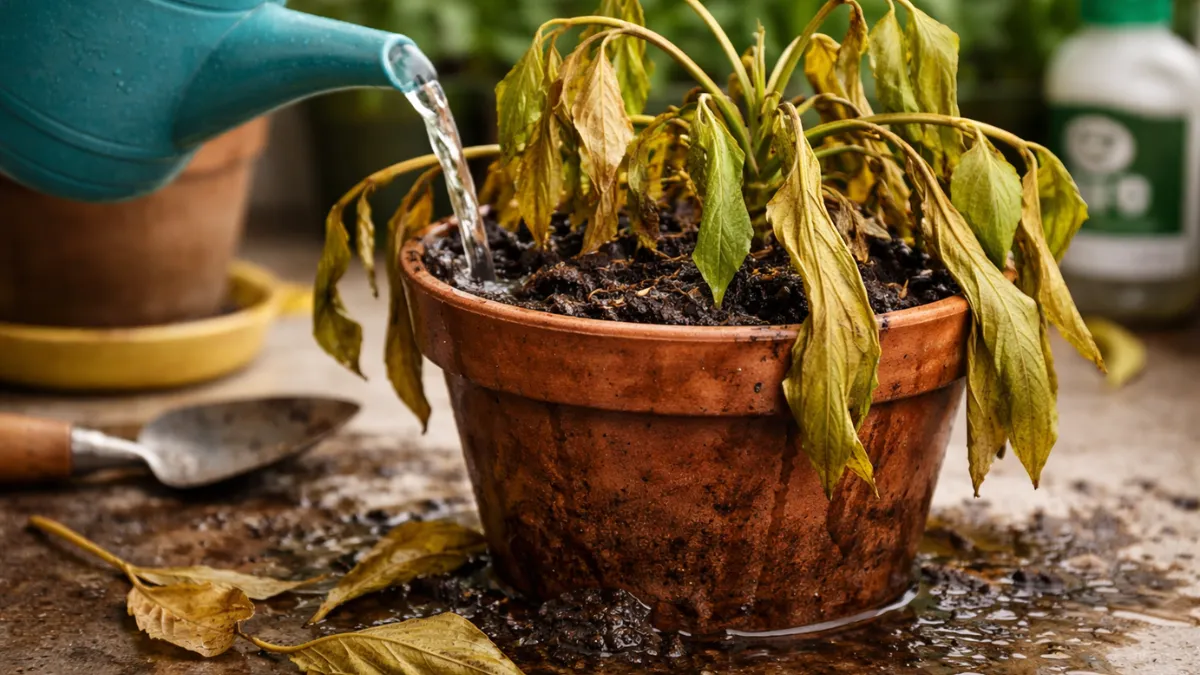
1. Overwatering (The Biggest Hidden Enemy)
This is the most common culprit behind the sudden death of a plant.
When you overwater:
• The soil remains constantly wet
• The roots are unable to access oxygen
• The roots begin to rot
Once root rot sets in, the plant can collapse very rapidly sometimes within just 24 hours.
Signs you may have overlooked earlier:
• Yellowing leaves
• Soft or mushy stems
• A foul odor emanating from the soil
My Mistake:
I once watered my plant every single day, thinking, More water = faster growth. It looked perfectly fine... until one morning, it completely collapsed.
2. Root Rot (The Silent Killer)
Root rot is not immediately visible above the soil surface.
By the time the leaves begin to wilt:
• The roots have already been compromised.
• The process of water absorption has ceased.
• The plant is, in reality, dying from the inside out.
That is why it appears to happen so suddenly.
The Reality:
The plant was already dying you just couldn't see it happening.
3. Temperature Shock (An Often-Overlooked Cause)
Indoor plants are highly sensitive to sudden fluctuations in temperature.
This can occur when:
• The air conditioner runs all night long.
• A heater is placed nearby.
• The plant is exposed to a sudden draft of cold air.
• You abruptly move the plant to a new location.
Even a single night of drastic temperature change can send a plant into shock.
Example:
A plant placed near a window during winter might look perfectly fine at night, but by morning, it could collapse due to exposure to the cold.
4. Severe Water Deprivation (Delayed Damage)
Sometimes, the opposite scenario occurs.
If you forget to water the plant for an extended period:
• The soil dries out completely.
• The roots shrivel up and deteriorate.
• The plant manages to survive for a while.
Then, suddenly, it wilts.
Why it seems to happen overnight:
Because the plant was surviving on its internal reserves of water and nutrients until those reserves were completely depleted.
5. Sudden Pest Infestation (The Hidden Attack)
Pests such as:
• Spider mites
• Mealybugs
• Aphids
Can multiply with alarming speed. If left unchecked:
• They suck the sap out of the plant
• They weaken the plant from the inside
• They cause the plant to wilt suddenly
Early signs that people often overlook:
• Tiny webs
• Sticky leaves
• Small white dots
Also Read : DIY Soil Mix for Indoor Plants at Home – Easy Recipe (2026)
6. Fertilizer Burn or Chemical Damage
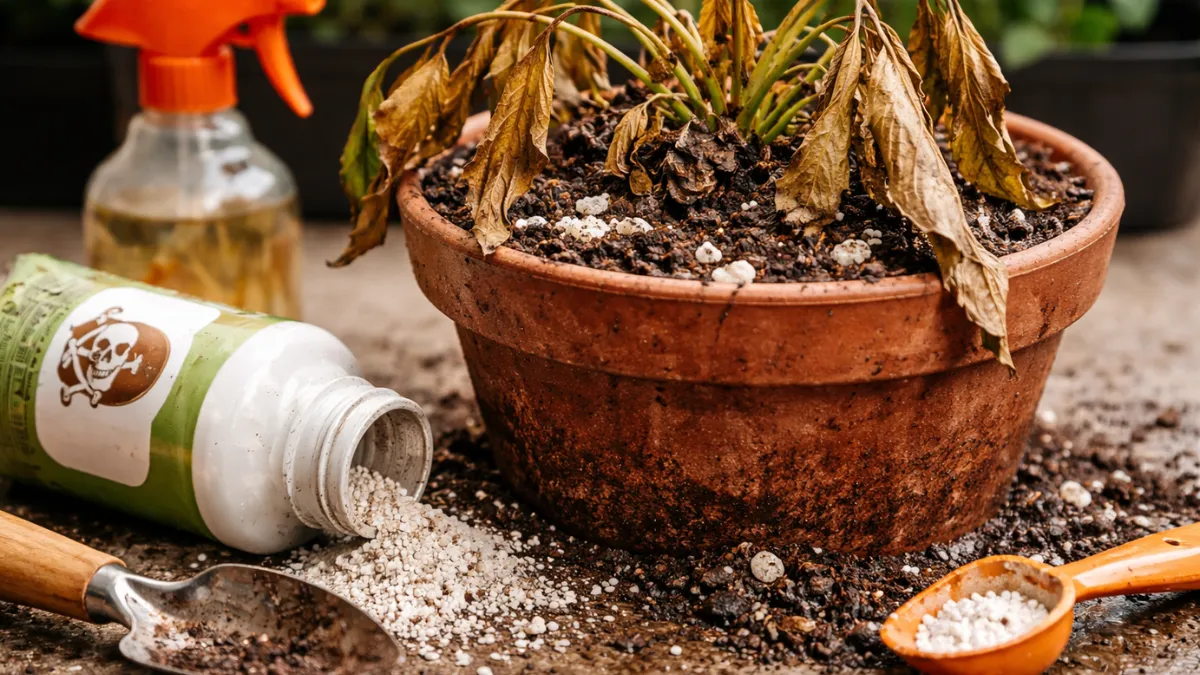
Excessive fertilization can scorch the roots.
Additionally:
• Hard tap water (high in chlorine)
• Chemical sprays
• An incorrect soil mix
Can cause immediate damage to the roots.
The Result:
The plant stops absorbing water and nutrients = and dies suddenly.
7. Lack of Oxygen in the Soil
This occurs when:
• The soil is too compacted
• Drainage holes are clogged
• The potting mix is incorrect
Roots need air not just water.
Without oxygen:
• The roots suffocate
• The plant wilts rapidly
8. Sudden Environmental Changes
Plants absolutely dislike sudden changes.
Examples:
• Moving a plant from shade directly into full sun
• Changing the plant's location within a room
• Repotting shock
• Exposure to a new season or environment
This stress can cause the plant's health to deteriorate rapidly.
Reality Check (Myth vs. Fact)
Myth:
My plant died overnight for no reason at all.
Fact:
There is always a reason it’s just that the process began much earlier.
Myth:
Giving plants extra water keeps them safe.
Fact:
Overwatering is, in fact, the leading cause of death for indoor plants.
Practical Tips (How to Prevent It)
Here is what actually works in real-world settings:
1. Check the soil before watering
Insert your finger 1–2 inches deep
Water only when the soil is dry
2. Ensure proper drainage
Always use pots with drainage holes
Do not let water stagnate
3. Keep the environment stable
Avoid sudden changes in temperature
Do not move plants frequently from one spot to another
4. Inspect weekly
Check the leaves (on both the top and underside)
Identify pests early on
5. Use a Balanced Fertilizer
Do not over-fertilize
Use only the recommended dosage
6. Choose the Right Soil Mix
Soil that drains easily is essential
Avoid using heavy or compacted soil
Conclusion
Seeing a plant wither overnight can be disheartening especially when it looked perfectly healthy just the day before.
But once you understand the root cause, you realize something important:
Plants are always sending signals we just sometimes overlook them.
I’ve made these mistakes myself: overwatering, ignoring early symptoms, constantly moving plants from one spot to another.
But when you start to observe closely, everything changes.
Your plants don't need perfection.
They simply need consistency.
This article, written for IndoorPlantify, draws upon my own real-world experience in caring for indoor plants.