

Air conditioners make our rooms comfortable. But many indoor plants struggle in that environment.
AC rooms typically have cool air, low humidity, and constant airflow. Some plants dry out quickly in such conditions.
Related News



The good news is that many indoor plants adapt surprisingly well to air-conditioned spaces. If you choose the right plants, they can stay healthy with very little effort.
Here are 10 indoor plants that grow well in AC rooms and are perfect for homes and offices.
1. Snake Plant
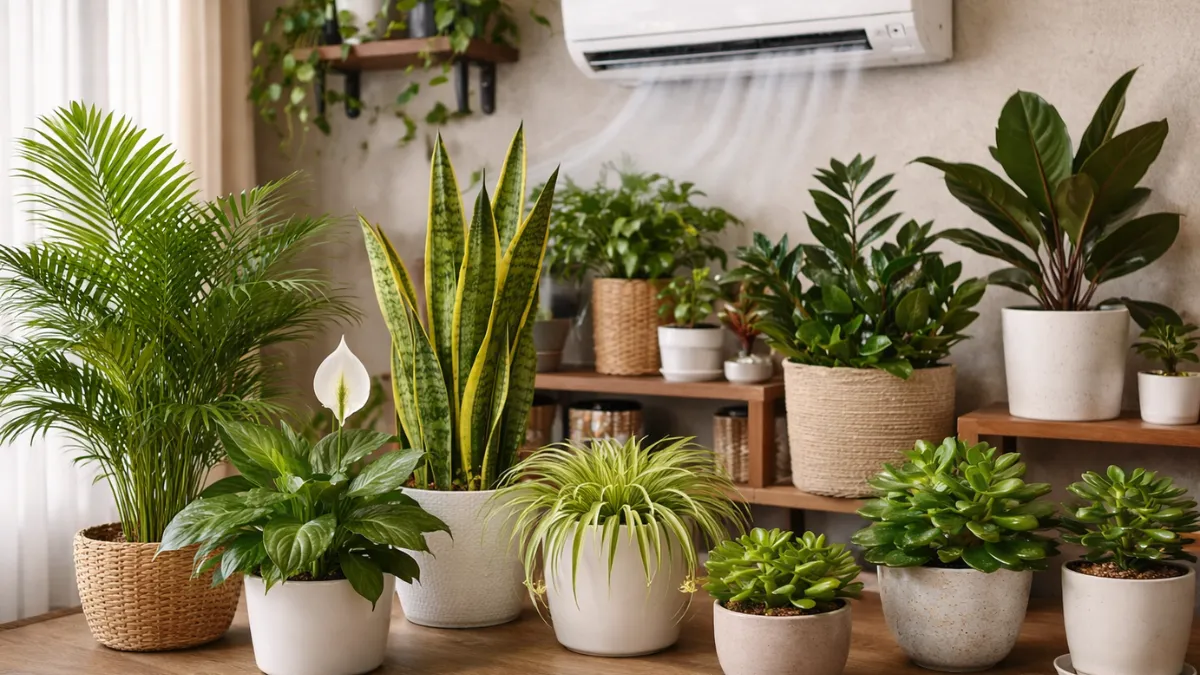
The snake plant is one of the hardiest indoor plants you can grow.
It handles dry air very well, making it perfect for air-conditioned rooms. The thick leaves store water, so the plant doesn't suffer even when the humidity drops.
In my experience, snake plants often grow better in AC rooms than in humid areas.
Care Tips:
• Water every 2–3 weeks
• Keep in indirect light
• Avoid overwatering
2. ZZ Plant
The ZZ plant is another great option for AC environments.
Its waxy leaves help reduce water loss, allowing it to survive in dry indoor air.
Many offices with constant air conditioning keep ZZ plants because they are nearly impossible to kill.
Care Tips:
• Water only when the soil is completely dry
• Tolerates low light
• Avoid placing directly in a cold air vent
3. Spider Plant
Spider plants adapt easily to most indoor conditions.
They tolerate slightly dry air and continue to grow small plants even in AC rooms.
However, direct exposure to very cold air can cause the tips to turn brown.
Care Tips:
• Bright indirect light works best
• Water when the soil is slightly dry
• Keep away from direct AC airflow
4. Pothos (Money Plant)
Pothos is one of the most tolerant indoor plants.
It grows well in AC rooms and can sometimes tolerate dryness. Because of its long vines, it also looks beautiful on shelves or in hanging pots.
In many homes, Pothos continues to grow even when other plants struggle.
Care Tips:
• Medium to bright indirect light
• Water once a week
• Prune the vines to maintain shape
5. Peace Lily
Peace lilies prefer humidity, but with proper care, they can also survive in AC rooms.
You may notice that the plant bends when it needs water. After watering, it usually recovers quickly.
This natural "drooping signal" makes peace lilies easy for beginners to care for.
Care Tips:
• Keep the soil slightly moist
• Avoid direct, cold air
• Place in medium, indirect light
6. Rubber Plant
Rubber plants have thick, shiny leaves that help retain moisture.
Because of this, they tolerate dry indoor air better than many tropical plants.
Rubber plants can also make beautiful statement plants in a living room or office.
Care Tips:
• Bright, indirect light
• Water when the topsoil dries
• Wipe the leaves occasionally to remove dust
7. Areca Palm
Areca palms add a tropical feel to AC rooms.
They handle indoor cooling systems better than most palms. However, they also prefer occasional watering and indirect sunlight.
In my experience, keeping an Areca palm a few feet away from an AC vent keeps it healthy.
Care Tips:
• Bright filtered light
• Water when the topsoil dries out
• Avoid direct cold air on the leaves
8. Cast Iron Plant
The name itself suggests the plant's strength.
Cast iron plants tolerate low light, temperature changes, and dry indoor air very well.
If you often forget to water or keep the plant in an AC office environment, this plant is a safe bet.
Care Tips:
• Low to medium light
• Water every 10–14 days
• Avoid wet soil
9. Dracaena
Dracaena plants are commonly used in offices with central air conditioning.
They grow slowly but remain healthy even in low humidity.
Keep in mind that tap water contains fluoride, which can sometimes cause the tips of the leaves to turn brown.
Care Tips:
• Indirect lighting
• Watering adequately
• Use filtered water if possible
10. Jade Plant
Jade plants are succulents, meaning they store water in their leaves.
Because of this natural adaptation, they tolerate dry AC air very well.
However, overwatering is a common mistake with jade plants.
I once overwatered my plant, and the roots began to rot. After reducing the watering, the plant recovered.
Care Tips:
• Bright light is preferable
• Water every 2–3 weeks
• Use well-draining soil
Common Mistakes When Growing Plants in AC Rooms
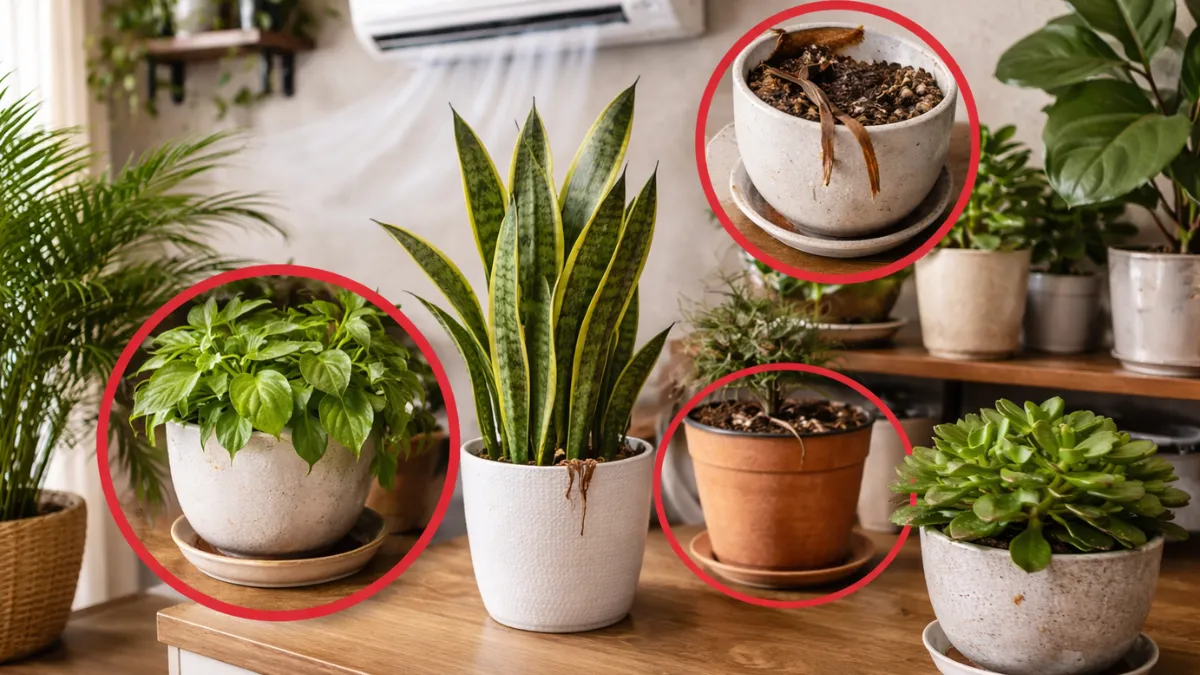
Many indoor plants die in AC rooms due to minor care mistakes.
Some common problems include:
• Placing plants directly under AC vents
• Overwatering due to fear of dryness
• Using pots without drainage holes
Ignoring Low Humidity
Air conditioners dry out the air, but plants generally suffer more from excess water than from dry air.
Easy Tips to Keep Plants Healthy in AC Rooms
A few small changes can make a big difference.
Useful Tips:
• Keep plants away from direct cold air
• Use well-draining soil
• Avoid frequent watering
• Rotate plants occasionally for consistent lighting
• Place plants together to slightly increase humidity
These small changes help keep plants healthy even in high-AC environments.
Related Helpful Articles:
Indoor Plants That Survive AC Rooms Without Dying
Misting Indoor Plants in AC Rooms : Helpful or Harmful? (Myth Busted)
Do Indoor Plants Increase Humidity in AC Rooms? Explained
Final Points
AC rooms can be challenging for many houseplants, but choosing the right plants makes everything easier.
Hardy plants like snake plants, pothos, ZZ plants, and jade plants naturally tolerate dry air and temperature changes.
Start with one or two of these plants and see how they respond to your room. Once you understand their needs, maintaining indoor plants in AC spaces is surprisingly easy.
Written from real-life experience with indoor plant care for IndoorPlantify.