

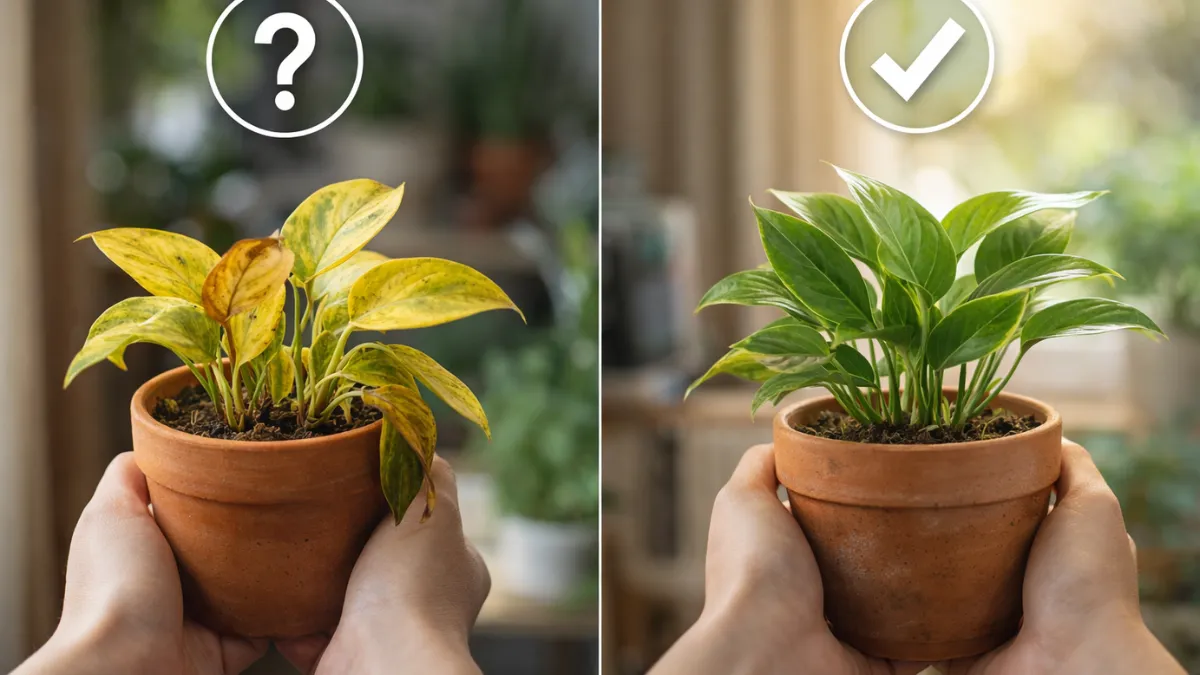
If your houseplants suddenly start turning yellow, dropping their leaves, or looking wilted when the weather changes, you are not alone.
Although indoor plants may appear static, they are highly sensitive to changes in the external weather. Even the slightest shift in temperature, light, or humidity can cause them stress.
Related News

In many cases, the issue isn't your care routine rather, the problem is that the environment changes so rapidly that the plant simply cannot adapt quickly enough.
The Short Answer
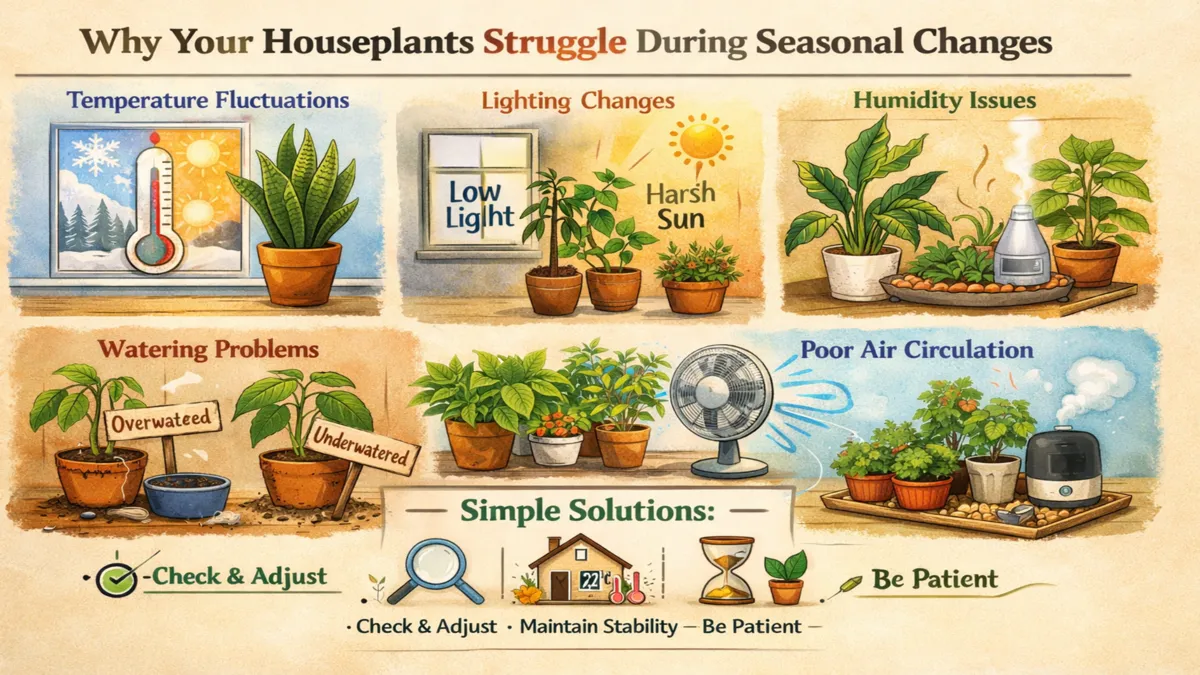
Houseplants struggle during weather transitions primarily due to the following reasons:
• Sudden fluctuations in temperature
• Changes in the intensity and duration of sunlight
• Fluctuations in indoor humidity levels
• Overwatering or underwatering caused by seasonal confusion
• Reduced airflow or the effects of heating systems
1. Temperature Fluctuations (The Primary Cause)
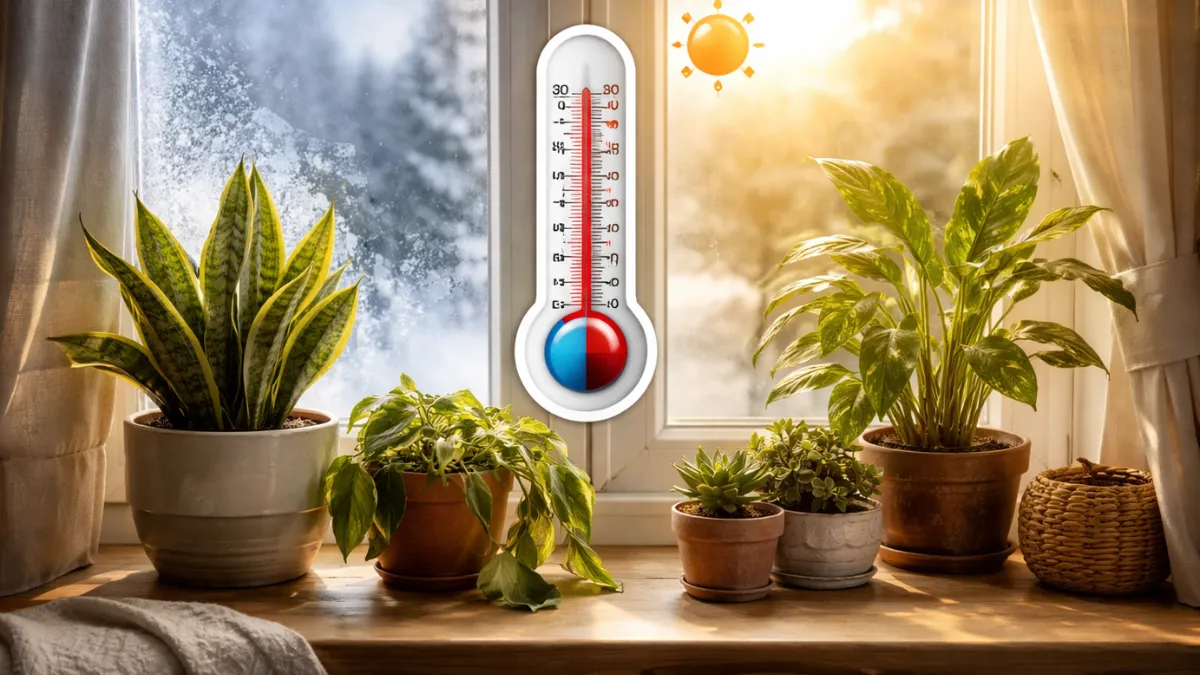
Houseplants thrive on stability. When the weather changes:
• Days suddenly become much warmer or much colder
• Temperatures may drop significantly at night
• Heaters or air conditioners cycle on and off frequently
This subjects the plants to temperature shock.
Also Read : Low-Light Indoor Plants for North-Facing Rooms
Also Read : Why Your Indoor Plants Are Dying Even With Watering Correctly – Experts Explain
A Personal Experience
One winter, I placed my Snake Plant near a window. It looked fine during the day, but the cold drafts at night gradually began to damage its leaves. It took several weeks for the plant to recover.
Solutions:
• Keep plants away from windows during extreme weather conditions.
• Avoid placing plants near AC vents or heaters.
• Maintain a consistent room temperature (18–26°C is ideal for most plants).
2. Changes in Lighting (An Often-Overlooked Cause)
As the seasons change:
Winters = Reduced sunlight exposure.
Summers = Intense and direct sunlight.
Plants rely heavily on light for survival; consequently, these fluctuations disrupt their growth cycle.
Signs:
• Plants becoming tall and spindly (stretching toward the light).
• Leaves becoming pale or smaller in size.
• Burn marks appearing on leaves during the summer.
Solutions:
• Move plants closer to windows during the winter.
• Use light, sheer curtains during the summer.
• Rotate your plants weekly to ensure uniform growth.
3. Humidity Imbalance
Indoor humidity levels fluctuate significantly with the changing seasons:
Winters = The air is dry (especially when heaters are running).
Monsoons = The air is extremely humid.
Summers = Conditions vary depending on the region.
Low humidity is one of the most common yet often hidden causes of stress in plants.
My Personal Experience
I noticed that every winter, the edges of my Peace Lily's leaves would begin to turn brown, despite the fact that I was watering them correctly. The real issue was the lack of moisture in the air (dry air).
Solutions:
• Mist your plants occasionally (but not excessively).
• Use a pebble tray filled with water.
• Group plants together to increase local humidity levels.
4. Watering Mistakes During Seasonal Transitions
The weather has a direct impact on how quickly the soil dries out.
Winter = Soil remains wet for longer periods
Summer = Soil dries out quickly
However, many people fail to adjust their watering frequency, which leads to problems.
Common Mistake (Real-life Example)
I used to water my plants on a fixed schedule. During the winter, this resulted in root rot because the soil remained excessively wet for too long.
Solution:
• Always check the soil before watering.
• Reduce watering frequency during the winter.
• Increase it slightly during the summer (based on the dryness of the soil, not according to a rigid routine).
5. Poor Air Circulation
When the weather is particularly harsh:
• Windows remain closed.
• Air becomes stagnant.
This creates an unhealthy environment for the plants.
Impact:
• Fungal growth
• Stunted growth
• Weak stems
Solution:
• Open windows occasionally to let in fresh air.
• Use a fan to facilitate gentle air circulation (do not aim it directly at the plants).
Also Read : Do Indoor Plants Increase Humidity in AC Rooms? Explained
Also Read : Common Soil Mistakes Killing Indoor Plants (And How to Fix Them) (2026)
Reality Check (Misconceptions vs. Truth)
Misconception: Indoor plants are unaffected by the weather outside.
Truth: They are significantly affected—albeit indirectly.
Misconception: Yellowing leaves are always a sign of overwatering.
Truth: It can also be caused by changes in temperature or lighting conditions.
Misconception: Plants adjust to their surroundings automatically.
Truth: Some plants struggle to adapt and may require assistance to adjust to their environment.
Practical Solution Guide (A Simple System)
Follow this simple adjustment routine whenever the weather changes:
Step 1: Observe First
Check the following:
• The condition of the leaves
• Soil moisture levels
• The amount of light the plant is receiving
Step 2: Adjust Only One Variable at a Time
Do not change everything simultaneously. Start with the basics:
• Lighting
• Then watering
• Then humidity
Step 3: Stabilize the environment
Keep the plants in a single location.
Do not move them frequently.
Step 4: Be patient
It may take 1–3 weeks for the plants to adapt to their environment.
Conclusion
Indoor plants are far more sensitive than they appear. Seasonal changes don't just happen outdoors. they also quietly impact the plants inside your home.
The good news? You don't need complicated solutions.
Simply observe, make gradual adjustments, and give your plants time.
Sometimes, doing less but doing it right is the best care you can provide.
Written for IndoorPlantify, based on real-world indoor plant care experience.