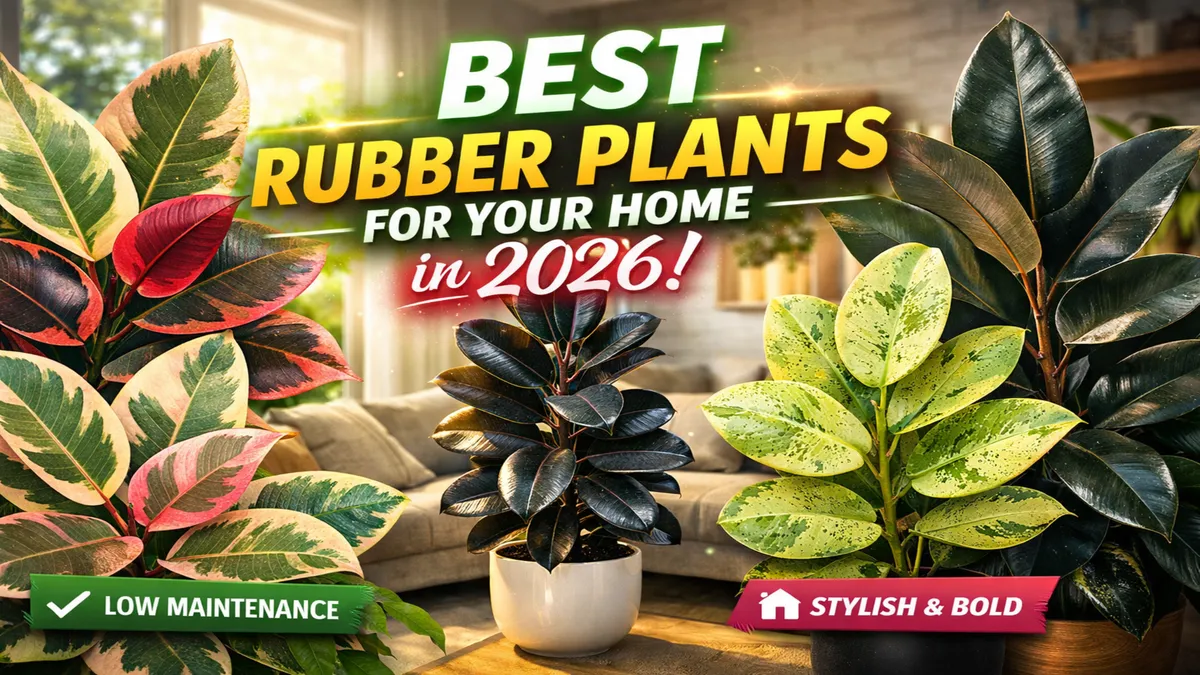
From bold dark leaves to trendy variegation, these rubber plant varieties are becoming the most loved indoor plants in modern homes thanks to their beauty and easy care.
✨
AI summarized this news · Reviewed by Indoor Plantify
Rubber plants have quietly become one of the most stylish and reliable indoor plants, and their popularity has surged in 2026. This is because modern homes favor plants that are bold, clean, and architectural in appearance, and that don't require constant attention. Rubber plants fit perfectly into this lifestyle. With new varieties gaining attention on social media and plant blogs, homeowners are choosing specific varieties that match their lighting, decor, and care habits, rather than just buying any rubber plant.
Quick Answers:
Which rubber plant varieties are most popular in 2026?
The most popular rubber plant varieties in 2026 include Ficus elastica Burgundy, Tineke, Ruby, Abidjan, and Shivereana, due to their visual impact, adaptability, and low-maintenance nature.
Why are rubber plants so trendy in 2026?
Rubber plants meet many of the needs of today's indoor gardeners. They grow upright, require infrequent watering, and instantly complete the look of a room. Many people are moving away from delicate plants and instead choosing robust statement plants.
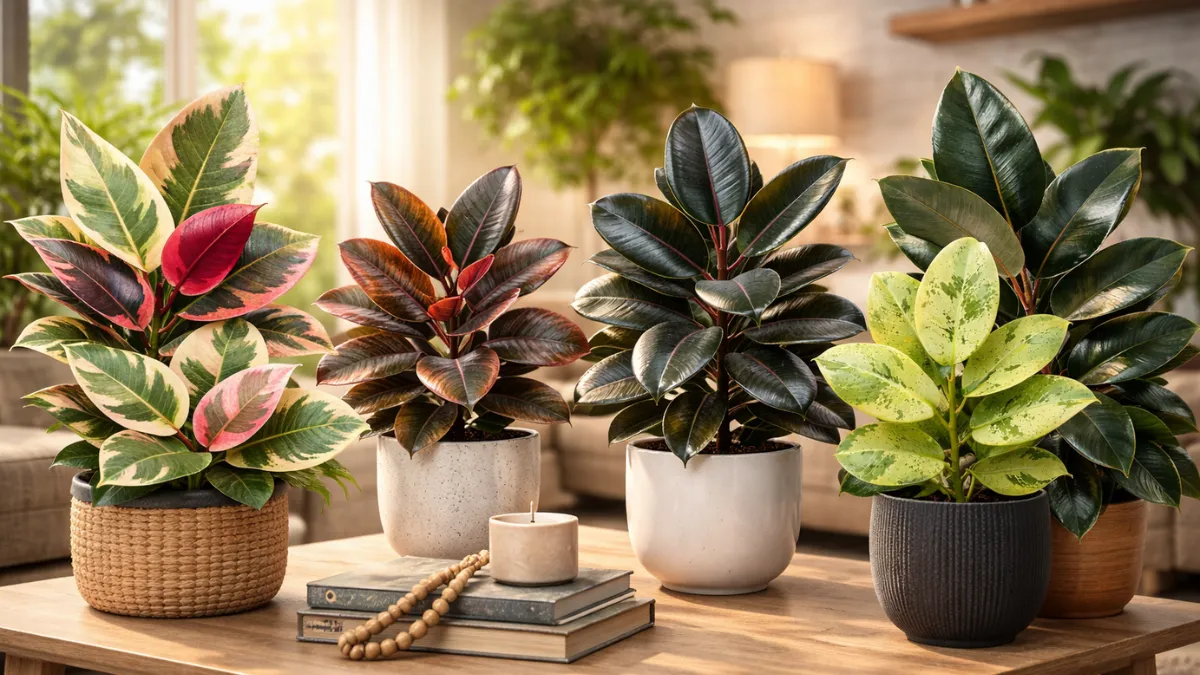
File Photo : Close-up view of stunning variegated rubber plant varieties.
Common reasons for their popularity include:
• Tolerance for inconsistent care
• Compatibility with modern and minimalist interiors
• Long lifespan indoors
• Improved nursery cultivation with robust root systems
• Why rubber plants are popular indoors
• Benefits of rubber plants for the home
Most Popular Rubber Plant Varieties for Homes
1. Ficus Elastica Burgundy
This is the most common and reliable rubber plant variety in 2026. Its deep green, almost black leaves give it a premium look. Why it's popular:
• Performs better than others in low to medium light
• Thick leaves resist damage
• Ideal for beginners
From my own personal experience, this variety has fared better in my living room with inconsistent watering and uneven lighting than any other Ficus I've owned.
• Ficus Elastica Burgundy Indoor Care
2. Ficus Elastica Tineke
The Tineke remains the most popular variegated rubber plant. Its cream, green, and light pink colors look stunning in bright homes.
Best suited for :
• Bright, indirect light
• Design-focused interiors
Limitation: It grows a bit slower than the green varieties and shows stress quickly if light levels are low.
• Variegated Rubber Plant Tineke
3. Ficus Elastica Ruby
In 2026, the Ruby is trending heavily on social media. Its pink and red splotches look great in neutral rooms.
Why people love it :
• Unique color contrast
• Instagram-friendly look
What didn't work: In low light, the pink color faded, and new leaves were mostly green, disappointing many new owners.
• Rubber Plant Ruby Care
4. Ficus Elastica Abidjan
The Abidjan is gaining popularity among those who want a dramatic look without variegation. Its dark, glossy leaves grow large and upright.
Advantages:
• Grows faster than Burgundy
• Great for floor planters
This variety responded best when placed near an east-facing window, receiving filtered morning light.
• Ficus Elastica Abidjan
5. Ficus Elastica Shivereana
This rare-looking variety is quietly becoming a collector's favorite in 2026. It features light green leaves with scattered splotches. Why it's special:
• Delicate, artistic leaf patterns
• Its compact growth habit
Disadvantage : More sensitive to overwatering compared to other rubber plants.
• Ficus elastica Shivereana
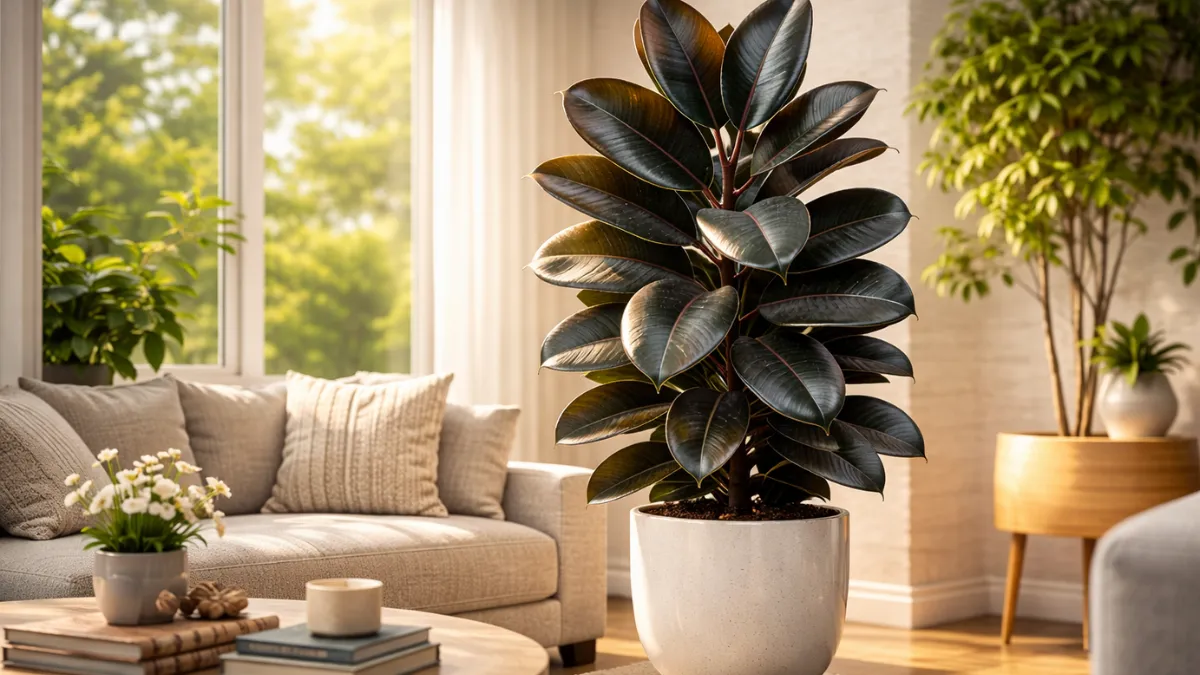
File Photo : Large rubber plant thriving beside a bright living room window.
Popular Rubber Plant Variety Comparison Table
Variety
Leaf Color
Light Needs
Growth Speed
Beginner Friendly
Burgundy
Dark green
Low–Medium
Medium
Yes
Tineke
Green & cream
Bright indirect
Slow
Moderate
Ruby
Pink & green
Bright indirect
Slow
Moderate
Abidjan
Deep green
Medium–Bright
Fast
Yes
Shivereana
Speckled green
Bright indirect
Slow
No
Rubber Plant Care Trends in 2026
In 2026, plant owners are moving away from rigid care schedules. The focus is on observing soil moisture, light direction, and leaf response.
Some key care practices:
• Water only when the top 2 inches of soil are dry
• Avoid frequent relocation
• Use a well-draining soil mix
• Common Rubber Plant Watering Mistakes
Best Rooms for Rubber Plants
Rubber plants are now commonly placed in these locations:
If you want a plant that lasts a long time, looks good, and doesn't require daily attention, then yes, rubber plants are still one of the best options for you. The key is to choose the right variety based on your lighting conditions, rather than simply choosing a plant based on its appearance.
Clarity of Purpose : This guide helps you choose a rubber plant that suits your home environment and care habits, not just current trends.
Written for IndoorPlantify from real indoor plant care experience.
Follow Us On Social Media
Join the Discussion
No discussions yet. Be the first to start one!
Expert FAQs
How often should you water a rubber plant indoors?
Water only when the top 1–2 inches of soil feel dry, as overwatering is one of the biggest causes of plant failure.
What type of light is best for rubber plant varieties?
Rubber plants prefer bright, indirect sunlight, while harsh direct sun can burn their leaves.
Why are my rubber plant leaves turning yellow?
Yellow leaves often signal watering issues, pest problems, excess sunlight, or sudden temperature changes.
What is the most common problem with rubber plants?
Root rot caused by excessive watering is one of the most frequent problems affecting indoor rubber plants.
Can rubber plants tolerate low light?
They can adapt to moderate light, but insufficient light may lead to weak growth and pale leaves.
Why is my rubber plant dropping leaves?
Leaf drop typically happens due to inconsistent watering, low light, pests, or dry indoor air.
What soil is best for rubber plants?
Use a well-draining soil mix to prevent moisture buildup that can suffocate roots.
Do rubber plants need fertilizer?
After settling in, they benefit from regular nutrient feeding to support healthy growth.
Should you move a rubber plant frequently?
Avoid moving it often, as sudden environmental changes can stress the plant.
Where is the best place to keep a rubber plant indoors?
Place it near a bright window with filtered light and away from drafts for stable growth.