

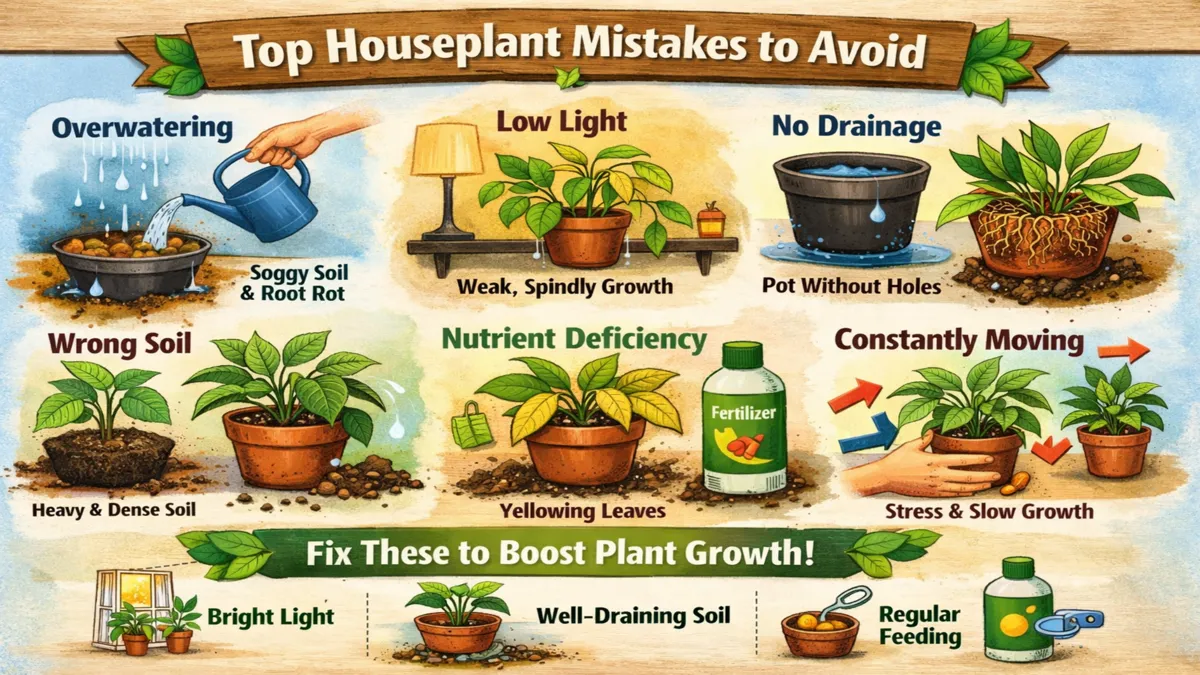
If your houseplants look healthy but aren't growing, you are not alone. I’ve been through this phase myself watering regularly, providing sunlight, yet seeing no new leaves for weeks on end.
The truth is quite simple : most issues regarding slow growth stem from small, everyday mistakes, rather than a lack of effort.
Related News
Once I corrected a few of my habits, I noticed a distinct difference; within just a few weeks, new leaves, richer colors, and stronger stems began to appear.
The Answer in Brief (What You Should Stop Doing)
• Overwatering your plants
• Keeping them in low-light conditions for too long
• Neglecting proper drainage
• Using the wrong type of soil
• Providing absolutely no nutrients
• Constantly moving your plants to different locations
Also Read : Best Indoor Plants for Self-Watering Pots (Smart Gardening)
Also Read : How to Revive a Dying Indoor Plant (Step-by-Step Guide)
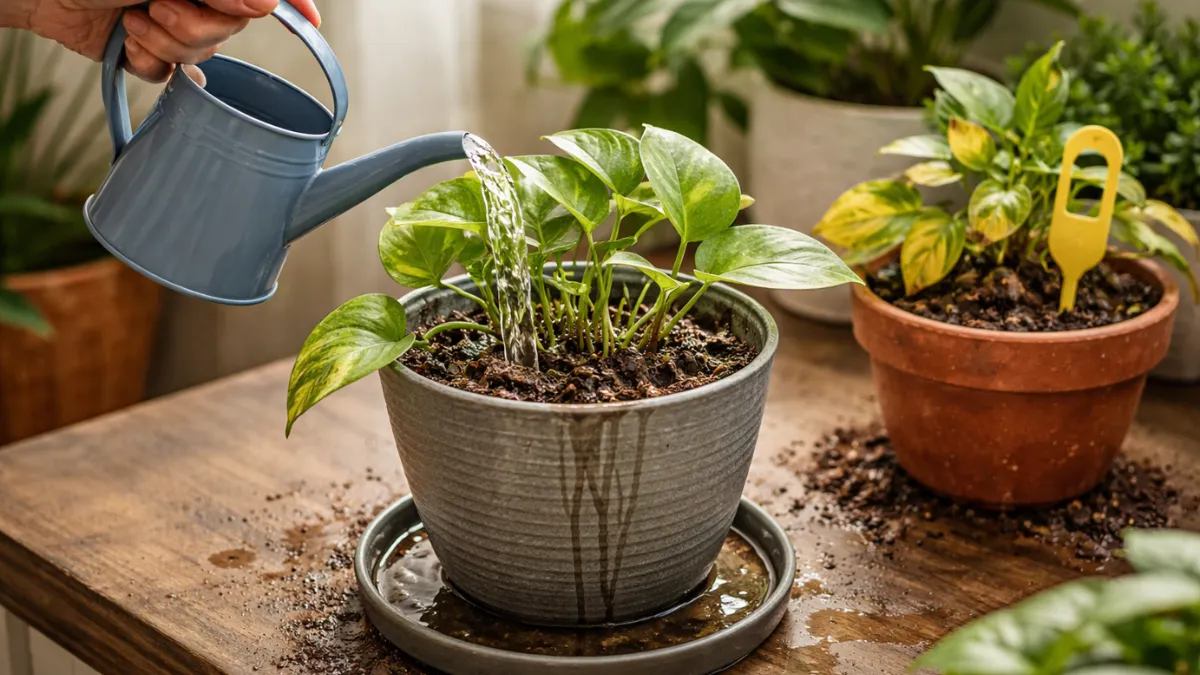
1. Stop Overwatering Your Plants
This is the biggest mistake.
Most people assume that more water equals faster growth. However, in reality, excessive water suffocates the roots.
What Happens:
• The roots are deprived of oxygen
• The soil remains wet and soggy
• Growth slows down or comes to a complete halt
What to Do Instead:
• Check the soil before watering
• Water only when the top 1–2 inches of the soil feel dry
My Personal Experience : I used to water every two days. Since adopting the check before you water approach, my plants have truly started growing at a much faster pace.
2. Stop Keeping Plants in Low-Light Conditions
Light is essentially food for plants. Without adequate light, plant growth becomes slow and weak.
Symptoms of Low Light:
• Long and spindly stems
• Small or yellowing leaves
• No new growth
Solution:
• Move the plants closer to a window
• Provide bright, but indirect, sunlight
Limitation : Not every home has access to bright, natural light. In such cases, plant growth may remain slow despite proper care.
3. Stop Using Pots Without Drainage Holes
Lack of drainage = Risk of root rot.
Water pooling at the bottom of the pot creates a toxic environment for the roots.
Solution:
• Always use pots that have drainage holes at the bottom
• Empty any excess water that collects in the tray placed beneath the pot
My Mistake : I once used a decorative pot that lacked drainage holes. The plant looked fine for about a week, but then its growth suddenly stalled, and it began to die.
4. Stop Using Heavy or Improper Soil
Ordinary garden soil is not suitable for indoor plants.
The Problem:
• It retains excessive moisture
• It hinders proper airflow to the roots
Better Alternatives:
Use a potting mix that allows for easy drainage
Amend it with perlite or coco peat
Healthy Roots = Rapid Growth.
Also Read : Low-Light Indoor Plants for North-Facing Rooms
Also Read : How to Grow Indoor Plants Without Sunlight – Proven Tips
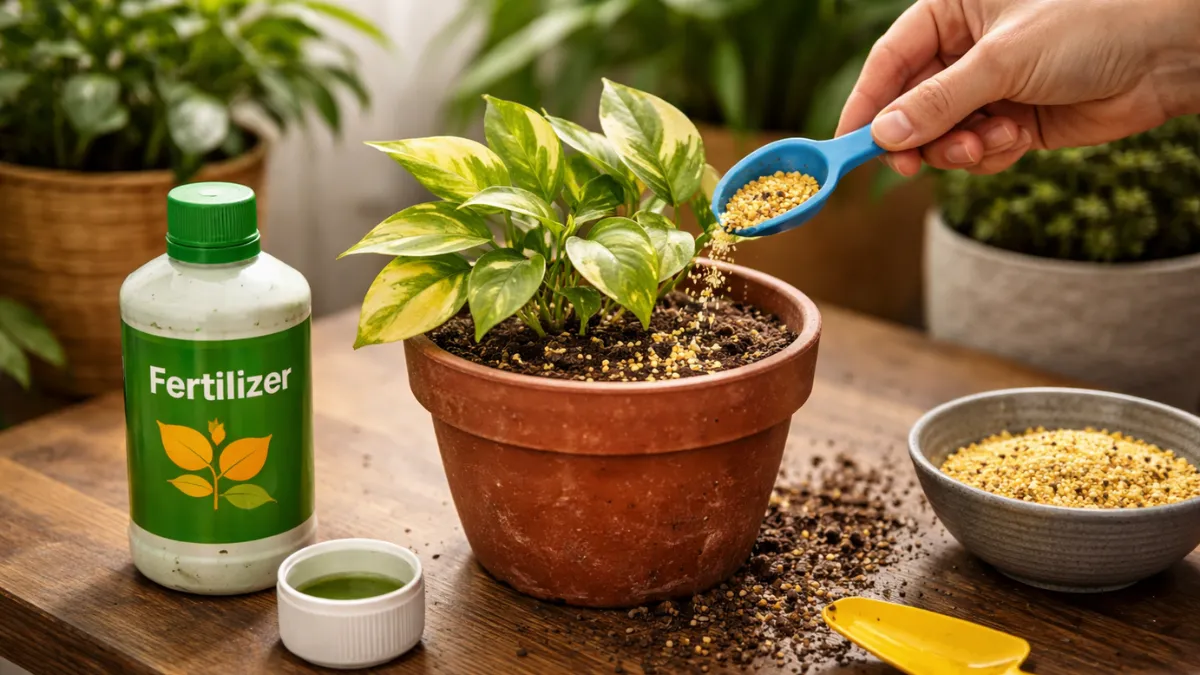
5. Stop Neglecting Plant Nutrition
Water and light alone are not enough.
Plants also require essential nutrients such as nitrogen, phosphorus, and potassium.
Symptoms of Nutrient Deficiency:
• Yellowing leaves
• Slow growth or no growth at all
• Weak stems
Solution:
Apply liquid fertilizer once every 2–4 weeks.
Avoid over-fertilizing.
6. Stop Constantly Moving Your Plants
Plants need time to adapt to their environment.
Continuously changing their location disrupts their growth cycle.
What Happens:
• Stress levels increase
• Growth slows down
Tip:
Choose a suitable spot and let your plants stay there.
Personal Experience : Since I stopped moving my plants from one place to another every few days, they have become more stable and are growing consistently.
7. Stop Neglecting Temperature and Humidity
Indoor plants thrive best in a stable environment.
Problems:
• Air currents from AC units
• Dry air
• Sudden temperature fluctuations
Solutions:
Keep plants away from direct AC or heater airflow
Increase humidity if necessary (mist lightly or use a humidity tray)
Reality Check: Myths vs. Facts
Myth : More care = Faster growth
Fact : Proper care = Faster growth
Myth : Watering daily is beneficial
Fact : Overwatering stunts growth
Myth : All indoor plants grow quickly
Fact : Some plants naturally grow slowly
Practical Tips for Boosting Growth
• Rotate plants weekly to ensure even light exposure
• Clean leaves to optimize photosynthesis
• Repot the plant when roots begin to outgrow the pot
• Choose the right plant suited to your specific environment
Final Thoughts
Indoor plant growth isn’t about doing more it’s about doing things right.
Once you stop these common mistakes, your plants may naturally start growing faster, healthier, and stronger.
Start small. Fix one habit at a time.
And you’ll begin to see real results.
Written from real indoor plant care experience for IndoorPlantify.