

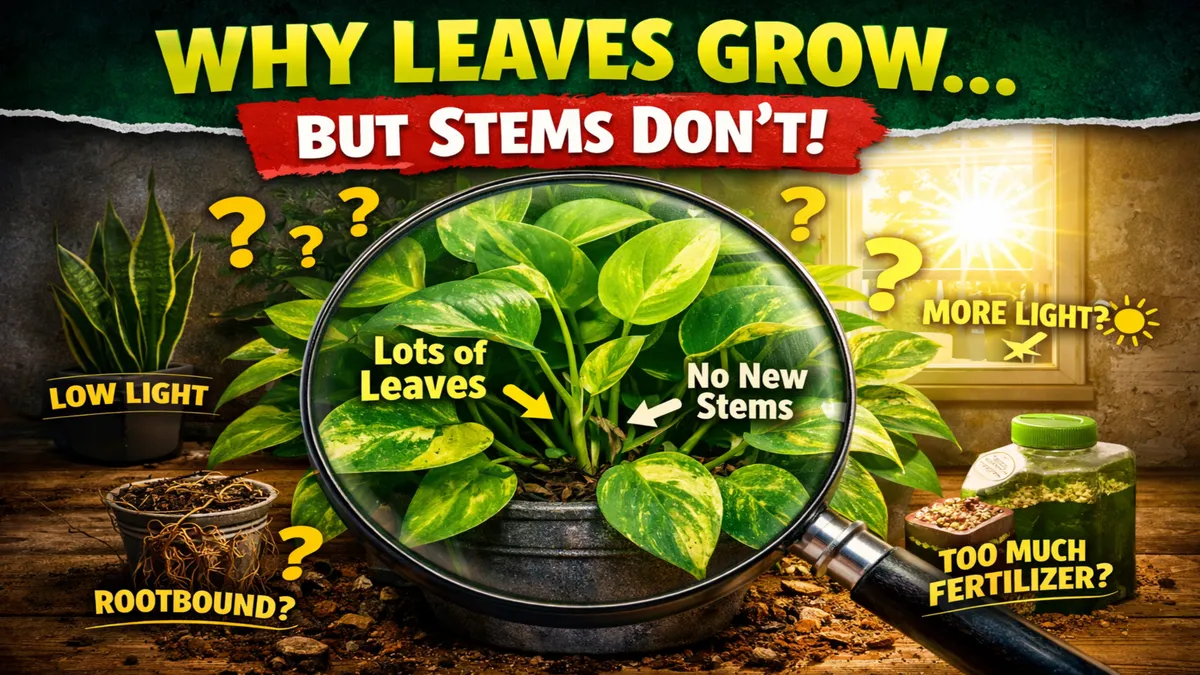
Many indoor plants look healthy from the top, but their growth seems stunted. Leaves keep appearing, the color remains green, but no new branches form. This situation is confusing, and people often resort to overwatering, over-fertilizing, or constantly moving their plants. In reality, leaf growth without stem development is common in indoor plants. Understanding why this happens will help you avoid unnecessary stress and allow your plant to grow at its own pace.
Quick Comparison:
• Best for Low Light : Snake Plant
• Best for Fast Growth : Pothos
• Best for Beginners : ZZ Plant
• Best for Air Circulation : Spider Plant
Related News
Why Leaves Grow Before Stems in Indoor Plants
Indoor plants prioritize survival over expansion. When conditions are limited, plants allocate their energy to maintaining leaves rather than structural growth. Leaves help maintain photosynthesis, while new branches require more light, space, and internal resources.
Indoor environments often provide enough light to sustain leaves, but not enough intense light to trigger branching. This results in a healthy-looking plant that stops growing upwards or outwards without showing any signs of damage or distress.
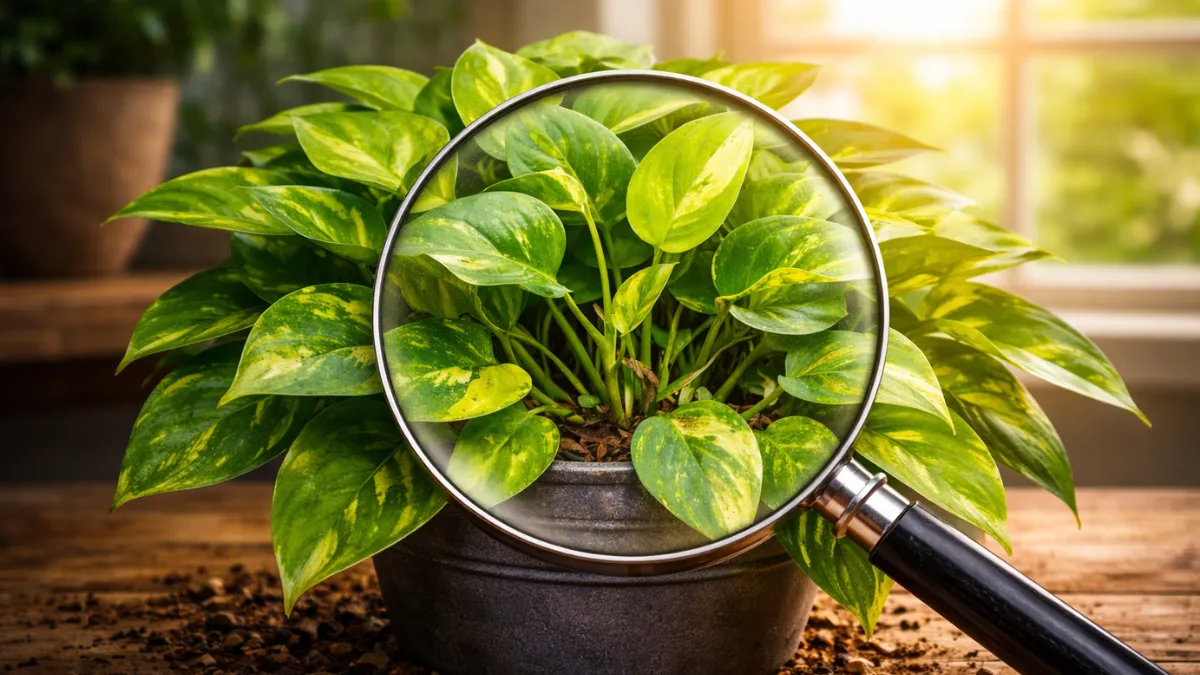
Light Levels Support Leaves, Not Expansion
Most indoor light is indirect and weaker than outdoor light. This supports leaf formation but limits stem development. Stems typically develop when light comes from multiple angles and triggers growth hormones.
Moving the plant closer to a window may help over time, but sudden changes in light won't force stem growth. Their leaves can adjust quickly; Stems respond slowly and only when conditions remain consistently the same.
Root space controls stem decisions.
When roots feel restricted, plants reduce their above-ground spread. But leaves can still grow because they require less support than stems. Plants with root-bound pots often show leaf growth without developing new branches.
This doesn't mean repotting is always immediately necessary. Some plants prefer tight roots. Stem growth usually only begins once the roots have established themselves in the available space.
Why fertilizing often doesn't fix the problem
Fertilizing primarily increases leaf size and color. But it doesn't guarantee new branches. Stem growth depends on hormonal balance, not just nutrient strength.
Over-fertilizing can actually delay stem growth by increasing leaf production. Indoor plants are designed to grow slowly. Excess nutrients can't overcome environmental limitations like light and airflow.
Natural growth cycles are often misunderstood
Indoor plants don't grow at a consistent rate throughout the year. Many plants pause stem growth while building internal energy reserves. Leaves appear because they are less risky. Stem growth often occurs in short bursts, followed by long periods of no change. This is normal and not a sign of failure.
Confusion between leaf nodes and stem branching
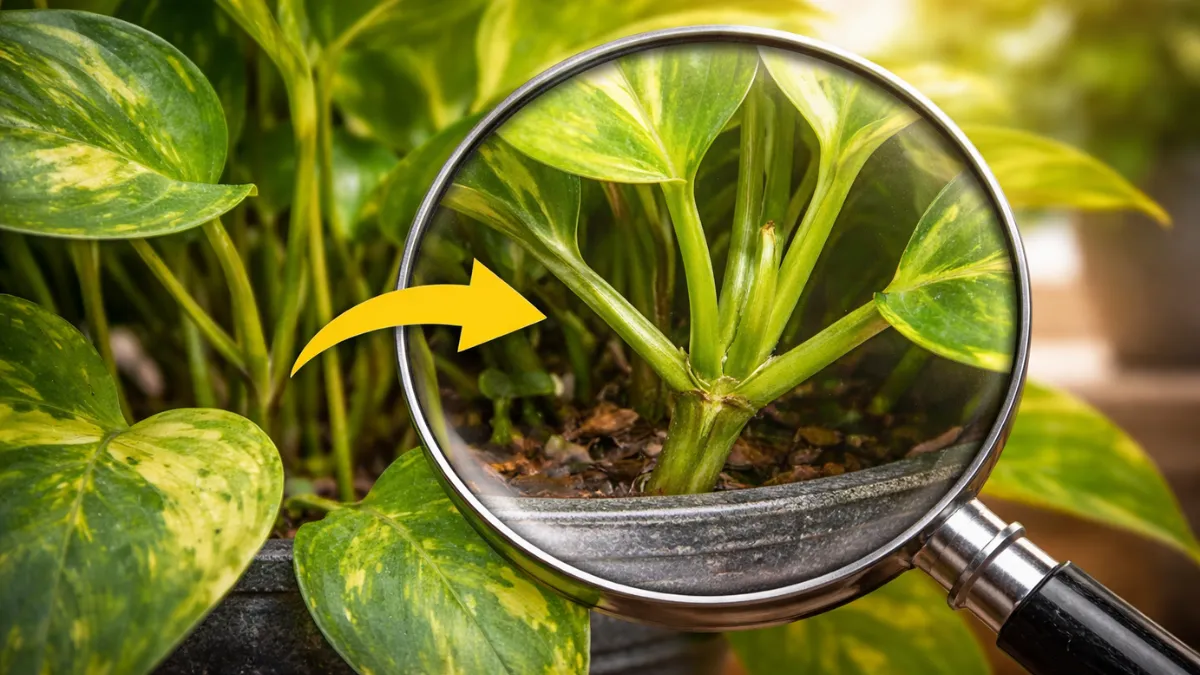
Some plants grow leaves directly from nodes without developing a visible stem. This makes it difficult to notice growth. Pothos, philodendrons, and peace lilies often behave this way indoors.
What appears to be a lack of stem is sometimes just compact growth. In low light, internodes shorten, causing the plant to remain bushy rather than tall.
Common Causes and Real Solutions
| Situation | What’s Happening | What Actually Helps |
|---|---|---|
| Low light | Energy supports leaves only | Gradual brighter placement |
| Small pot | Roots limit expansion | Repot only if roots circle heavily |
| Overfeeding | Leaves prioritized | Pause fertilizer temporarily |
| Stable conditions | Plant conserving energy | Patience and consistency |
Things that won't encourage new stem growth
• Suddenly increasing fertilizer
• Frequently moving the plant
• Continuously pruning without improving light
• Overwatering to force rapid growth
Plants never respond well to stress. Stem growth occurs when conditions are supportive over time, not when forced.
When to expect new stem growth
Most indoor plants show stem growth only weeks or months after receiving consistent light and space. Leaf growth alone can continue indoors for an entire season.
If the leaves are healthy, strong, and evenly spaced, the plant is not struggling. When energy reserves allow, stem growth usually resumes on its own.
Related Article:
Why Indoor Plants Drop Leaves Overnight (Hidden Reasons)
Yellow Leaves on Indoor Plants? Heres What Experts Say
Fastest Growing Indoor Plants (Quick Results at Home)
Final Thoughts
Indoor plants that are growing leaves but not producing new stems are usually healthy and adjusting, not failing. The leaves are the plant's way of maintaining balance while it waits for better growing conditions. Don't rush this process. Consistent light, patience, and realistic expectations are far more important than fertilizer or frequent changes. In time, when the conditions are right, the stems will emerge on their own – without any forcing.