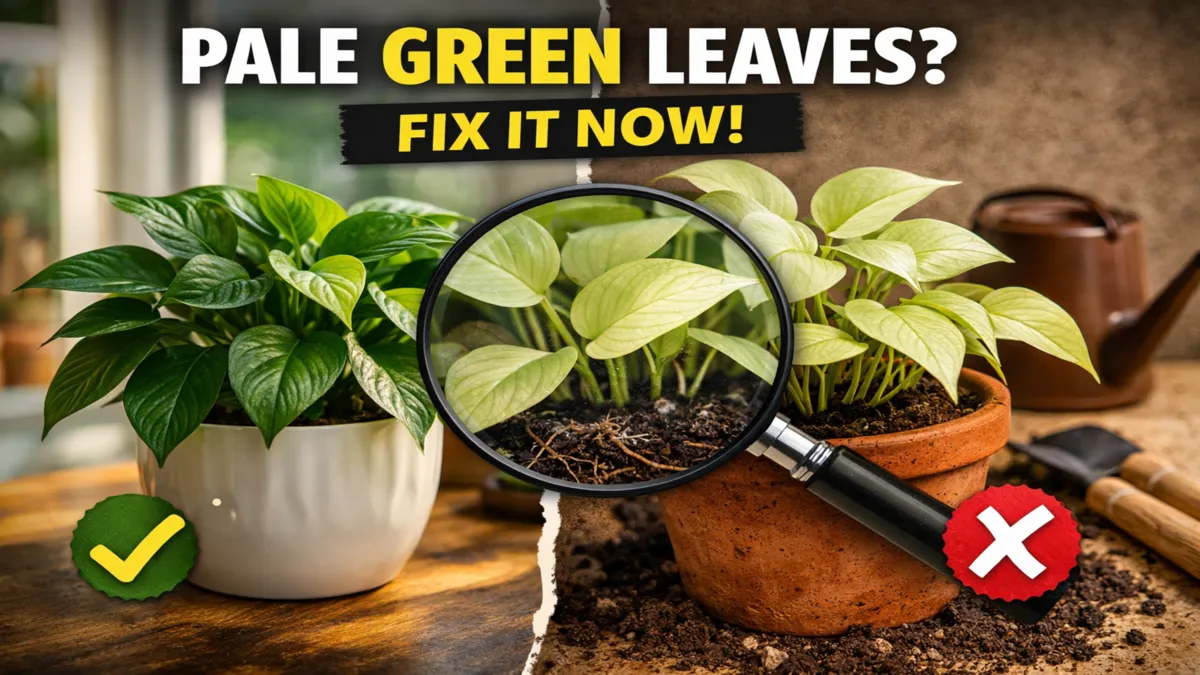
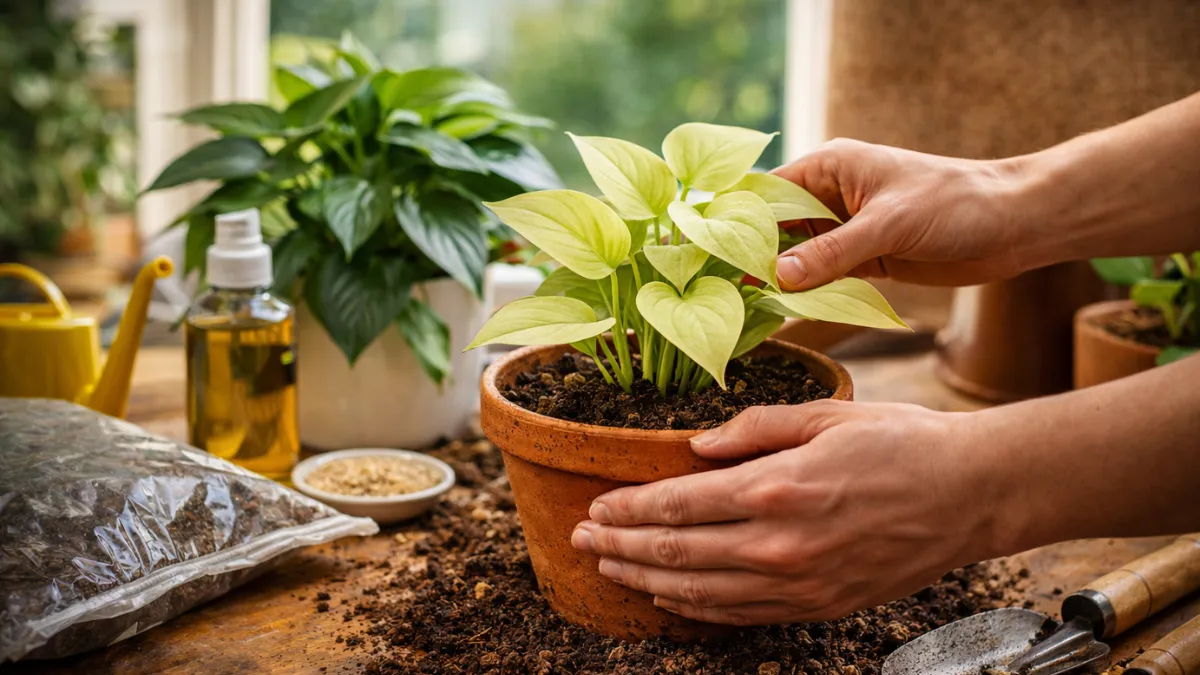
Noticing pale green leaves on your indoor plants? Learn the real reasons behind fading color and simple, practical fixes to restore healthy, deep green growth quickly and naturally at home.
At first, it’s easy to overlook.
Your plant still looks alive. No brown leaves. No wilting.
The deep green color slowly begins to fade. The leaves look washed-out—almost tired.
If you’re seeing this, your plant is trying to tell you something. And the good news? It can be fixed.
What exactly does a pale green color mean?
Healthy plant leaves are typically deep and lush green.
This color comes from chlorophyll. It helps plants produce food by utilizing light.
When leaves turn pale green, it means the plant isn't producing enough chlorophyll.
Simply put : your plant isn't getting the things it needs to stay strong.
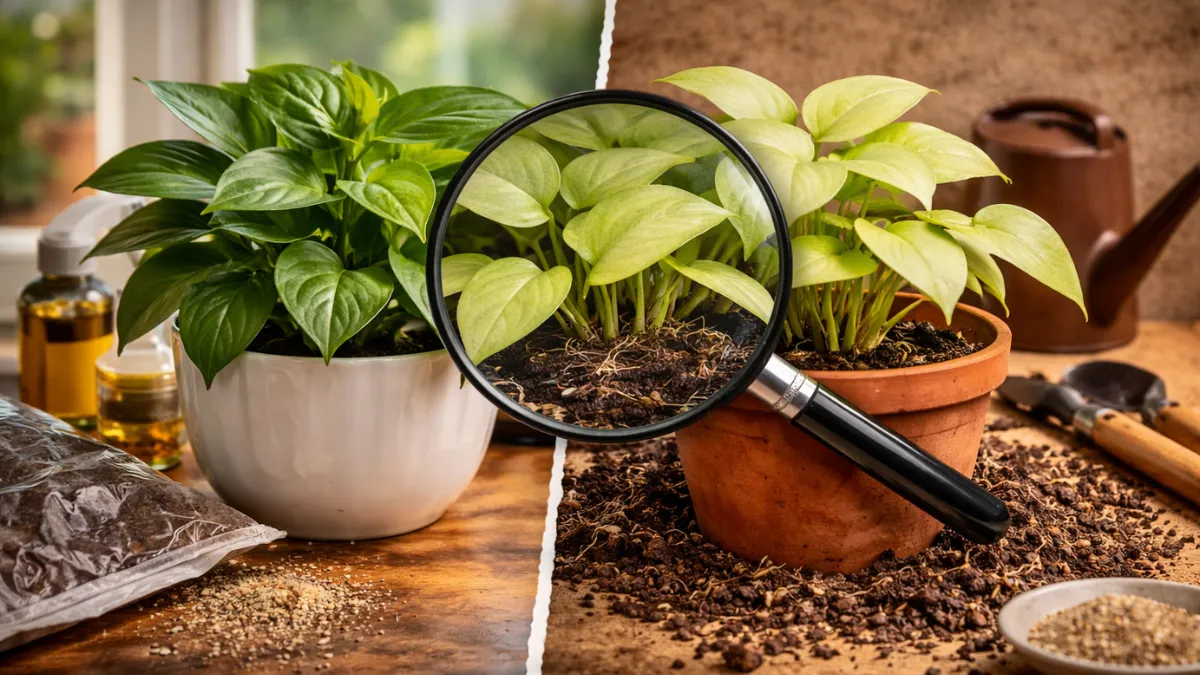
File Photo : Common reasons behind pale green leaves in indoor plants
The Main Causes of Pale Green Leaves
Let's break this down clearly so you can identify the problem quickly.
1. Not Getting Enough Light
This is the most common cause.
Indoor plants rely heavily on light. When they don't receive enough light, they cannot generate sufficient energy.
The leaves lose their deep color and begin to look pale.
In my experience, this often happens in corners or in rooms with small windows. The plant survives, but it fails to thrive.
2. Overwatering
Giving a plant too much water might not seem harmful, but in reality, it displaces the oxygen in the soil.
The roots are unable to breathe properly.
When the roots struggle, the plant cannot absorb nutrients. This causes the leaves to turn pale.
I once regularly watered a Money Plant, thinking I was helping it grow faster. Instead, the leaves turned pale green and became weak.
3. Nutrient Deficiency
Plants require nutrients such as nitrogen, iron, and magnesium.
Nitrogen is particularly essential for maintaining their green color.
If your soil is old or has become depleted of nutrients, your plant will not receive adequate nourishment.
This often occurs when you haven't changed the soil or added fertilizer for several months.
4. Poor Soil Quality
Not all types of soil are suitable.
If the soil is too compacted or does not drain water properly, the roots cannot grow effectively.
Even if you provide the correct amount of water and fertilizer, poor soil quality can still cause the leaves to lose their vibrant color.
5. Root Bound
When a plant outgrows its pot, the roots begin to circle around inside it.
There is no longer any space left for them to spread out. This limits the absorption of nutrients and water, which, in turn, affects the color of the leaves.
6. Sudden Temperature Changes
Indoor plants thrive on stability.
Drafts of cold air, air conditioning currents, or sudden fluctuations in temperature can place the plant under stress.
This stress often manifests as the leaves turning yellow or appearing lifeless.
How to Fix Yellow-Green Leaves (Step-by-Step)
Now, let's address this issue in a simple and practical manner.
File Photo : Step-by-step care to restore healthy green leaves
Step 1: Check the Lighting
Move your plant closer to a source of natural light.
A bright window (avoiding direct, harsh sunlight) is ideal for most indoor plants.
If your room is dim, simply moving the plant 2–3 feet closer to the window can make a significant difference.
Step 2: Adjust Your Watering Habits
Do not water your plant according to a fixed schedule.
Instead, check the soil itself.
Insert your finger about 1–2 inches deep into the soil. If it feels dry, go ahead and water the plant.
If it still feels moist, wait a little longer. This small change resolves many issues.
Step 3: Nourish Your Plant
Apply a balanced liquid fertilizer once every 2–4 weeks.
Choose something mild that isn't too potent.
In my experience, over-fertilizing can actually worsen the situation. I once thought that applying more fertilizer would help the plant recover faster, but it only caused the plant even more stress.
Start slowly.
Step 4: Improve the Soil
If your soil feels hard or stays wet for too long, it is time to replace it.
Use a soil mix that drains water easily.
A simple indoor mix made of coco peat, compost, and perlite works very well for this purpose.
Step 5: Repot When Necessary
Check the bottom of the pot.
If roots are protruding, your plant needs a larger pot.
Repotting gives the roots room to spread out and allows the plant to absorb nutrients more effectively.
Step 6: Maintain Stable Conditions
Keep your plant away from the following:
• Direct airflow from an AC unit
• Cold drafts
• Sudden temperature fluctuations
Plants thrive in consistent conditions.
How long does recovery take?
It is important to understand this:
Leaves that have already turned yellow typically will not turn deep green again.
If you resolve the underlying issue, the new leaves or shoots that emerge will be healthy.
You should start seeing improvements within 2–4 weeks. However, full recovery may take a few months.
When You Should Be Concerned
Sometimes, a light green color can turn yellow.
This is a major warning sign.
If you observe the following:
• The leaves are turning yellow rapidly
• The stem has become soft or mushy
• The soil emits a foul odor
Then root rot may have set in.
In such a situation, you must take immediate action—reduce watering and inspect the roots.
Prevention Tips (Keep It Simple)
Once your plant has recovered, keeping it healthy is far easier than constantly fixing recurring problems.
• Place your plants in a spot where they receive adequate light
• Avoid overwatering
• Fertilize lightly but regularly
• Replace the soil every 6–12 months
• Check on your plant weekly
That’s it. No complicated routines required.
A Little Truth
Not every plant will look absolutely perfect all the time.
An indoor environment is not natural for plants.
In my experience, even healthy plants sometimes show slight variations in color.
And that’s okay.
The goal is not perfection. The goal is steady, healthy growth.
Final Thoughts
Light green leaves are not the end of the world.
They are an early warning sign.
If you recognize it now, your plant can bounce back and become strong again.
Just focus on the basics : light, water, and soil.
Once those things are in order, everything else falls into place.
Written for IndoorPlantify, based on real-world experience in indoor plant care.
Follow Us On Social Media
Join the Discussion
No discussions yet. Be the first to start one!
Expert FAQs
What does it mean when indoor plant leaves turn pale green?
When indoor plant leaves turn pale green, it indicates that the plant is not producing enough chlorophyll. This means the plant is not receiving the necessary elements to stay strong and healthy.
What is the most common reason for indoor plants to develop pale green leaves?
The most common reason for indoor plants to develop pale green leaves is insufficient light. Without enough light, plants cannot generate sufficient energy, causing their leaves to lose their deep color.
How does overwatering affect the color of plant leaves?
Overwatering displaces oxygen in the soil, preventing roots from breathing and absorbing nutrients properly. This struggle at the root level leads to the leaves turning pale green.
Which nutrient is particularly important for maintaining a plant's green color?
Nitrogen is particularly essential for maintaining a plant's green color. A deficiency in nutrients like nitrogen, iron, or magnesium can cause leaves to become pale.
Can poor soil quality contribute to pale green leaves, even with proper watering and fertilizing?
Yes, poor soil quality can contribute to pale green leaves. If the soil is too compacted or doesn't drain properly, roots cannot grow effectively, hindering the plant's ability to maintain vibrant leaf color.
What is "root bound" and how does it affect plant leaf color?
"Root bound" occurs when a plant outgrows its pot, causing roots to circle and lack space to spread. This condition limits the absorption of nutrients and water, which in turn affects the color of the leaves.
Do sudden temperature changes impact the health and color of indoor plant leaves?
Yes, sudden temperature changes, such as drafts or air conditioning currents, can stress indoor plants. This stress often manifests as the leaves turning yellow or appearing lifeless, indicating a decline in health.