

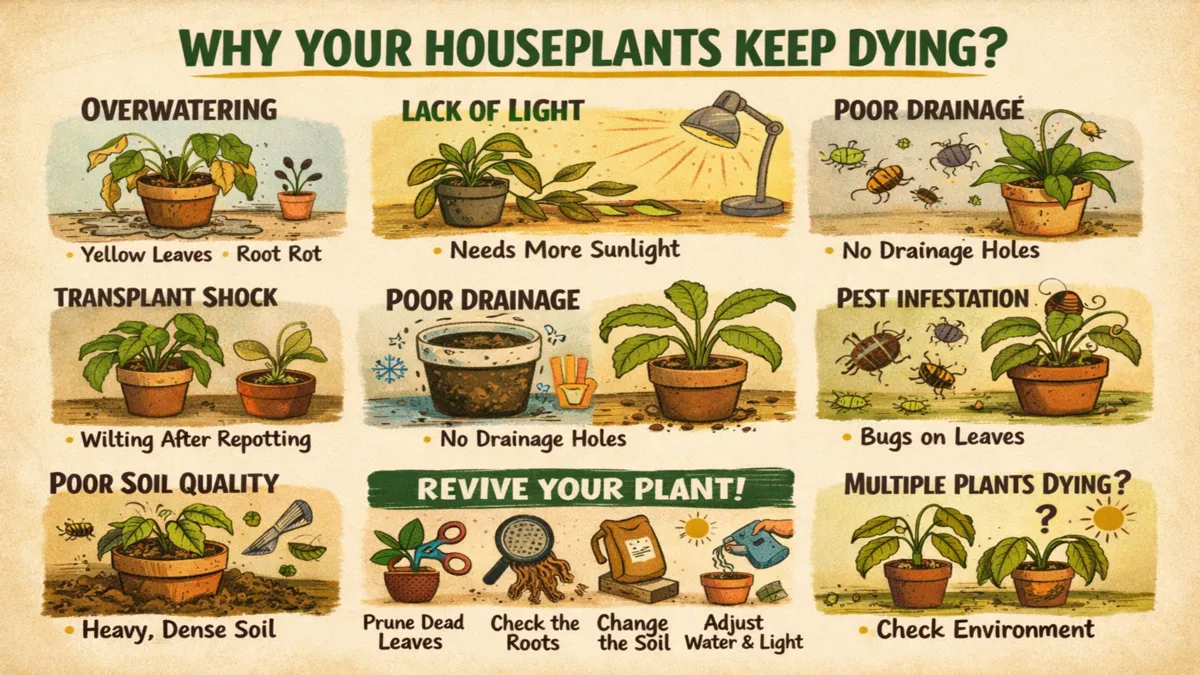
Indoor plants can transform your home into a fresh and tranquil sanctuary. However, many people face a single, frustrating problem: their houseplants keep dying repeatedly. You water them, move them to different spots, and even talk to them yet they slowly turn yellow, wither, and perish.
If this sounds familiar, you are not alone. Thousands of plant enthusiasts struggle with this very issue. The truth is, most houseplants don't die due to bad luck; they die because of a few common mistakes made during their care.
Related News
In this guide, you will discover the actual reasons why your houseplants keep dying, how to fix these problems, and simple methods to revive your plants.
1. Overwatering: A Plant's Greatest Enemy
One of the biggest mistakes plant owners make is watering their plants too frequently.
Many people believe that plants require daily watering, but in reality, most houseplants prefer soil that is slightly dry. When the soil remains constantly wet, the roots are unable to breathe. This leads to root rot, which eventually kills the plant.
Symptoms of Overwatering:
• Yellowing leaves
• Soft or mushy stems
• A foul odor coming from the soil
• Dropping leaves
What to Do:
• Always check the soil before watering.
• Insert your finger 1–2 inches deep into the soil.
• If the soil feels moist, do not water.
If you have ever wondered, I am watering it, so why is my plant dying?, the culprit is usually overwatering.

Also Read : How to Revive a Dying Indoor Plant (Step-by-Step Guide)
Also Read : How I Turned My Dying Indoor Plant Into a Healthy One in 7 Days
2. Lack of Light
Another major reason why your houseplants keep dying is a lack of light. Plants use sunlight to generate energy through photosynthesis. When light levels are too low, plants become weak and unhealthy.
Signs that your plant needs more light:
• Slow growth, or no growth at all
• Pale or yellowing leaves
• Long and stretched-out stems
• Immediate Solution
Place your plants near a bright window ideally one facing east or south.
If your home doesn't receive much sunlight, choose plants that can survive in low-light conditions, such as:
• Snake Plant
• ZZ Plant
• Pothos
• Peace Lily
These plants are generally easier for beginners to care for.
3. Transplant Shock
Many plant owners panic when their plant suddenly wilts after being repotted.
So, do plants go into shock after repotting?
Yes, and it is a very common occurrence. When roots are disturbed during the repotting process, plants require time to adjust. This brief period of stress is known as transplant shock.
Symptoms of Transplant Shock:
• Wilting leaves
• Slow growth
• Temporary leaf drop
How to Prevent Transplant Shock:
• Water the plant lightly after repotting
• Keep the plant out of direct sunlight for a few days (place it in indirect light)
• Avoid applying fertilizer immediately
With proper care, most plants recover within 1–2 weeks.
4. Incorrect Pot Size or Poor Drainage
The size of your plant's pot matters far more than you might think.
If the pot lacks drainage holes, excess water becomes trapped within the soil. This causes the roots to rot and leads to fungal diseases.
Similarly, if the pot is too large, excessive water can accumulate within it as well.
Proper Pot Management:
• Always use pots that have drainage holes.
• Use a potting mix (soil blend) that offers good drainage.
• Avoid using pots that are excessively large.
Good drainage is one of the most effective home remedies for saving dying plants.
5. Temperature Stress
Indoor plants are highly sensitive to fluctuations in temperature.
Excessive heat, cold drafts, or air conditioning (AC) can send plants into shock.
Common Temperature-Related Issues:
• AC air blowing directly onto the plant.
• Cold air entering through windows during winter.
• Heaters placed too close to the plant.
This is often the reason why many indoor plants perish during the winter months. The combination of reduced sunlight and colder temperatures significantly slows down plant growth.
Winter Care Tips:
• Water less frequently.
• Keep plants away from cold windows.
• Maintain a room temperature between 18–26°C.
6. Pest Infestations
Tiny pests can stealthily wreak havoc on your plants.
Common pests that infest indoor plants include:
• Spider mites
• Aphids
• Mealybugs
• Fungus gnats
These pests suck the sap from the leaves, causing the plants to weaken over time.
Signs of a Pest Problem:
• Sticky leaves
• Small insects visible on the stems
• Cotton-like white spots
A Simple Home Remedy
Mix neem oil with water and spray it on the leaves once a week. Neem oil is a natural remedy that is widely used to protect indoor plants.
7. Poor Soil Quality
Generally, standard garden soil is too heavy for indoor plants.
Dense soil restricts airflow around the roots, hindering proper plant growth and making them susceptible to diseases.
Ideal Soil Mix for Indoor Plants
A good potting mix typically consists of the following ingredients:
• Coco peat
• Perlite
• Compost
• Bark or sand
This mixture ensures proper drainage while keeping the roots healthy.
8. Why Are All My Plants Dying at the Same Time?
If multiple plants begin to die simultaneously, the cause is usually related to the surrounding environment.
Potential reasons for this include:
• Sudden changes in temperature
• Changes in watering habits
• An insect infestation
• Insufficient indoor lighting
When several plants start to decline together, the first things to check are lighting, watering, and for the presence of pests.
Also Read : Overwatering Is not the Problem : The Real Reason Your Plants Are Dying
Also Read : Indoor Plants That Survive AC Rooms Without Dying
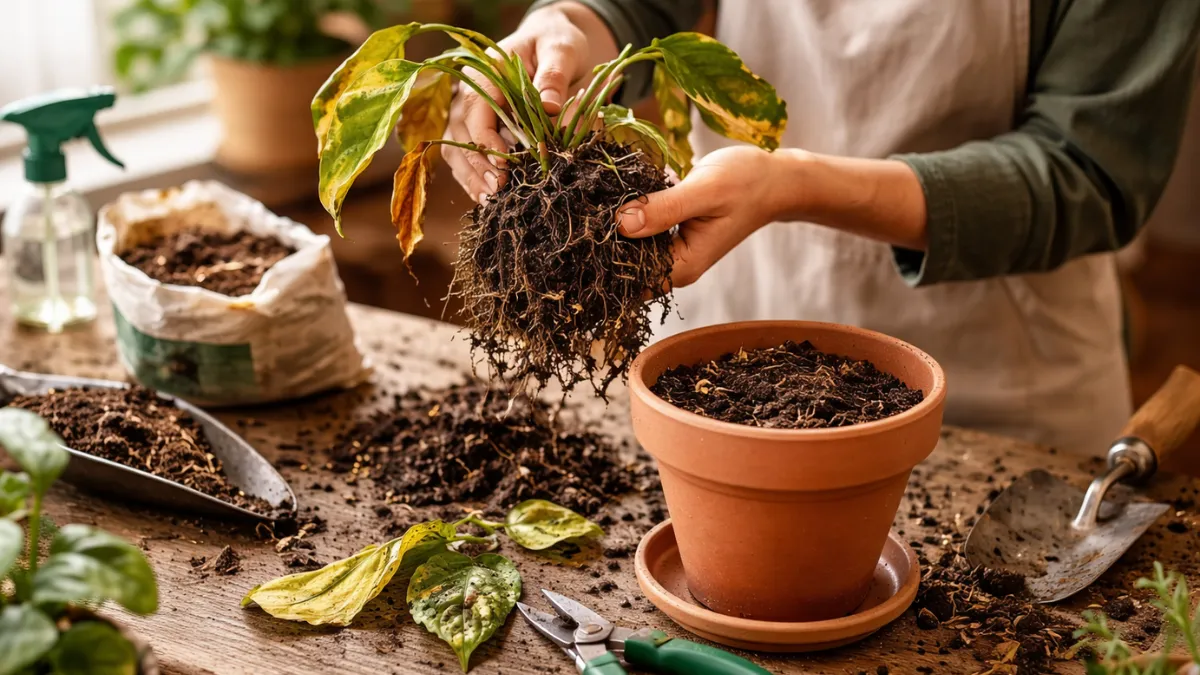
9. How to Save a Dying Indoor Plant
If your plant is wilting, do not discard it immediately. With proper care, many plants can be revived.
How to Save a Plant (Step-by-Step)
• Remove any yellow or dried leaves
• Check the roots for signs of rot
• Replace the old soil with fresh potting mix
• Adjust your watering schedule and technique
Place the plant in a location where it receives bright, but not direct, sunlight (indirect light).
Most plants will begin to show signs of recovery within 2–3 weeks.
10. The Spiritual Meaning of Dying Plants
Some people believe that plants absorb the negative energy present in their surroundings.
According to certain spiritual beliefs, a dying plant is considered a sign of underlying stress or emotional imbalance within that space. Although there is no scientific proof of this, plants are highly sensitive to changes in lighting, air quality, and care routines.
Often, improving your plant care practices also enhances the overall atmosphere of your home.
Bonus: Plants That Are Hard to Kill
If you struggle with plant care, start with varieties that are easy to maintain.
The most resilient indoor plants include:
• Snake Plant
• ZZ Plant
• Pothos
• Spider Plant
• Cast Iron Plant
These plants easily tolerate low light, infrequent watering, and common beginner mistakes.
Final Thoughts
If your indoor plants keep dying, the cause is rarely something mysterious. In most cases, it stems from watering errors, insufficient lighting, or environmental stress.
By making a few simple adjustments such as watering less frequently, improving lighting conditions, and using the right soil you can significantly increase your plants' chances of survival.
Remember, even experienced plant enthusiasts lose a plant from time to time. The most important thing is to learn from your mistakes and refine your plant care techniques. With proper care, your indoor plants can thrive and transform your home into a lush, green oasis.
Written for IndoorPlantify, based on personal, real-world experience with indoor plant care.